Thursday, April 30, 2026
  • Login
The Southern African Times
  • Home
  • Southern Africa
  • Business
    • African Start ups
    • African Continental Free Trade Area
  • Technology
    • Lifestyle
      • Health
      • Culture
      • Food and Drink
      • Entertainment
  • Opinion
  • Sports
  • SAT Jobs
    • Events
  • About Us
    • Advertise with Us
    • Contact Us
No Result
View All Result
  • Home
  • Southern Africa
  • Business
    • African Start ups
    • African Continental Free Trade Area
  • Technology
    • Lifestyle
      • Health
      • Culture
      • Food and Drink
      • Entertainment
  • Opinion
  • Sports
  • SAT Jobs
    • Events
  • About Us
    • Advertise with Us
    • Contact Us
No Result
View All Result
The Southern African Times
No Result
View All Result
Home Markets

Middle East Conflict Disrupts Global Oil and Gas Supply

by SAT Reporter
March 9, 2026
in Markets, Middle East
0
Middle East Conflict Disrupts Global Oil and Gas Supply

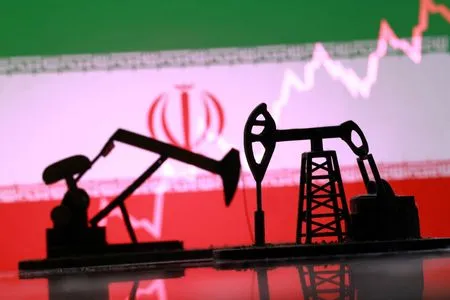
Escalating hostilities involving the United States, Israel and Iran are disrupting oil and natural gas production across parts of the Middle East, contributing to sharp increases in energy prices and raising concerns about supply security for economies across Africa and the Global South.

Energy infrastructure and shipping routes connected to the Gulf region account for a substantial share of global energy trade. According to the International Energy Agency, roughly one fifth of the world’s oil consumption moves through the Strait of Hormuz, a narrow maritime corridor linking Gulf producers to global markets. Disruptions in this region therefore carry implications well beyond the Middle East, particularly for African states that rely heavily on imported refined fuels and liquefied natural gas.

Recent developments indicate widespread interruptions to production and export operations. Kuwait Petroleum Corporation declared force majeure and began cutting output after exports through the Strait of Hormuz were halted. Officials indicated that the decision was taken after shipping traffic through the waterway became severely restricted amid security threats.


ADVERTISEMENT

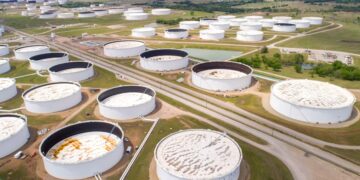
In the United Arab Emirates, the Abu Dhabi National Oil Company stated that it was adjusting offshore production levels in order to maintain operational flexibility during the crisis. Reports also indicated that debris linked to regional hostilities caused a fire at the Fujairah energy hub, one of the world’s largest storage and bunkering centres for oil shipments.

Iraq has also begun reducing production due to limited storage capacity and restricted export routes. Officials told Reuters that production had already fallen by about 1.5 million barrels per day and could decline further if export channels remain constrained. Iraq produced roughly 4.1 million barrels per day earlier this year, accounting for about four percent of global output. Several operators in the Kurdistan region have temporarily halted production as a precaution.

The conflict has also affected the natural gas market. QatarEnergy halted operations at several liquefied natural gas facilities in early March and subsequently declared force majeure on LNG shipments. Qatar is the world’s largest exporter of liquefied natural gas and supplies close to twenty percent of global LNG trade according to the Organization of the Petroleum Exporting Countries and international energy market data.

Saudi Arabia has reported disruptions to its refining system after the Ras Tanura refinery, which has a capacity of about 550000 barrels per day, suspended operations. Saudi authorities said that crude shipments are being redirected to the Red Sea port of Yanbu in an effort to maintain export continuity.

The maritime situation remains particularly sensitive. Iranian officials stated that the Strait of Hormuz had been closed to most commercial traffic and warned that vessels attempting to pass could face military action. Maritime monitoring agencies have reported multiple attacks on shipping in the Gulf since the beginning of March. Several insurers have subsequently withdrawn war risk coverage for vessels operating in the area, increasing costs for global shipping and raising uncertainty about the reliability of supply chains.

While the United States has indicated that naval escorts could be provided for tankers travelling through the strait, shipping companies and traders have suggested that security guarantees alone may not fully restore normal shipping flows.

The effects are already visible in global energy markets. Benchmark crude prices rose sharply in early trading, while major energy indices also recorded gains. According to reporting by Al Jazeera, analysts warn that prolonged disruptions could tighten global supply and intensify price volatility.

The ripple effects are extending into Asia and other regions that depend heavily on Gulf energy supplies. Refiners in China have begun reducing processing runs or accelerating scheduled maintenance due to uncertain crude flows. India has started exploring alternative suppliers of crude oil, liquefied petroleum gas and LNG in anticipation that the disruption could extend beyond several weeks. Indonesia has also signalled plans to increase crude purchases from the United States as a temporary measure.

Alternative supplies from Brazil, West Africa and the United States are available but involve longer shipping times and higher freight costs. Traders note that voyages from Atlantic producers to Asian markets can take more than a month, adding logistical complexity at a time when shipping insurance and charter costs are rising.

For African economies the developments present both risks and opportunities. Countries that depend heavily on imported refined fuels such as Kenya, Senegal and Morocco may face higher energy import costs if prices remain elevated. At the same time, oil producing states including Nigeria, Angola and Libya could see temporary revenue gains if global prices remain strong.

Energy analysts across the continent have noted that the situation highlights the importance of strengthening regional refining capacity, diversifying supply routes and accelerating investment in renewable energy. Such strategies are increasingly discussed within continental frameworks including the African Union’s Agenda 2063, which emphasises long term economic resilience and energy sovereignty.

As diplomatic efforts continue internationally, the evolving conflict underscores the interconnected nature of global energy systems. Developments in a single maritime corridor in the Gulf can rapidly affect households, industries and governments far beyond the region, including across Africa where energy access remains a central component of economic development and social wellbeing.

For African policymakers and markets alike the present moment serves as a reminder that global energy security is inseparable from broader geopolitical stability.

Tags: African economic resilienceAfrican economic resilience Middle East conflictAfrican energy securityenergy geopoliticsglobal energy tradeglobal oil marketsIran Israel United States tensionsLNG supply disruptionMiddle East conflictOPEC producersStrait of Hormuz shipping
Previous Post

The Power of Women: Southern Africa’s Unfinished Journey Toward Equality

Next Post

MSC introduces emergency fuel surcharge on routes linking Mediterranean, Red Sea and East Africa

SAT Reporter

Related Posts

Botswana Makes Its Case to Global Investors as Frontier Markets Re-enter Focus
Markets

Botswana Makes Its Case to Global Investors as Frontier Markets Re-enter Focus

by SAT Reporter
April 29, 2026
Africa Faces Prolonged Energy and Fertiliser Shock as Policy Uncertainty Grows
Markets

Africa Faces Prolonged Energy and Fertiliser Shock as Policy Uncertainty Grows

by SAT Reporter
April 27, 2026
AFRINEX highlights global capital platform at African markets conference
Markets

AFRINEX highlights global capital platform at African markets conference

by SAT Reporter
April 27, 2026
ASEA President Highlights African Markets Growth and Integration Drive
Markets

ASEA President Highlights African Markets Growth and Integration Drive

by SAT Reporter
April 27, 2026
Oil rises and global markets steady as US Iran diplomacy stalls
Markets

Oil rises and global markets steady as US Iran diplomacy stalls

by SAT Reporter
April 27, 2026
Next Post
MSC introduces emergency fuel surcharge on routes linking Mediterranean, Red Sea and East Africa

MSC introduces emergency fuel surcharge on routes linking Mediterranean, Red Sea and East Africa

Browse by Category

  • Africa AI
  • African Continental Free Trade Area
  • African Debt
  • African Start ups
  • Agriculture
  • AI Africa
  • Algeria
  • All News
  • Analysis
  • Angola
  • Arts / Culture
  • Asia
  • Botswana
  • BOTSWANA
  • BREAKING NEWS
  • BRICS
  • Burkina Faso
  • Burundi
  • Business
  • Business
  • Business Wire
  • Cameroon
  • Central Africa
  • Chad
  • China
  • Climate Change
  • Climate Changev
  • Community
  • Congo Republic
  • Conservation
  • Côte d’Ivoire
  • COVID 19
  • CRYPTOCURRENCY
  • Culture
  • Democratic Republic of Congo
  • Diplomacy
  • Eastern Africa
  • Economic Development
  • Economy
  • Education
  • Egypt
  • Elections 2024
  • Energy
  • Entertainment
  • Environment
  • Eritrea
  • Ethiopia
  • Europe
  • Fashion
  • Feature
  • Finance
  • Financial Inclusion
  • Food
  • Food and Drink
  • Foods
  • GABON
  • Ghana
  • Global
  • Global Africa
  • Guinea
  • Health
  • Immigration
  • in Southern Africa
  • International news
  • International Relations
  • Investment
  • Ivory Coast
  • Just In
  • Kenya
  • Lesotho
  • Libya
  • Life Style
  • Lifestyle
  • Literature
  • Malawi
  • Malawi
  • Mali
  • Markets
  • Mauritius
  • Middle East
  • Mining in Africa
  • Morocco
  • Mozambique
  • Namibia
  • Niger
  • niger
  • Nigeria
  • North Africa
  • North-Eastern Africa
  • Obituaries
  • Obituary
  • Opinion
  • PARTNER CONTENT
  • Politics
  • Property
  • Racism
  • Rwanda
  • Rwanda
  • SADC
  • SAT Interviews
  • SAT Investigation
  • SAT Jobs
  • Saudi Arabia
  • Senegal
  • Seychelles
  • Somaliland
  • South Africa
  • South Sudan
  • Sports
  • Startup Africa
  • STOCK EXCHANGE
  • Sudan
  • Sustainability
  • Sustainablity
  • Tanzania
  • Technology
  • Telecommunications
  • The Editorial Board
  • The Power Of She
  • Togo
  • Trade
  • Travel
  • Travel
  • Tunisia
  • Uganda
  • Uncategorized
  • Wealth
  • West Africa
  • World
  • World
  • ZAMBIA
  • Zambia
  • Zimbabwe
  • ZIMBABWE

Browse by Tags

#NewsUpdate #SouthAfrica #SouthernAfricanTimes #TheSouthernAfricanTimes AfCFTA africa African Continental Free Trade Area African development African Development Bank African economies African economy African Union Agriculture Angola Botswana Business China Climate change Cyril Ramaphosa Economic Development economic growth energy transition fiscal policy industrialisation Inflation Infrastructure Infrastructure Development International relations Investment Kenya Mozambique Namibia news Nigeria Regional Integration renewable energy Rwanda SADC South Africa Southern Africa sustainable development Tanzania United States Zambia Zimbabwe
ADVERTISEMENT

WHO WE ARE

The Southern African Times is a regional bloc digital newspaper that covers Southern African and world news. The paper also gives a nuanced analysis on news and covers a wide range of reporting which include sports, entertainment, foreign affairs, arts and culture.

Welcome Back!

Login to your account below

Forgotten Password?

Retrieve your password

Please enter your username or email address to reset your password.

Log In

  • Home
  • Southern Africa
  • Business
    • African Start ups
    • African Continental Free Trade Area
  • Technology
    • Lifestyle
      • Health
      • Culture
      • Food and Drink
      • Entertainment
  • Opinion
  • Sports
  • SAT Jobs
    • Events
  • About Us
    • Advertise with Us
    • Contact Us
Are you sure want to unlock this post?
Unlock left : 0
Are you sure want to cancel subscription?