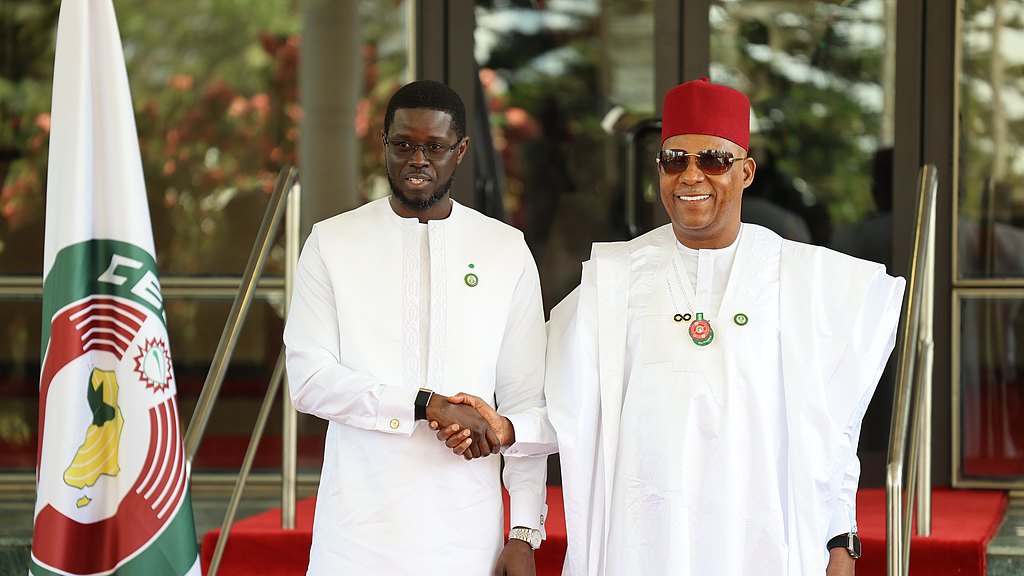
Senegal has been chosen to preside over the Commission of the Economic Community of West African States (ECOWAS) for the 2026 to 2030 mandate, marking the first time the country will assume leadership of the regional body. The decision was confirmed during the 68th Ordinary Session of the ECOWAS Authority of Heads of State and Government held in Abuja, Nigeria, according to an official communiqué released by the Senegalese Ministry of African Integration and Foreign Affairs.
The election of Senegal reflects a wider commitment among ECOWAS member states to sustain regional unity and shared governance at a time when the West African bloc is navigating complex political and economic transitions. ECOWAS, founded in 1975, remains one of the continent’s most significant regional organisations, tasked with fostering economic cooperation, political stability, and collective security among its members.
As of December 2025, ECOWAS counts twelve member states including Benin, Togo, Cabo Verde, The Gambia, Guinea, Guinea-Bissau, Ghana, Côte d’Ivoire, Liberia, Nigeria, Sierra Leone, and Senegal. Earlier in January 2025, Burkina Faso, Mali, and Niger announced their formal withdrawal from the organisation, citing concerns over sovereignty and differing political alignments following a series of military transitions in their respective countries.



Senegal’s appointment to the Commission presidency is viewed by regional observers as both a recognition of its sustained democratic governance and an affirmation of the nation’s growing diplomatic role within Africa’s multilateral institutions. The country has consistently positioned itself as an advocate for dialogue-driven conflict resolution and regional economic integration.
ECOWAS continues to face the challenge of maintaining cohesion amidst political realignments and security concerns across West Africa. The institution’s mandate remains rooted in advancing collective economic growth, free movement of people, and the strengthening of democratic institutions. Senegal’s leadership is expected to focus on deepening regional cooperation and revitalising mechanisms for inclusive development that reflect Africa’s shared aspirations rather than external geopolitical pressures.

This development underscores a broader pan-African dynamic where regional leadership transitions are increasingly shaped by internal consensus and collective agency rather than external endorsement. Senegal’s stewardship of the ECOWAS Commission from 2026 to 2030 may thus serve as a pivotal period for recalibrating West Africa’s integration agenda toward self-defined and community-centred priorities.
ECOWAS was established in 1975 under the Treaty of Lagos to promote economic integration and cooperation among West African states. The bloc’s resilience and adaptability continue to play a crucial role in Africa’s regional and continental development architecture, linking local initiatives to broader frameworks such as the African Union’s Agenda 2063.
As the continent continues to navigate complex governance and economic challenges, Senegal’s tenure at the helm of ECOWAS presents an opportunity to advance a vision of African-led multilateralism grounded in partnership, pragmatism, and shared prosperity.