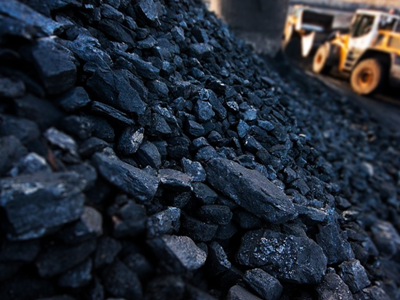
South African coal exports to Israel have risen sharply in recent months following Colombia’s decision to halt shipments of thermal coal to the Middle Eastern nation. Data from international commodity tracking platforms Kpler, LSEG and DBX Commodities indicate that South African miners have significantly increased coal exports despite the political tensions that frame the trade relationship between the two countries.
Colombia, previously a leading supplier of thermal coal to Israel, imposed a total ban on exports in August after President Gustavo Petro’s administration accused Israel of committing mass civilian casualties in Gaza. The decree, which took effect immediately, brought all coal shipments from Colombia to Israel to a halt by September.
In contrast, South African coal exports to Israel rose by 87 percent to 474,000 metric tonnes during the three months to November, compared with the same period last year. Official data from the South African Revenue Service further revealed that coal exports to Israel climbed by 20 percent to 667,442 tonnes in the three months to October, marking the highest volume since early 2017. Projections from Kpler suggest that South Africa is likely to ship an additional 170,000 tonnes to Israel by the end of December.



Patrick Bond, director at the University of Johannesburg’s Centre for Social Change, observed that more than a dozen South African coal exporters have been supplying Israel since 2023. He described the situation as “talk left, walk right,” a phrase reflecting the contradiction between South Africa’s political stance on Israel and its continued trade in energy commodities.
While South Africa has been among the most outspoken critics of Israel’s military actions in Gaza and has initiated a case at the International Court of Justice alleging genocide, the country’s export data reveal an economic relationship that remains pragmatic. Trade Minister Parks Tau previously cautioned that imposing sanctions against Israel could expose South Africa to potential legal challenges under World Trade Organization (WTO) rules. Colombia, however, has not faced any such challenges since implementing its own export ban.
Industry data suggest that South Africa’s coal exports in 2025 will reach their highest levels in nearly a decade. The nation’s share in Israel’s seaborne coal market is expected to rise from less than 20 percent in 2024 to about 55 percent by the end of 2025. Colombia, by comparison, will account for roughly 42 percent of Israel’s total imports this year, reflecting shipments made before the August ban. Russia’s contribution has dwindled sharply, with only one cargo of 55,000 tonnes delivered in 2025, making up less than three percent of Israel’s coal imports.
Alexandre Claude, chief executive of DBX Commodities in London, said the decline in Colombian coal shipments to Israel is unlikely to reverse in the short to medium term. “Colombia will redirect slightly more of its coal to other buyers. The country already has a highly diversified portfolio,” he noted.

Israel’s Ministry of Energy and state-run Israel Electric Corporation have both indicated that coal will soon be phased out of the country’s energy mix. A senior official at the utility company confirmed that coal use will end by 2027, with natural gas set to become the dominant energy source and coal retained only for emergency use.
The evolving dynamics highlight a complex intersection of energy security, trade pragmatism and political principle. For South Africa, a nation seeking to reconcile its moral stance on global justice with its economic realities, the coal trade with Israel underscores the broader challenge of maintaining consistency in foreign and economic policy.