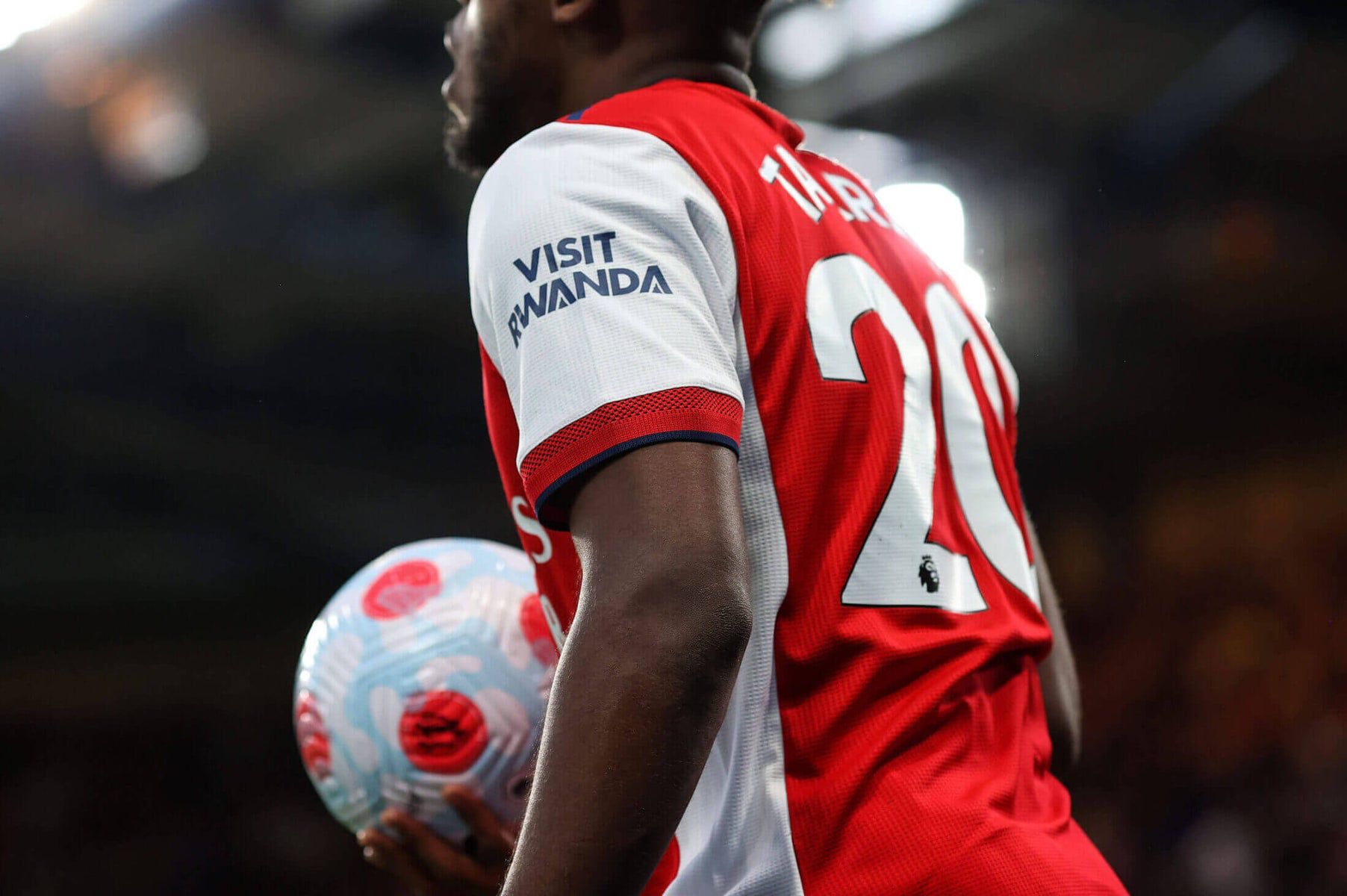
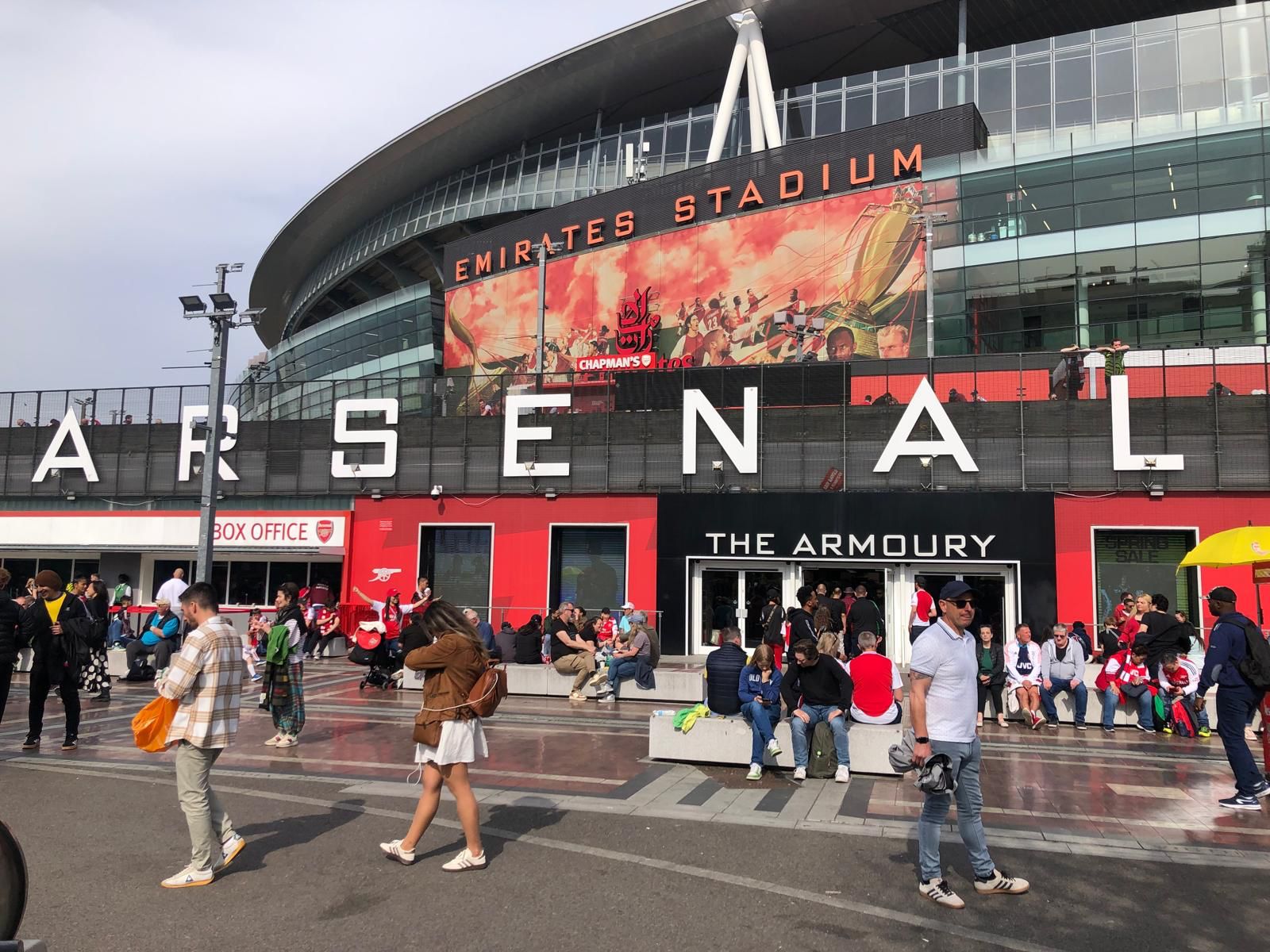
I arrived at Arsenal’s Emirates Stadium on a crisp afternoon, excited not just for the Arsenal vs. Brentford match but for the unique networking event I’d been invited to in the Visit Rwanda hospitality box. The atmosphere was electric—tens of thousands of fans decked in Arsenal’s red and white, the roar of anticipation echoing under the stadium’s steel and glass. Stepping into the private box, I was greeted by the sight of “Visit Rwanda” logos emblazoned on the walls and even on the Arsenal players’ sleeves on the pitch below. It was immediately clear that this was no ordinary matchday; it was a showcase of Rwanda’s bold leap into sports diplomacy and nation branding.
The event was hosted by Michaelle Kubwimana, Founder and Network Director of Rwanda Business UK, whose friendly enthusiasm set the tone. Over lunch and pre-game refreshments, she explained how her organization serves as a platform “designed to bridge the gap between Rwandan and UK entrepreneurs and investors”. In essence, this gathering of business leaders, diaspora members, and football fans was itself a product of Rwanda’s strategic outreach. As we shook hands and exchanged business cards, Kubwimana reminded us that Rwanda’s economy has been one of Africa’s star performers in recent years, growing around 7.5% annually over the past decade – a fact that has created “numerous opportunities for UK businesses” (as she had recently shared on LinkedIn). The Visit Rwanda-Arsenal partnership, she noted, is one channel to make those opportunities known on the global stage.



When the match kicked off, I found myself intermittently watching the game and marveling at the branding around me. The Visit Rwanda logo stood out on the LED boards circling the pitch and on the players’ jerseys. This partnership between Rwanda and Arsenal, I learned, began in 2018 as a three-year, £30 million deal that made Visit Rwanda the club’s official Tourism Partner and first-ever sleeve sponsor. It was an ambitious move by a small East African nation – one that initially raised eyebrows. Some critics in 2018 questioned why Rwanda, often unfairly reduced in global perception to its tragic history or its developing-nation status, would spend so much on a football sponsorship. Even some Arsenal fans were surprised to see “Visit Rwanda” on their team’s kit. But sitting there in the Emirates, I could see exactly why Rwanda bet on this idea. The scope of the partnership went far beyond a logo: Rwanda secured not only kit branding but also stadium presence and social media collaborations, effectively tapping into Arsenal’s worldwide following of millions.

As the first half unfolded, a buzz of conversation in our box underscored how well this strategy has worked. My research team leant that in the very first year of the Arsenal deal, Rwanda recouped its entire £30 million investment, thanks to the exposure it gained. Further, independent analytics showed the campaign generated roughly £36 million worth of media value in year one alone. By 2021, the accumulated media value had reached an estimated £77 million from that initial £36 million outlay, more than doubling the return on investment. This clearly evidences that the exposure wasn’t just theoretical: I learnt that before the partnership, 71% of Arsenal’s global fanbase did not even think of Rwanda as a travel destination, whereas by the end of the first year half of those fans said they would consider visiting Rwanda. That is a remarkable swing in perception, essentially achieved by leveraging the Arsenal fandom’s attention. Conversely, whilst watching the game I glanced around and indeed saw a microcosm of that impact: here we were, a group of people in London, many of whom had probably never thought about Rwanda much before, now eagerly discussing gorilla trekking and investment opportunities in Kigali—all because a football club’s sleeve said “Visit Rwanda.”
In between cheering moves on the field, I chatted with an entrepreneur seated next to me who admitted he initially came for the match but was now genuinely curious about Rwanda. He had seen Arsenal’s star players and even club legends make promotional visits to Rwanda in the news—photos of them trekking through jungles to see the famous mountain gorillas or participating in youth football clinics under the Rwandan sun. Those initiatives suddenly felt very real as we heard more about them. In fact, Arsenal’s partnership isn’t just a billboard; it has involved player visits and content creation that bring Rwanda’s culture and beauty directly to football fans. For example, Arsenal legends have traveled to Rwanda and shared their encounters with our gorillas and our vibrant communities on social media, garnering millions of views. Even an Arsenal-branded plush gorilla toy was created as a clever merchandising idea – it sold out within weeks, with proceeds helping fund the expansion of Rwanda’s Volcanoes National Park (home to those same gorillas). These are the kinds of creative crossover initiatives that make the partnership feel genuine and mutually beneficial: Arsenal fans get a taste of Rwanda’s uniqueness, and Rwanda gains positive global visibility.

As a driving force behind the Visit Rwanda initiative, His Excellency Johnston Busingye, Rwanda’s High Commissioner to the UK, has long championed innovative branding—and he should be justly proud of how far the campaign has come. His staff shared with me that this initiative forms part of a broader effort to reshape Rwanda’s global image. “As a country, we have to come up with innovative ways to market ourselves as a place to visit,” one official at the High Commission explained—echoing the very rationale that underpinned the original Arsenal deal.
Indeed, football has emerged as an unexpected yet highly effective medium for shifting perceptions. Every Arsenal match broadcast globally—watched by millions—is another opportunity for Rwanda to recast its narrative. The Arsenal jersey alone is seen 35 million times per day worldwide. Just imagine that level of visibility for a country once overlooked by many travellers and investors.
This is far from a mere tourism board initiative; it’s a coordinated national strategy, embraced at the highest levels of diplomacy and policymaking as a form of soft power. In effect, the networking environment we were immersed in represented precisely the sort of synergy the Rwandan government envisioned—leveraging the football partnership as a launchpad for engaging with global business networks.
From my vantage point, I reflected on the comprehensiveness of Rwanda’s approach. The economic dividends of the campaign are already evident. Tourism, Rwanda’s leading source of foreign exchange, has experienced a marked surge. We were told that, following the commencement of the Arsenal sponsorship, Rwanda recorded a historic tourism revenue of $620 million in 2023—a 24% increase on its pre-partnership revenue in 2019. This represents a remarkable rebound and growth trajectory, especially when considering the pandemic-induced lull in between.
It is no exaggeration to credit the Arsenal partnership—and a similar Visit Rwanda arrangement with French club Paris Saint-Germain—as pivotal contributors to this success. Visitors are arriving in greater numbers to explore the country’s national parks, track its iconic gorillas, attend international conferences in Kigali, and invest in its dynamic economy. In the Emirates hospitality box, I met a London-based investor who had travelled to Kigali for a conference after noticing Rwanda’s growing prominence through Arsenal; he went on to fund a local tech startup. Such anecdotes were common among our group—each reinforcing how a football sponsorship has become a conduit for connections that yield tangible economic results.
Few nations have so astutely turned sport into statecraft—and Rwanda’s playbook is fast becoming a model for others to follow.

As the referee blew the final whistle (a hard-fought draw, for the record), our group lingered—reluctant to leave the lively discussions still unfolding around us. We wrapped up the day with a group photo—Arsenal’s pitch in the background and a “Visit Rwanda” banner proudly displayed above us. I left the Emirates Stadium with a sense of awe at what I had witnessed. It wasn’t just the thrill of Premier League football; it was witnessing a masterclass in nation branding and sports diplomacy.
Rwanda has managed to insert itself into global water-cooler conversations through the universal language of football. By partnering with a beloved club like Arsenal, it has found a seat at the table in London’s business circles and among millions of fans worldwide—not through traditional diplomacy or high-level political manoeuvring, but through the beautiful game.
And yet, this triumph in storytelling comes at a complex moment. Rwanda continues to face geopolitical challenges, including its fraught relations with the Democratic Republic of Congo and, more recently, the severing of diplomatic ties with Belgium, its former colonial power. The decision to expel Belgian diplomats amid accusations of bias and interference speaks to deeper tensions that transcend branding. The timing of this event, coinciding with the close of the genocide commemoration week, made the symbolism all the more profound.
Rather than allowing the 1994 genocide to be the dominant narrative that defines it internationally, Rwanda is deliberately crafting a new one—anchored in resilience, ambition, and reinvention. On my way out, I thought about how far Rwanda’s image had come. Not so long ago, when Rwanda was mentioned in international media or casual conversation, it was often in the context of tragedy or poverty. Today, thanks to campaigns like Visit Rwanda, the country is just as likely to be associated with adventurous tourism, vibrant entrepreneurship, and Arsenal’s latest Premier League season.
This is a nation reclaiming its story—and that act alone is quietly revolutionary. In African reporting, shifting the focus from viewing Africans as objects of narrative to subjects of their own stories is crucial for a more accurate and inclusive portrayal of the continent. Rwanda is offering a template for how that can be done: by empowering its own voice, embracing innovation, and turning even its darkest history into a foundation for forward-looking diplomacy.
The partnership with Arsenal exemplifies sports diplomacy at its finest—a symbiotic relationship where both club and country win. Arsenal gained a partner rooted in community values and global ambition, while Rwanda gained visibility and a platform to rewrite its global narrative.
Looking back on that networking event, I realise it was more than a marketing exercise; it felt like a diplomatic mission in the guise of a matchday hospitality outing. Figures such as Michaelle Kubwimana and the broader diplomatic cohort in attendance represented a coordinated effort that cleverly intertwines Rwanda’s national ambitions with the global passion for sport. Together, they have turned a football sponsorship into a platform for cultural exchange, economic networking, and national storytelling. The result is a case study in how a country can brand itself boldly and strategically—transforming challenges into opportunities.
As I walked away from the Emirates, I felt convinced that “Visit Rwanda” at Arsenal is not just a slogan on a sleeve—it’s a story in motion, one that I, along with many others, am now inspired to follow to its next chapter.

In a world where diplomacy often happens behind closed doors, Rwanda chose an open field. And on that field, under the North London sky, a new narrative for the nation is being written—one match at a time. A narrative of resilience, self-determination, and global friendship forged through the love of the game. Visit Rwanda, indeed.
Written by Farai Ian Muvuti, the Chief Executive Officer of The Southern African Times, 2023 winner of the Young Entrepreneur of the Year award by the South African Chamber of Commerce UK, an advisor on the board of the Africa Chamber of Commerce, and a contributor to Arise News, Al Jazeera, and the BBC.