Monday, June 15, 2026
  • Login
The Southern African Times
  • Home
  • Southern Africa
  • Business
    • African Start ups
    • African Continental Free Trade Area
  • Technology
    • Lifestyle
      • Health
      • Culture
      • Food and Drink
      • Entertainment
  • Opinion
  • Sports
  • SAT Jobs
    • Events
  • About Us
    • Advertise with Us
    • Contact Us
No Result
View All Result
  • Home
  • Southern Africa
  • Business
    • African Start ups
    • African Continental Free Trade Area
  • Technology
    • Lifestyle
      • Health
      • Culture
      • Food and Drink
      • Entertainment
  • Opinion
  • Sports
  • SAT Jobs
    • Events
  • About Us
    • Advertise with Us
    • Contact Us
No Result
View All Result
The Southern African Times
No Result
View All Result
Home Opinion

A just and sustainable peace in Sudan is possible

by SAT Reporter
August 17, 2024
in Opinion
0
A just and sustainable peace in Sudan is possible

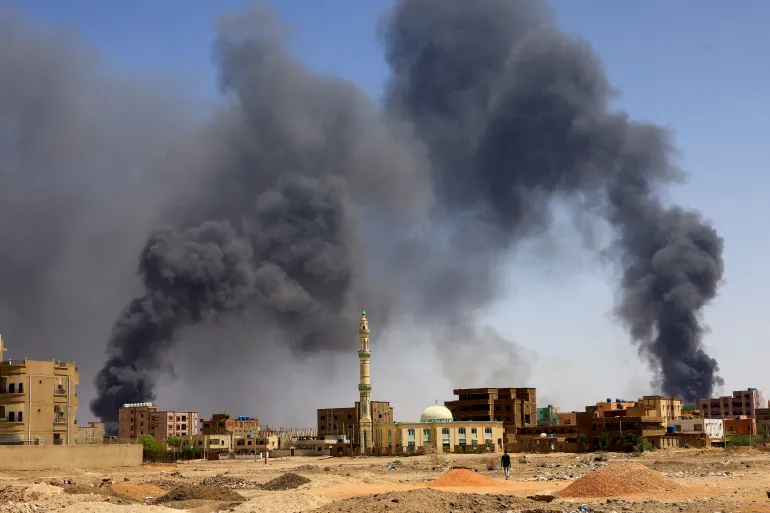
A man walks while smoke rises above buildings after aerial bombardment, during the war between the Rapid Support Forces (RSF) militia and the Sudanese army in Khartoum North, Sudan, May 1, 2023 [Mohamed Nureldin Abdallah/File Photo/Reuters]

A tragedy is unfolding in Sudan as a result of the brutal proxy war the Rapid Support Forces (RSF) militia has been waging on the Sudanese people and state since April 2023. This war seeks to reshape Sudan, its state, demography, and potentially its borders to further the agenda of an avaricious regional power, with the tacit approval or indifference of certain global actors.

The international community is fully aware of the unspeakable atrocities the RSF has committed against our people over the course of this war. Sudanese Armed Forces (SAF) is fully capable of defeating the RSF and putting an end to these grave violations of international law. Our forces are fighting with an unwavering determination to restore peace and stability, repair national unity, and enable our people to rebuild their lives. But we need more from the international community to end this war.

Why does the war persist?

This war would not have lasted this long without the logistical, political, and media support the RSF receives from certain regional countries. We in Sudan, therefore, call upon all peace-loving nations, as well as international and regional organisations, to unequivocally condemn external interference in Sudan’s internal affairs and demand these countries cease supporting the rebel militia with money, weapons, and mercenaries. We believe this is the shortest path to ending the war.


ADVERTISEMENT

We also appeal to all nations, particularly our valued allies, to condemn the crimes and atrocities committed by the RSF, along with its serious violations of international humanitarian law. The militia’s breach of the Jeddah Declaration on the protection of civilians and the delivery of relief warrants a decisive and deterrent international response.

The quest for peace

Sudan welcomes all serious initiatives aimed at restoring peace and stability. However, we remain steadfast in our commitment to the Jeddah platform as the forum for negotiating a ceasefire. We insist on implementing the resolutions of the Jeddah platform, which include protecting civilians and allowing them to return to their homes as a prerequisite for reaching a final agreement on a ceasefire.

The Jeddah Declaration remains the only binding and practical framework for addressing humanitarian issues and protecting civilians. It provides the most feasible basis for a ceasefire and lasting peace. Had it been implemented in good faith at the time of its signing, just four weeks after the war began, it could have led to an early peaceful settlement. Any attempt to undermine or overlook it will further derail the peaceful resolution of the crisis.

Unfortunately, the lenient or empathetic attitude of several influential members of the international community towards the RSF’s disregard for the Jeddah Declaration and relevant UN Security Council resolutions, particularly Resolution 2736 (2024), serves to allow the militia to buy time and avoid making a commitment to peace.

No imminent famine

While we continue our efforts to bring peace, security and stability to the Sudanese people, we remain committed to protecting and delivering aid to those in need. Despite the militia’s concerted campaign to starve the population in certain regions of the country, Sudan is not currently facing an imminent famine.

The militia is trying to stop farming in key food-producing regions by stealing agricultural machinery, targeting harvests, blocking irrigation canals, terrorising farmers, obstructing relief deliveries, and looting warehouses. Nevertheless, according to the latest joint survey conducted by the Ministry of Agriculture and UN specialised agencies, there is only a minor deficit in staple grains in the country, which occasionally happens even in times of peace, due to different reasons, such as rain shortage.

As a contingency plan, we will cultivate sufficient quantities of sorghum, the main staple grain, in safe states, even those where it is not traditionally grown. For wheat, which is primarily consumed in urban centres, the country will continue to rely on imports.

Some are trying to portray the humanitarian challenges our country is facing as dependent on a particular border corridor, but this is highly misleading. Currently, five border corridors are open for aid passage, in addition to seven international airports ready to receive aid flights. The recent statement by Doctors Without Borders (known by its French initials, MSF) on the seizure of its trucks loaded with medicines and therapeutic food supplies by the RSF near el-Fasher, after crossing from Chad, highlighted yet again that the real problem lies not in the closure of any specific entry point, but the militias widespread efforts to obstruct aid delivery.

As such, Sudan calls on the international community and relief organisations to fulfil their pledges of humanitarian assistance to our country. So far, only about 17 percent of these pledges have been realised.

Despite all the challenges we face, we remain determined to achieve the goals of the glorious December 2019 Revolution, put our country on the path to democracy, and form a transitional government once the war is over. The primary tasks of this government are disbanding all militias in favour of a unified national army, and holding free and fair general elections, allowing the Sudanese people to choose their leaders and express their hopes and aspirations for a better future.

Minister of Foreign Affairs of the Republic of the Sudan Hussein Awad Ali . The article reflects the author’s opinions and not necessarily those of The Southern African Times.
Tags: humanitarian crisisinternational communityJeddah DeclarationRSF militiaSudan conflictSudan democracySudan humanitarian aid.Sudan peace processSudan war 2023Sudanese Armed Forces
Previous Post

GWM Launches P500 Double-Cab Bakkie and Tank 500 SUV in South Africa

Next Post

President Mnangagwa of Zimbabwe Assumes SADC Chairmanship, Advocates for Regional Sovereignty

SAT Reporter

Related Posts

LONG READ | No Longer the World’s Dustbin: China’s Waste Ban and Africa’s Circular Economy Moment
Opinion

LONG READ | No Longer the World’s Dustbin: China’s Waste Ban and Africa’s Circular Economy Moment

by Times Reporter
June 12, 2026
OPINION | The Investors Southern Africa Refuses to See
Opinion

OPINION | The Investors Southern Africa Refuses to See

by Times Reporter
June 14, 2026
Faith, Miracles and the Crisis of Religious Authenticity
Opinion

Faith, Miracles and the Crisis of Religious Authenticity

by Brendan Amadi
June 10, 2026
How DRC President Leveraged Geopolitics to Secure Political Survival
Opinion

How DRC President Leveraged Geopolitics to Secure Political Survival

by Dr. Alex Ntung
June 9, 2026
Zimbabwe’s Child Online Safety Moment and Why It Matters Beyond 2030
Opinion

Zimbabwe’s Child Online Safety Moment and Why It Matters Beyond 2030

by Kundai Vambe
June 5, 2026
Next Post
President Mnangagwa of Zimbabwe Assumes SADC Chairmanship, Advocates for Regional Sovereignty

President Mnangagwa of Zimbabwe Assumes SADC Chairmanship, Advocates for Regional Sovereignty

Browse by Category

  • Africa AI
  • African Continental Free Trade Area
  • African Debt
  • African Start ups
  • Agriculture
  • AI Africa
  • Algeria
  • All News
  • Analysis
  • Angola
  • Arts / Culture
  • Asia
  • Botswana
  • BOTSWANA
  • BREAKING NEWS
  • BRICS
  • Burkina Faso
  • Burundi
  • Business
  • Business
  • Business Wire
  • Cameroon
  • Central Africa
  • Chad
  • China
  • Climate Change
  • Climate Changev
  • Community
  • Congo Republic
  • Conservation
  • Côte d’Ivoire
  • COVID 19
  • CRYPTOCURRENCY
  • Culture
  • Democratic Republic of Congo
  • Diplomacy
  • Eastern Africa
  • Economic Development
  • Economy
  • Education
  • Egypt
  • Elections 2024
  • Energy
  • Entertainment
  • Environment
  • Eritrea
  • Ethiopia
  • Europe
  • Fashion
  • Feature
  • Finance
  • Financial Inclusion
  • Food
  • Food and Drink
  • Foods
  • GABON
  • Ghana
  • Global
  • Global Africa
  • Guinea
  • Health
  • Humanitarian Aid
  • Immigration
  • in Southern Africa
  • International news
  • International Relations
  • Investment
  • Ivory Coast
  • Just In
  • Kenya
  • Lesotho
  • Libya
  • Life Style
  • Lifestyle
  • Literature
  • Malawi
  • Malawi
  • Mali
  • Markets
  • Mauritius
  • Middle East
  • Mining in Africa
  • Morocco
  • Mozambique
  • Namibia
  • Niger
  • niger
  • Nigeria
  • North Africa
  • North-Eastern Africa
  • Obituaries
  • Obituary
  • Opinion
  • PARTNER CONTENT
  • Politics
  • Property
  • Racism
  • Rwanda
  • Rwanda
  • SADC
  • SAT Interviews
  • SAT Investigation
  • SAT Jobs
  • Saudi Arabia
  • Senegal
  • Seychelles
  • Somaliland
  • South Africa
  • South Sudan
  • Sports
  • Startup Africa
  • STOCK EXCHANGE
  • Sudan
  • Sustainability
  • Sustainablity
  • Tanzania
  • Technology
  • Telecommunications
  • The Editorial Board
  • The Power Of She
  • Togo
  • Trade
  • Travel
  • Travel
  • Tunisia
  • Uganda
  • Uncategorized
  • Wealth
  • West Africa
  • World
  • World
  • ZAMBIA
  • Zambia
  • Zimbabwe
  • ZIMBABWE

Browse by Tags

#NewsUpdate #SouthAfrica #SouthernAfricanTimes #TheSouthernAfricanTimes AfCFTA africa African Continental Free Trade Area African development African Development Bank African economies African economy African Union Agriculture Angola Botswana China Climate change Cyril Ramaphosa Economic Development economic growth energy transition governance IMF industrialisation Inflation Infrastructure Infrastructure Development International relations Investment Kenya Mozambique Namibia news Nigeria Regional Integration renewable energy Rwanda SADC South Africa Southern Africa sustainable development Tanzania United States Zambia Zimbabwe
ADVERTISEMENT

WHO WE ARE

The Southern African Times is a regional bloc digital newspaper that covers Southern African and world news. The paper also gives a nuanced analysis on news and covers a wide range of reporting which include sports, entertainment, foreign affairs, arts and culture.

Welcome Back!

Login to your account below

Forgotten Password?

Retrieve your password

Please enter your username or email address to reset your password.

Log In
  • Home
  • Southern Africa
  • Business
    • African Start ups
    • African Continental Free Trade Area
  • Technology
    • Lifestyle
      • Health
      • Culture
      • Food and Drink
      • Entertainment
  • Opinion
  • Sports
  • SAT Jobs
    • Events
  • About Us
    • Advertise with Us
    • Contact Us
Not enough quota to unlock this post
Unlock left : 0
Are you sure want to cancel subscription?