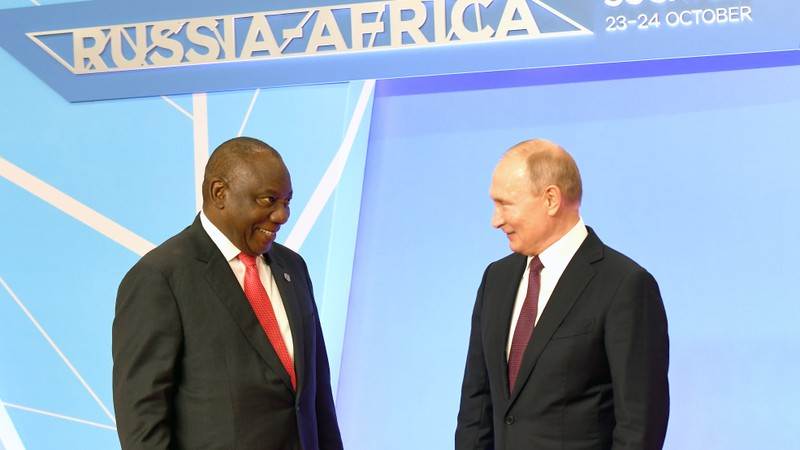
In July African leaders will be heading to St Petersburg, Russia, to attend the second Russia- Africa summit. African and Russian leaders will meet and discuss the ways in which they can improve their trade and diplomatic relations. Usually, a key outcome of such a high-level event is to promote the idea of achieving win-win outcomes for all parties involved. It could be argued that such high-level platforms provide an opportunity for African leaders to express and assert their agency.
However, despite Africa’s participation in similar initiatives with countries such as China, India, Turkey, US, Japan among others, the continent still lacks a coordinated strategy for engaging its external partners.
The President of Kenya William Ruto made a comment during the Mo Ibrahim Governance Conversation that future summits will not be conducted in the same manner as in the past. He observed that it was not a wise use of resources for all 54 heads of state and governments in Africa to attend such summits and “meet one gentleman from elsewhere”. Ruto is of the opinion that Africa will not be able to make an impact on the global stage unless the continent is able to speak with one voice. This development echoes the need to recognise how African leaders are perceived and treated, how Africa is perceived and treated as well as the history of the outcomes of such summits measured against what the AU has set as an agenda.



The decision to participate in these summits lies within the discretion of African leaders.
However, it is imperative for the continent to prioritise the alignment of these summits with African interests. External partners are clear about what they want from Africa, but Africa is yet to establish a clear understanding of the benefits it seeks to derive from these partnerships. We argue that the African Union (AU) must take the lead in drafting a strategy to engage with external partners. But how can the AU ensure that Africa achieves win-win outcomes in these forums?

At the core of AU’s agreed vision and strategy would be the realisation of the ends of the “Agenda 2063: The Africa we want” affirmation. The AU development agenda sets out clear projects and lays out what Africa needs for its advancement. A coordinated strategy is useful to focus collective efforts toward these development goals and aide in discussions for country specific needs according to country specific conditions, geographic region and otherwise. Also at the core of this vision is a need to develop a regional value chain to not only withstand global supply chain shocks such as inadequate supply of vaccines during the Covid-19 pandemic, but also to advance Africa’s general contribution to the global supply of goods.
There is a growing recognition among African stakeholders of the necessity to delegate the responsibility of leading African affairs on the global stage to the AU. The proposed Paul Kagame reforms, as referenced by Ruto, suggest the formation of a consolidated African delegation for the purpose of representing the continent in summits. This delegation would consist of the former, outgoing, and incoming chairpersons of the AU, the chairperson of the African Union Commission (AUC), and the chairs of Regional Economic Communities (RECs). We argue that there are several benefits in developing a continent-wide strategy for engaging external partners.
To begin with, the implementation of a well-coordinated strategy will augment the solidarity and coherence of Africa, thereby guaranteeing that African countries speak with one voice in their interactions with external partners. The strategy that is currently being implemented is one that serves to promote the interests of individual African countries to the detriment of collective interests. African leaders prioritise their respective national interests, which is a justifiable stance given the varying levels of development across African countries. Such an approach may confer a comparative advantage to external partners during negotiations, thereby undermining African agency in international diplomacy.
Secondly, African countries can benefit from aligning their efforts and pooling resources together. This can help them avoid duplicating efforts and fragmenting their approach. For instance, failed negotiations with the AU on an issue that is being addressed through bilateral arrangements elsewhere can undermine set goals and agreements. Collaborative efforts and resource pooling have the potential to expedite the process of African integration, particularly the logistics required for the implementation of the African Continental Free Trade Area (AfCFTA).
Thirdly, implementing a well-coordinated strategy over a long period of time can enhance the sustainability of external partnerships. This could allow African countries to identify specific areas where external aid can have a significant impact. By creating programmes that align with their own goals and values, African countries can maximise the benefits of such aid.
Fourthly, implementing a well-coordinated strategy could enhance Africa’s ability to negotiate effectively. By working together, African countries have the potential to increase their leverage and negotiate more advantageous deals with external partners. By adopting this approach, African countries could enhance their prospects of obtaining improved access to financial resources, technological advancements, and market opportunities. Furthermore, it may afford them increased agency in determining the terms of engagement. Finally, implementing a well-coordinated strategy can facilitate the advancement of regional integration.
Through collaborative efforts, African nations can establish regional infrastructure, foster trade and investment, and exchange best practices and resources. As African leaders prepare for the 2023 Russia-Africa summit, the AU and its member states should approach these deliberations with a well-defined strategy aimed at bolstering Africa’s position.
At the very least, they must go into these discussions having a clear understanding of what Africa wants from their partnership with Russia to ensure genuinely mutually beneficial outcomes and enhance Africa’s voice in global affairs. The AU and its member states must be committed to implementing institutional reforms. This is necessary to enhance their ability to address continental issues in a more effective and relevant manner. Historically, Africa’s partnerships have exhibited an asymmetrical nature, with external partners having the upper-hand. However, it is now imperative to establish mutually advantageous engagements, wherein the AU and its member states engage with external partners on terms that prioritise their own interests, rather than being subordinate to external partners.
Hellen Adogo is a Researcher at the Institute for Pan-African Thought and Conversation (IPATC) at the University of Johannesburg and Mikatekiso Kubayi is a Researcher at the Institute for Global Dialogue associated with UNISA, a Research Fellow at IPATC and is also a doctoral candidate at UJ.