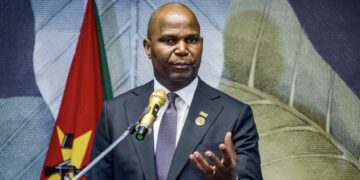
World Bank President Ajay Banga has underscored the critical role of electrification in realising Africa’s demographic potential, announcing an ambitious $85 billion initiative to bring electricity to 300 million people by 2030. The programme, known as Mission 300, is spearheaded by the World Bank in collaboration with the International Monetary Fund (IMF), the African Development Bank (AfDB), and private investors.
With almost half of sub-Saharan Africa’s population—approximately 570 million people—lacking access to electricity, Banga highlighted how this shortfall hampers education, employment, and productivity. Speaking at the Mission 300 Africa Energy Summit in Dar es Salaam, he emphasised that without adequate investment in energy infrastructure, Africa’s vast youth population could face severe socio-economic challenges in the coming decades.
“Everyone talks about [Africa] as a demographic dividend, which it will be if you give them clean air, clean water, health, education, and eventually a job,” Banga stated. “If not, you’ll have young people coming out the pipe in 10, 12, 15 years who will have no hope, no optimism, who will be socially challenged.”
The Mission 300 initiative is structured as a results-based funding model, wherein African governments will receive grants and concessional financing in exchange for implementing regulatory reforms conducive to private sector investment. This approach, according to Banga, is designed to ensure accountability and long-term sustainability.



“It’s a pay-for-results kind of thing,” he explained. “We can say you’ve committed to these things, you make the change, here’s the support. You don’t make the change, the money’s not coming.”
The summit featured presentations from multiple African nations, including Nigeria and the Democratic Republic of Congo, outlining the scale of investment required. Estimates suggest that expanding the power grid, deploying off-grid technologies such as mini-grids, and scaling up solar home systems will necessitate over $115 billion in funding. A further ten to twelve African nations are expected to develop their own electrification strategies within six months.
On Tuesday, more than 20 African heads of state are expected to endorse Mission 300, while French President Emmanuel Macron is anticipated to announce a financial contribution to the initiative. According to Rémy Rioux, head of the French development bank Agence Française de Développement, France is keen to support Africa’s electrification agenda as part of broader global development goals.
The funding structure of Mission 300 is expected to be multi-layered. Banga indicated that the World Bank’s International Development Association (IDA) could provide between $30 billion and $40 billion, with the IMF contributing an additional $10 billion to $20 billion. The AfDB may allocate between $8 billion and $10 billion, while private investors are projected to contribute a further $10 billion to $15 billion. Other multilateral development banks and funds have already committed approximately $5 billion, according to AfDB President Akinwumi Adesina.
This financial commitment significantly exceeds earlier estimates, which had suggested a total of $40 billion in funding, including $25 billion from the World Bank alone. Additionally, the International Finance Corporation (IFC), the World Bank’s private sector investment arm, is set to channel funds into companies focused on expanding electricity access, with the aim of leveraging further private investment.

Despite concerns over potential shifts in US foreign aid policy under a new administration, Banga expressed confidence that Mission 300 would not be derailed. The United States, as the largest shareholder in the World Bank, has historically played a key role in financing global development projects. Addressing the possibility of declining US support, Banga remained optimistic:
“I hope not,” he remarked when asked about the programme’s future under changing US leadership. “It reduces illegal migration. If it keeps people happy in their countries, it creates marketplaces for your products and your intellectual property and your technology.”
The electrification drive aligns with Africa’s broader economic development strategy, which seeks to harness the continent’s abundant renewable energy potential. With a youthful and rapidly growing population, access to reliable electricity is widely regarded as a fundamental enabler of industrialisation, digital transformation, and socio-economic advancement.
As Africa continues to position itself as a major global economic player, initiatives such as Mission 300 could serve as a catalyst for sustained growth and development, ensuring that millions gain access to the fundamental resources needed to thrive in the modern economy.