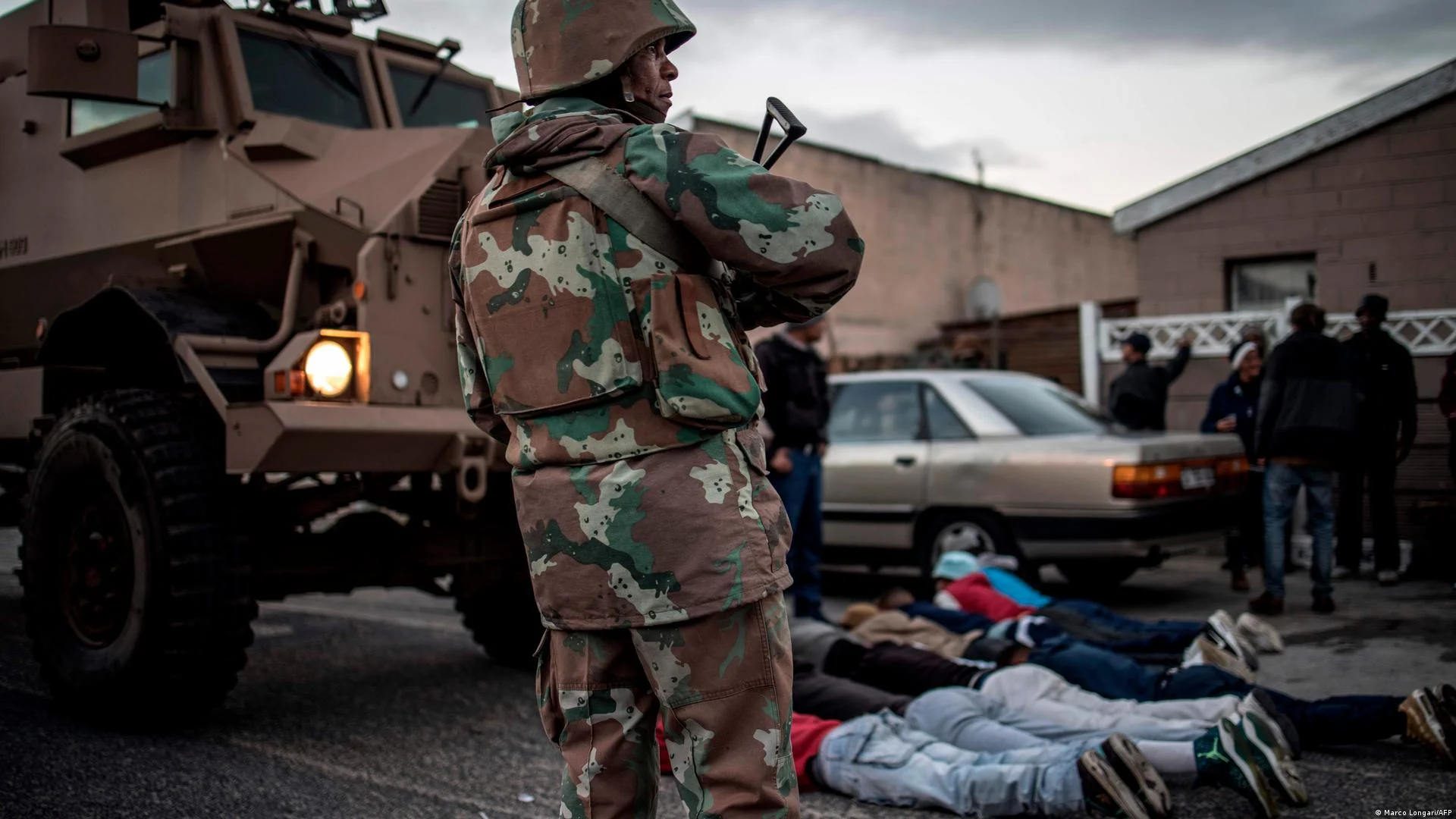
South Africa has once again turned to the South African National Defence Force to support the South African Police Service in confronting organised crime and persistent violent offending. The decision, announced by President Cyril Ramaphosa during his State of the Nation Address on 12 February 2026, follows sustained public concern over levels of homicide, gang violence, kidnapping and sexual offences. According to the most recent official statistics released by the South African Police Service, 26,232 murders were recorded during the 2023 to 2024 financial year, equivalent to a homicide rate of approximately 42 per 100,000 people. Early quarterly data for 2025 indicate a decline in murder and certain categories of serious assault, though violent crime remains concentrated in parts of the Western Cape, Eastern Cape, KwaZulu Natal and Gauteng.
The presidency has stated that the deployment will comply with section 201 of the Constitution, which requires written notification to Parliament when the defence force is deployed domestically. The stated objective is to reinforce policing capacity in gang affected communities, particularly in the Cape Flats, and in areas affected by illegal mining and organised criminal networks in Gauteng. The initiative forms part of a broader security package that includes the recruitment of 5,500 additional police officers and enhancements to intelligence coordination.
The use of soldiers in support of civilian policing is not without precedent in democratic South Africa. The defence force was deployed during the July 2021 unrest and previously during the COVID 19 national state of disaster. Scholarly analysis suggests that such deployments are often framed as temporary stabilisation measures rather than permanent shifts in civil military relations. Esterhuyse observes that domestic deployment in a constitutional democracy requires careful balancing between security imperatives and civil oversight, warning that repeated use may normalise exceptional measures within routine governance structures. Similarly, Montesh and Basdeo argue that while the defence force may offer logistical and deterrent capacity, its institutional design is not optimised for long term community policing functions.




A growing body of African scholarship situates violent crime within broader structural conditions. Stuurman links patterns of militarised policing to enduring social inequality, while Lamb highlights how spatial inequality inherited from apartheid urban planning continues to shape concentrations of violence in cities such as Cape Town. Cock’s earlier work on militarism in post apartheid South Africa underscores how security institutions have undergone transformation yet remain embedded within deeply unequal socio economic contexts. Empirical evaluation of the 2019 army deployment to gang affected precincts in the Cape Flats by Cano, Kriegler, Scott and Ntshekisa found limited and localised effects on homicide rates, suggesting that military presence alone does not address the drivers of gang economies.
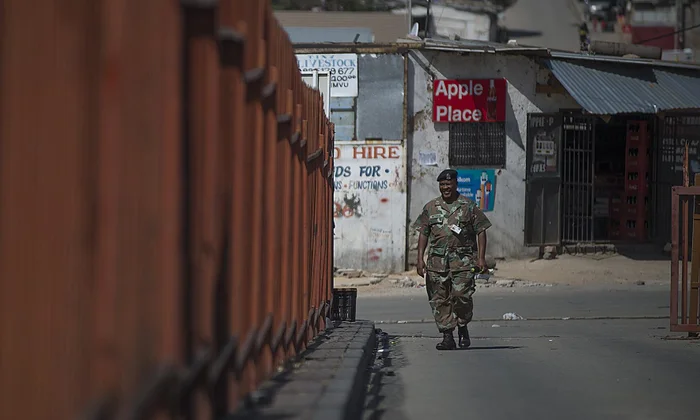
South Africa remains one of the most unequal societies globally, as measured by the Gini coefficient reported by the World Bank. Analysts including Evans and De Jager emphasise that inequality, youth unemployment and fragile local governance structures interact with illicit markets, including drug trafficking and illegal mining. Rotberg and Mills situate organised crime in Southern Africa within transnational trade routes and regional political economies, arguing that effective responses require coordination beyond national borders. From a continental perspective, the Institute for Security Studies has consistently noted that organised crime networks in Southern Africa intersect with migration corridors, informal economies and cross border smuggling, reinforcing the need for cooperative regional security frameworks within the Southern African Development Community.
Public confidence in the police service has been affected by allegations of corruption and political interference. The establishment of a judicial commission of inquiry in 2025 following claims by senior police officials reflects ongoing institutional tensions. McMichael’s examination of police culture and Lamb’s work on policing boundaries both caution that increasing force capacity without parallel reforms in accountability may not produce sustainable improvements in public safety. O Shea and colleagues, in comparative research on serious and organised crime, argue that hybrid police military approaches can disrupt specific networks but require transparent mandates, civilian oversight and time bound objectives to avoid mission creep.
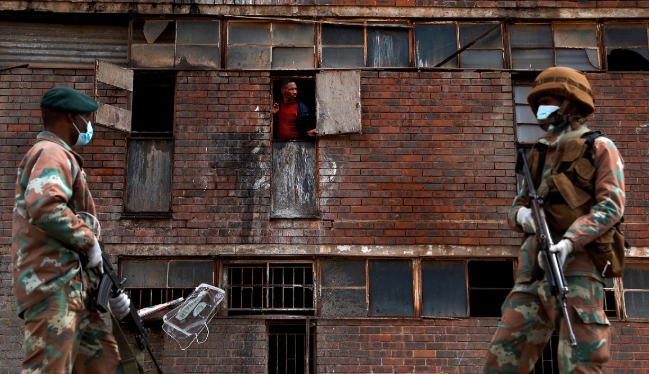
Within communities most affected by gang violence, responses to the announcement have been varied. Some civic organisations have welcomed the additional security presence, citing fears for children and local businesses. Others have expressed concern regarding the symbolism of soldiers patrolling neighbourhoods historically marginalised by state planning. Dube’s legal analysis of peacetime urban operations notes that international humanitarian law does not apply in such contexts, placing heightened emphasis on domestic constitutional safeguards and proportionality.
The present deployment therefore unfolds within a layered historical and regional context. South Africa’s democratic settlement sought to demilitarise public life while reforming security institutions to reflect constitutional values. At the same time, the country continues to confront high levels of interpersonal violence that have deep social roots. An African centred understanding recognises both the lived realities of communities demanding safety and the constitutional commitments forged in the transition from apartheid. It also acknowledges that organised crime in Southern Africa cannot be disentangled from continental patterns of inequality, migration, informal trade and global demand for illicit commodities.
Whether the current intervention yields measurable and sustained reductions in organised crime will depend on operational clarity, community engagement, regional cooperation and meaningful reform within policing institutions. As previous research indicates, security responses that are not accompanied by socio economic inclusion and institutional accountability risk offering only temporary relief. South Africa’s experience will be closely observed across the continent, where governments face similar pressures to reconcile democratic governance with urgent public safety concerns.