Friday, April 24, 2026
  • Login
The Southern African Times
  • Home
  • Southern Africa
  • Business
    • African Start ups
    • African Continental Free Trade Area
  • Technology
    • Lifestyle
      • Health
      • Culture
      • Food and Drink
      • Entertainment
  • Opinion
  • Sports
  • SAT Jobs
    • Events
  • About Us
    • Advertise with Us
    • Contact Us
No Result
View All Result
  • Home
  • Southern Africa
  • Business
    • African Start ups
    • African Continental Free Trade Area
  • Technology
    • Lifestyle
      • Health
      • Culture
      • Food and Drink
      • Entertainment
  • Opinion
  • Sports
  • SAT Jobs
    • Events
  • About Us
    • Advertise with Us
    • Contact Us
No Result
View All Result
The Southern African Times
No Result
View All Result
Home Opinion

Why the WTO dispute on U.S. export restrictions matters?

by SAT Reporter
December 29, 2022
in Opinion
0
Why the WTO dispute on U.S. export restrictions matters?

China has recently initiated a dispute in the World Trade Organisation (WTO) challenging the legality of the U.S. export controls that require prior government approval for the exports of advanced computing semiconductor chips, supercomputer items, and related technologies. This case will present an important opportunity for the WTO to clarify the borderline between the international trade commitments and permissible security-related measures.

Traditionally, the export controls were agreed upon in the international treaties concerning non-proliferation of nuclear, biological, and chemical weapons. The nations have been building consensus on the export controls over conventional weapons and ammunition by adopting the detailed lists of specific dual use (for civil and military purposes) products.

Nonetheless, starting with the passage of the Export Control Reform Act in 2018 under the Donald Trump administration, the U.S. deviated from the aforementioned consensus – building efforts and introduced the possibility for adopting extensive export controls covering not only military but also commercial products and technologies under the umbrella of “economic security.” Consequently, the current U.S. export control lists contain more than 2,800 items that are subjected to prior approvals.


ADVERTISEMENT

Furthermore, the U.S. restrictions also apply extraterritorially and should be complied with by the foreign companies using U.S. technologies subjected to export controls. Thus, a European chipmaker that uses designated U.S. technologies in its manufacturing process and wishes to sell the resulting products to China would require permission from U.S. authorities.
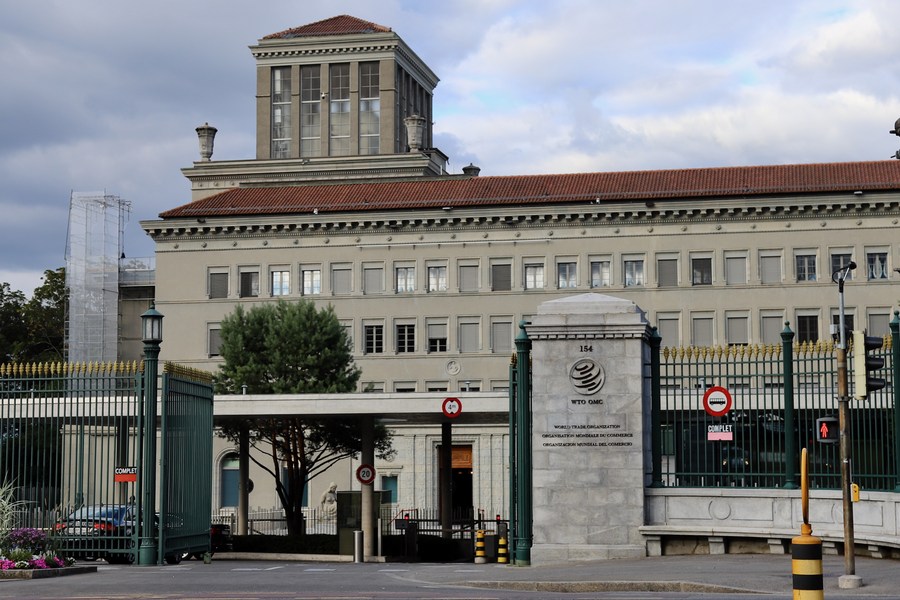
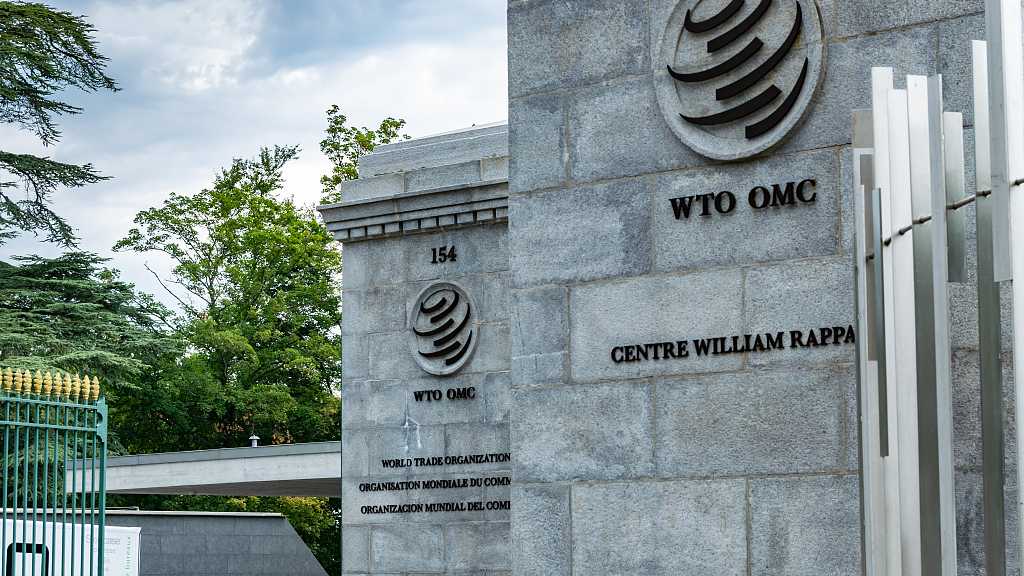
An exterior view of the World Trade Organization (WTO) headquarters in Geneva, Switzerland. /Xinhua

In its request for consultations in the WTO, China argued that instead of using export controls to contribute to world peace and security, the U.S. is using export controls to protect “its leadership in science, technology, engineering and manufacturing sectors.” China has been supportive of the WTO and its multilateral trade governance framework. The WTO rules allow its members to deviate from their international trade commitments using the “security exception” that justifies trade restrictions when they are related to the nation’s “essential security interests.” The WTO rules also require that the security-related restrictions should be only imposed at times of “war or other emergency in international relations.”

In two recent disputes against the U.S. brought by China to the WTO, the U.S. has failed to prove that its additional tariffs on steel and aluminum products from China and special marking requirements for products originating from the Hong Kong Special Administrative Region were imposed during an emergency in international relations.

As a result, the WTO panels required the U.S. to remove these non-complying measures. Nevertheless, U.S. Trade Representative Spokesperson Adam Hodge labeled both panel reports as “flawed interpretation” and rejected the WTO competence to review the issues of national security in the WTO dispute settlement. Hodge said his government will not comply with the findings of the report and will not remove the non-complying trade restrictions.

Accordingly, the case brought by China in relation to the U.S. export controls will serve as an important opportunity for the WTO to clarify the scope of permissible restrictions that can be imposed on the exported goods and technologies on security grounds. The functioning of the WTO dispute settlement mechanism is paralyzed due to the U.S. boycotting the appointment of new members of its Appellate Body.

Unlike China, Australia, Brazil, Canada, the European Union, and other countries, the U.S. has not joined the multi-party interim appeal arbitration arrangement that allows participating WTO members to finalize the settlement of their trade disputes. Even though the U.S. may follow its tactics of not complying with the WTO panel reports, the case brought by China will be a critical precedent supporting the predictability of the multilateral trade governance under the WTO.



Alexandr Svetlicinii is Associate Professor of Law at the University of Macau, where he also serves as program coordinator for the Master of Law in International Business Law. The article reflects the author’s opinions and not necessarily the views of The Southern African Times. 

Previous Post

Botswana to Host 2023 US-Africa Business Summit

Next Post

UK NHS Trust trials Helper Robots created by Zimbabwean born Inventor

SAT Reporter

Related Posts

Feeding the Future: Why AI and Agriculture Must Work Together
Opinion

Feeding the Future: Why AI and Agriculture Must Work Together

by Sonny Iroche
April 19, 2026
Julius Malema Sentenced to Five Years in Firearm discharge case
Opinion

Malema’s Sentence: A Test of South Africa’s Rule of Law in a Polarized Age

by Kundai Vambe
April 18, 2026
Zambia’s Copper and the Social Cost of Extraction Deals
The Editorial Board

Zambia’s Copper and the Social Cost of Extraction Deals

by Nothando Ndlovu
April 17, 2026
Op-Ed by Yemi Osinbajo, Former Vice President of Nigeria: Africa Is Losing the Iran War
Opinion

Op-Ed by Yemi Osinbajo, Former Vice President of Nigeria: Africa Is Losing the Iran War

by SAT Reporter
April 13, 2026
A Superpower Under Strain: Iran and the Limits of American Power
Opinion

A Superpower Under Strain: Iran and the Limits of American Power

by Kundai Vambe
April 8, 2026
Next Post
UK NHS Trust trials Helper Robots created by Zimbabwean born Inventor

UK NHS Trust trials Helper Robots created by Zimbabwean born Inventor

Browse by Category

  • Africa AI
  • African Continental Free Trade Area
  • African Debt
  • African Start ups
  • Agriculture
  • AI Africa
  • Algeria
  • All News
  • Analysis
  • Angola
  • Arts / Culture
  • Asia
  • Botswana
  • BOTSWANA
  • BREAKING NEWS
  • BRICS
  • Burkina Faso
  • Burundi
  • Business
  • Business
  • Business Wire
  • Cameroon
  • Central Africa
  • Chad
  • China
  • Climate Change
  • Climate Changev
  • Community
  • Congo Republic
  • Conservation
  • Côte d’Ivoire
  • COVID 19
  • CRYPTOCURRENCY
  • Culture
  • Democratic Republic of Congo
  • Diplomacy
  • Eastern Africa
  • Economic Development
  • Economy
  • Education
  • Egypt
  • Elections 2024
  • Energy
  • Entertainment
  • Environment
  • Eritrea
  • Ethiopia
  • Europe
  • Fashion
  • Feature
  • Finance
  • Financial Inclusion
  • Food
  • Food and Drink
  • Foods
  • GABON
  • Ghana
  • Global
  • Global Africa
  • Guinea
  • Health
  • Immigration
  • in Southern Africa
  • International news
  • International Relations
  • Ivory Coast
  • Just In
  • Kenya
  • Lesotho
  • Libya
  • Life Style
  • Lifestyle
  • Literature
  • Malawi
  • Malawi
  • Mali
  • Markets
  • Mauritius
  • Middle East
  • Mining in Africa
  • Morocco
  • Mozambique
  • Namibia
  • Niger
  • niger
  • Nigeria
  • North Africa
  • North-Eastern Africa
  • Obituaries
  • Obituary
  • Opinion
  • PARTNER CONTENT
  • Politics
  • Property
  • Racism
  • Rwanda
  • Rwanda
  • SADC
  • SAT Interviews
  • SAT Investigation
  • SAT Jobs
  • Saudi Arabia
  • Senegal
  • Seychelles
  • Somaliland
  • South Africa
  • South Sudan
  • Sports
  • Startup Africa
  • STOCK EXCHANGE
  • Sudan
  • Sustainability
  • Sustainablity
  • Tanzania
  • Technology
  • Telecommunications
  • The Editorial Board
  • The Power Of She
  • Togo
  • Trade
  • Travel
  • Travel
  • Tunisia
  • Uganda
  • Uncategorized
  • Wealth
  • West Africa
  • World
  • World
  • Zambia
  • ZAMBIA
  • ZIMBABWE
  • Zimbabwe

Browse by Tags

#NewsUpdate #SouthAfrica #SouthernAfricanTimes #TheSouthernAfricanTimes AfCFTA africa African Continental Free Trade Area African development African Development Bank African economies African economy African Union Agriculture Angola Botswana Business China Climate change Cyril Ramaphosa Economic Development economic growth energy transition fiscal policy food security industrialisation Inflation Infrastructure Development International relations Investment Kenya Mozambique Namibia news Nigeria Regional Integration renewable energy Rwanda SADC South Africa Southern Africa sustainable development Tanzania United States Zambia Zimbabwe
ADVERTISEMENT

WHO WE ARE

The Southern African Times is a regional bloc digital newspaper that covers Southern African and world news. The paper also gives a nuanced analysis on news and covers a wide range of reporting which include sports, entertainment, foreign affairs, arts and culture.

Welcome Back!

Login to your account below

Forgotten Password?

Retrieve your password

Please enter your username or email address to reset your password.

Log In

  • Home
  • Southern Africa
  • Business
    • African Start ups
    • African Continental Free Trade Area
  • Technology
    • Lifestyle
      • Health
      • Culture
      • Food and Drink
      • Entertainment
  • Opinion
  • Sports
  • SAT Jobs
    • Events
  • About Us
    • Advertise with Us
    • Contact Us
Are you sure want to unlock this post?
Unlock left : 0
Are you sure want to cancel subscription?