Monday, June 1, 2026
  • Login
The Southern African Times
  • Home
  • Southern Africa
  • Business
    • African Start ups
    • African Continental Free Trade Area
  • Technology
    • Lifestyle
      • Health
      • Culture
      • Food and Drink
      • Entertainment
  • Opinion
  • Sports
  • SAT Jobs
    • Events
  • About Us
    • Advertise with Us
    • Contact Us
No Result
View All Result
  • Home
  • Southern Africa
  • Business
    • African Start ups
    • African Continental Free Trade Area
  • Technology
    • Lifestyle
      • Health
      • Culture
      • Food and Drink
      • Entertainment
  • Opinion
  • Sports
  • SAT Jobs
    • Events
  • About Us
    • Advertise with Us
    • Contact Us
No Result
View All Result
The Southern African Times
No Result
View All Result
Home Opinion

Why did people rejoice when Facebook went down?

by SAT Reporter
October 6, 2021
in Opinion
0
Why did people rejoice when Facebook went down?

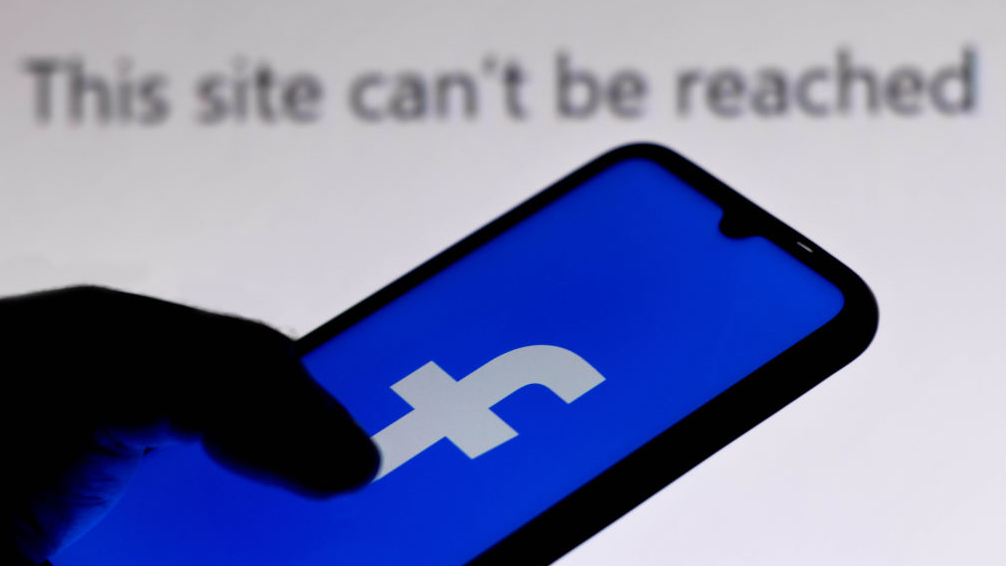
Facebook has nearly 3 billion monthly users, making it the most popular social media platform. Despite this popularity, its recent outage, along with that of its other apps, such as Instagram and WhatsApp, which also went offline for six hours, was greeted with a distinct tinge of celebratory schadenfreude.

Indeed, “karma” is a popular word that has been used to describe this recent event, and no wonder, considering that Facebook has long come under the spotlight from its users and governments alike. It has been blamed for drawing people in with mindless and addictive clickbait, which is considered not just a waste of time but unhealthy too. Recently, whistleblower Frances Haugen released thousands of pages of internal documents to regulators and claimed that Facebook is aware of how its platforms are used to spread hate, violence and misinformation. Then, on September 30, a Senate hearing listened to Facebook’s Global Head of Safety Antigone Davis’ testimony on Instagram’s negative impact on children.

On the political front, Facebook has been regularly accused of being a tool for vested liberal interests. In the U.S., former President Donald Trump was banned from the platform indefinitely. Even more sinister is that Facebook has been accused of fermenting revolution abroad, with the Arab Spring being one case in point.


ADVERTISEMENT

Some may naively point out that Facebook is just a neutral tool for communication. However, we know today that the algorithm for the Facebook newsfeed is centrally controlled in the U.S., and it is malleable to hostile non-sovereign-state forces. Also, with the advent of “sock puppets,” which are fake online accounts, a false narrative can be manufactured to push fringe views into the limelight.

If Facebook can be used as a tool to warp democracy in the U.S., where it is hosted, then governments and societies outside the U.S., who may have far less power to regulate its content, must be wary of this platform, too. Indeed, China has long been aware of this. It was Facebook’s refusal to remove terrorist content under the guise of free speech that led to its ban within China. While this may have been inconvenient, for some of its Chinese users, Chinese tech companies stepped up their game and responded by offering services that surpass Facebook.
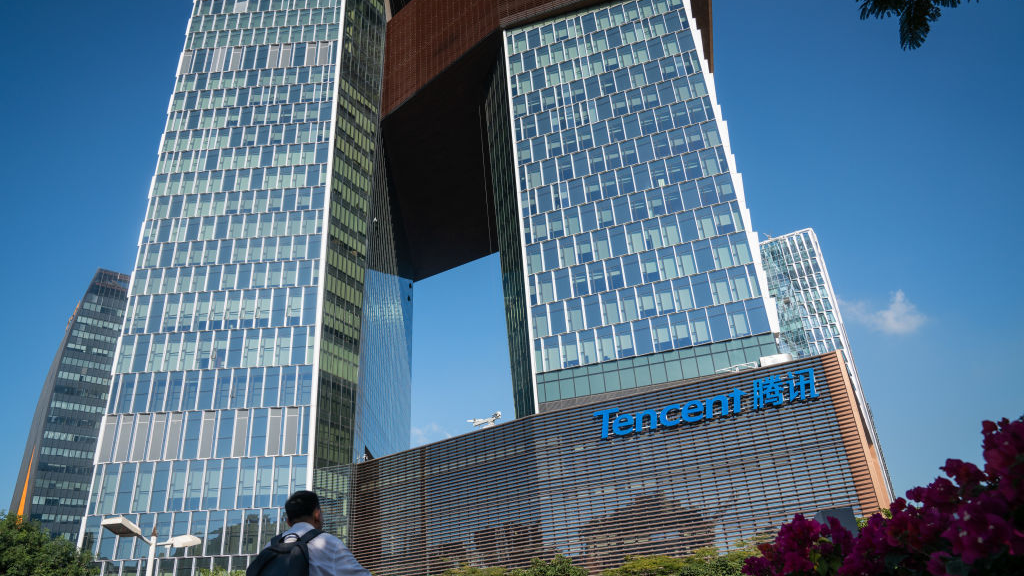
The Tencent Binhai Mansion in Shenzhen, south China, November 19, 2020. /Getty

However, what about countries that are not on the technological cutting edge and cannot provide alternatives? Some, like Australia, can regulate more, but they are nevertheless, without their own substitute, at the mercy of the U.S., or at least U.S. tech capital, to oversee their sovereign information space. Of course, considering the recent birth of AUKUS and the fact that the Anglosphere states share the same transnational liberal elite, the use of the term “sovereign information space” is perhaps redundant.

On the other hand, Europe isn’t as tied up within this circle, and in the future, they might want to make their own independent policy. The problem is that even high-tech European states currently have no alternative to U.S.-dominated online media platforms. Furthermore, being firmly co-opted into the view that the use of Facebook and other U.S. foreign-owned media is an expression of free speech rather than foreign control, it won’t be easy to create independent European alternatives. Simply put, Europeans, due to their own liberal dogma, are imprisoned in a luxurious cage manufactured in the United States.

Recognizing this fact, China’s governing system sets itself apart by seeing cutting-edge technology as not only crucial for protecting its independent information space and creating jobs but also as imperative for transitioning from one historical epoch to another. China’s goal of transforming itself into a great modern socialist society by 2049 is intimately and pragmatically tied up with technological advancements that have also heralded previous momentous political and economic shifts.

Armed with this knowledge, one realizes why Chinese tech, and the governing of its tech industries alike, is treated with such derision from the Facebook liberal clique who disdains socialism. For example, China’s recently imposed limits on its online gaming industry and the reigning in of its big-tech are two instances where China has sought to protect the health of its citizens and bring the class interests of big tech in line with the democratic needs of society as a whole. Yet these measures, in even the most “enlightened” pockets of the Western business media, hardly went over well.

These aforementioned contradictions run all the way down to Western consumers. They recognize that an oligarchic tech class holds undemocratic sway over society. They complain that their children are addicted to clickbait and are zombified by online gaming. They also know that the extraction of wealth, when it comes to sites like Facebook, derives from their own labor, for it is they, the consumers, who are also the product.

Despite all this, they are mindlessly indoctrinated to believe that the measures taken in China, which Westerners would themselves welcome at home, are malevolent. Ironically then, for those who would like to discipline the unfettered power of tech capital, the serendipity of October 4, the day of the Facebook outage, was a day of celebration. In contrast, in China, where tech must always work for the wider needs of society, it was just another day.

Keith Lamb is a University of Oxford graduate with an MSc degree in Contemporary Chinese Studies. His primary research interests are China’s international relations and “socialism with Chinese characteristics.” 

Previous Post

Let us change the narrative on Africa in the United States – AfDB President

Next Post

Agricultural development in China: Are there lessons for Africa?

SAT Reporter

Related Posts

As Cuba Suffocates Under Siege, Why Is Africa Silent?
Opinion

As Cuba Suffocates Under Siege, Why Is Africa Silent?

by The Editorial Board
June 1, 2026
AI Needs Oversight, Not Faith: Lessons from South Africa’s Policy Reversal
Opinion

AI Needs Oversight, Not Faith: Lessons from South Africa’s Policy Reversal

by Sonny Iroche
May 27, 2026
Africa Day 2026 | The Century Is Quietly Turning Towards Africa
The Editorial Board

Africa Day 2026 | The Century Is Quietly Turning Towards Africa

by The Editorial Board
May 25, 2026
How China-Africa Cooperation Can Accelerate Africa’s Industrialisation
Opinion

How China-Africa Cooperation Can Accelerate Africa’s Industrialisation

by SAT Reporter
May 25, 2026
France Is Trying to Get New Stripes in Africa – but will it work?
Opinion

France Is Trying to Get New Stripes in Africa – but will it work?

by Development Reimagined
May 14, 2026
Next Post
Agricultural development in China: Are there lessons for Africa?

Agricultural development in China: Are there lessons for Africa?

Browse by Category

  • Africa AI
  • African Continental Free Trade Area
  • African Debt
  • African Start ups
  • Agriculture
  • AI Africa
  • Algeria
  • All News
  • Analysis
  • Angola
  • Arts / Culture
  • Asia
  • Botswana
  • BOTSWANA
  • BREAKING NEWS
  • BRICS
  • Burkina Faso
  • Burundi
  • Business
  • Business
  • Business Wire
  • Cameroon
  • Central Africa
  • Chad
  • China
  • Climate Change
  • Climate Changev
  • Community
  • Congo Republic
  • Conservation
  • Côte d’Ivoire
  • COVID 19
  • CRYPTOCURRENCY
  • Culture
  • Democratic Republic of Congo
  • Diplomacy
  • Eastern Africa
  • Economic Development
  • Economy
  • Education
  • Egypt
  • Elections 2024
  • Energy
  • Entertainment
  • Environment
  • Eritrea
  • Ethiopia
  • Europe
  • Fashion
  • Feature
  • Finance
  • Financial Inclusion
  • Food
  • Food and Drink
  • Foods
  • GABON
  • Ghana
  • Global
  • Global Africa
  • Guinea
  • Health
  • Humanitarian Aid
  • Immigration
  • in Southern Africa
  • International news
  • International Relations
  • Investment
  • Ivory Coast
  • Just In
  • Kenya
  • Lesotho
  • Libya
  • Life Style
  • Lifestyle
  • Literature
  • Malawi
  • Malawi
  • Mali
  • Markets
  • Mauritius
  • Middle East
  • Mining in Africa
  • Morocco
  • Mozambique
  • Namibia
  • Niger
  • niger
  • Nigeria
  • North Africa
  • North-Eastern Africa
  • Obituaries
  • Obituary
  • Opinion
  • PARTNER CONTENT
  • Politics
  • Property
  • Racism
  • Rwanda
  • Rwanda
  • SADC
  • SAT Interviews
  • SAT Investigation
  • SAT Jobs
  • Saudi Arabia
  • Senegal
  • Seychelles
  • Somaliland
  • South Africa
  • South Sudan
  • Sports
  • Startup Africa
  • STOCK EXCHANGE
  • Sudan
  • Sustainability
  • Sustainablity
  • Tanzania
  • Technology
  • Telecommunications
  • The Editorial Board
  • The Power Of She
  • Togo
  • Trade
  • Travel
  • Travel
  • Tunisia
  • Uganda
  • Uncategorized
  • Wealth
  • West Africa
  • World
  • World
  • ZAMBIA
  • Zambia
  • ZIMBABWE
  • Zimbabwe

Browse by Tags

#NewsUpdate #SouthAfrica #SouthernAfricanTimes #TheSouthernAfricanTimes AfCFTA africa African Continental Free Trade Area African development African Development Bank African economies African economy African Union Agriculture Angola Botswana China Climate change Cyril Ramaphosa Economic Development economic growth energy transition Ghana governance industrialisation Inflation Infrastructure Infrastructure Development International relations Investment Kenya Mozambique Namibia news Nigeria Regional Integration renewable energy Rwanda SADC South Africa Southern Africa sustainable development Tanzania United States Zambia Zimbabwe
ADVERTISEMENT

WHO WE ARE

The Southern African Times is a regional bloc digital newspaper that covers Southern African and world news. The paper also gives a nuanced analysis on news and covers a wide range of reporting which include sports, entertainment, foreign affairs, arts and culture.

Welcome Back!

Login to your account below

Forgotten Password?

Retrieve your password

Please enter your username or email address to reset your password.

Log In
  • Home
  • Southern Africa
  • Business
    • African Start ups
    • African Continental Free Trade Area
  • Technology
    • Lifestyle
      • Health
      • Culture
      • Food and Drink
      • Entertainment
  • Opinion
  • Sports
  • SAT Jobs
    • Events
  • About Us
    • Advertise with Us
    • Contact Us
Not enough quota to unlock this post
Unlock left : 0
Are you sure want to cancel subscription?