
Saturday, November 7, 2026
  • Login
The Southern African Times
  • Home
  • Southern Africa
  • Business
    • African Start ups
    • African Continental Free Trade Area
  • Technology
    • Lifestyle
      • Health
      • Culture
      • Food and Drink
      • Entertainment
  • Opinion
  • Sports
  • SAT Jobs
    • Events
  • About Us
    • Advertise with Us
    • Contact Us
No Result
View All Result
The Southern African Times
No Result
View All Result
Home Analysis

Why Africa Waits While Asia Builds: A Critical Reflection on Kenya’s Developmental Stalemate

by Farai Muvuti
April 25, 2025
in Analysis
0
Why Africa Waits While Asia Builds: A Critical Reflection on Kenya’s Developmental Stalemate

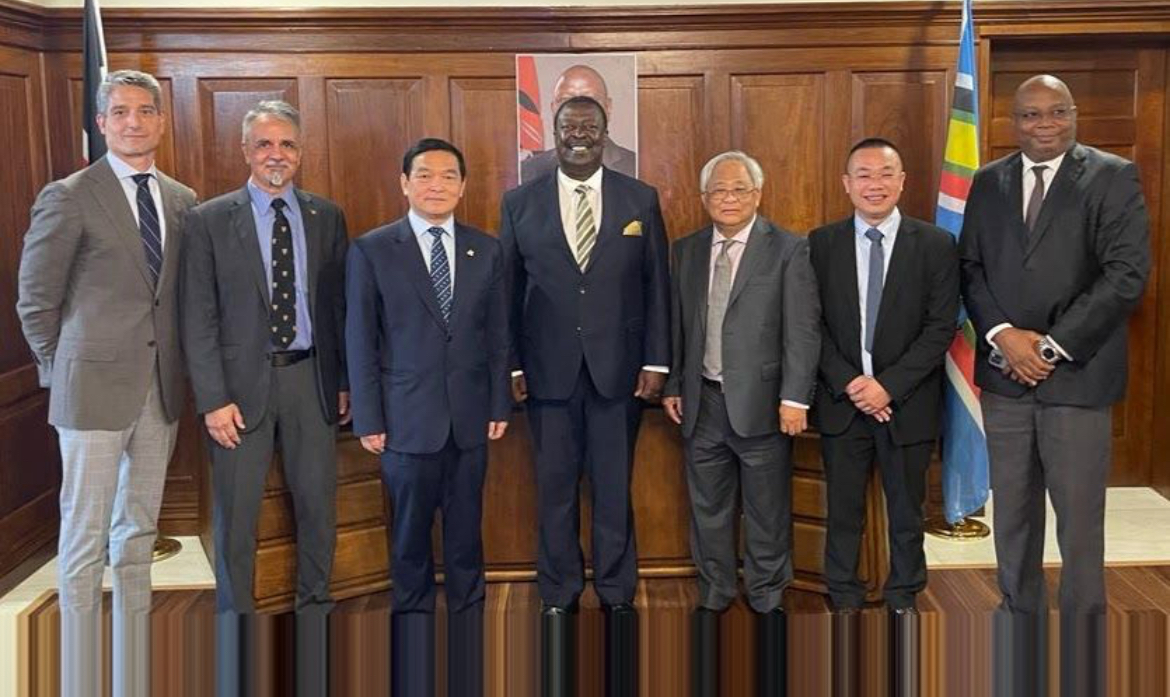
Kenya’s ambitious vision for modernisation remains aspirational rather than transformative. Despite compelling rhetoric from top-level officials, such as President William Ruto and Prime Cabinet Secretary Musalia Mudavadi, a closer look reveals a persistent inertia in execution and an environment that often prioritises political posturing over systemic reform.

Contrary to narratives of insufficient resources, Kenya’s primary deficit lies in operational culture and policy follow-through. As Cilliers et al. (2018) and Hope Sr. (2010) observed, Kenya has long suffered from development bottlenecks not for lack of funding or talent, but due to weak institutional frameworks and short-term political incentives. Execution delays in critical sectors like energy and housing consistently undermine economic progress.

A key indicator is electricity generation. Kenya, with a population of approximately 53 million, currently has an installed power capacity of around 4.8. In contrast, Vietnam, with close to 100 million citizens, has over 70 GW in power capacity, much of it clean and industrially focused. Singapore, a city-state of under six million people, ensures uninterrupted supply through strategic redundancy, despite not producing its own energy.


ADVERTISEMENT

These statistics are not marginal—they underpin economic expansion. Vietnam’s prioritisation of power capacity before industrial zones enabled rapid export-led growth. Kenya’s inconsistent electricity, by contrast, discourages industrialisation and deters long-term foreign direct investment (FDI) (Osano & Koine, 2016; SpringerLink).

Worse still, Kenya often invests in prestige infrastructure disconnected from economic purpose. The Standard Gauge Railway and Nairobi Expressway, though technologically impressive, were rolled out ahead of sufficient export volumes or logistical integration. Analysts argue these investments lack multiplier effects because they are not accompanied by productive ecosystems.

In the tourism sector, inefficiencies remain glaring. Procedural frictions at national parks and limited nightlife infrastructure reduce Kenya’s potential to capture tourism value beyond safari snapshots. Singapore’s seamless tourist logistics and Vietnam’s rapidly expanding cultural tourism market highlight how policy coherence can drive economic returns.

Meanwhile, corruption and regulatory uncertainty further erode investor confidence. Despite public declarations on housing and enterprise reforms, Kenya lacks the institutional guarantees required by international investors—risk mitigation, legal recourse, and consistent policy application.

The success of East Asian states stems not from external largesse but from internal discipline. Leaders in Vietnam and Singapore are known for early starts and long-term planning grounded in data and accountability. Policies are incentive-aligned, and leadership remains immersed in delivery rather than optics.

Kenya’s potential remains undeniable, especially in renewable energy where it leads Africa in geothermal development. Yet the foundation for sustainable economic transformation—consistent execution, energy reliability, legal certainty, and an investor-friendly ethos—remains fragile.

The window of global competitiveness is narrowing. With Asia consolidating its industrial rise and Latin America exploring new partnerships, Africa’s race is not against the West, but against time. To leap forward, Kenya and its neighbours must adopt a new mindset—less theatrical, more technocratic; less reactive, more deliberate.

A microphone makes a speech; a power grid makes a factory. Kenya must prioritise the latter.


Doanh Chau is the President of the Vietnam Gas and Energy Science Group. His insights reflect both professional expertise and personal experience working across Asia and Africa. The reflections herein are offered with respect and constructive intent, particularly towards Kenya and its leadership. The views expressed in this article are those of the author and do not necessarily reflect the official policy or position of The Southern African Times. This article is presented for informational and analytical purposes only.

Tags: Africa-Asia comparisonAfrican infrastructureEast Africa investmenteconomic transformation Africaelectricity generation Kenyaenergy policy AfricaKenya developmentpower sector KenyaSingapore governanceVietnam economic model
Previous Post

Regulatory Barriers Continue to Obstruct South Africa’s Solar Energy Momentum

Next Post

Building a Sustainable and Inclusive Tourism Future: Harry Theoharis’s Vision for Africa

Farai Muvuti

Related Posts

Academic who became one of Britain’s most trusted interpreters of Zimbabwe
Analysis

Academic who became one of Britain’s most trusted interpreters of Zimbabwe

by Farai Muvuti
September 15, 2026
African migration largely remains within Africa
Analysis

African migration largely remains within Africa

by The Editorial Board
September 15, 2026
Africa needs more than new businesses. It needs viable enterprises to survive
Analysis

Africa needs more than new businesses. It needs viable enterprises to survive

by Farai Muvuti
August 10, 2026
Mazowe Dam’s Slow Death Demands More Than Concern
Analysis

Mazowe Dam’s Slow Death Demands More Than Concern

by Farai Muvuti
August 3, 2026
Strait of Hormuz disruption tests Africa’s energy resilience as oil prices rise
Analysis

Strait of Hormuz disruption tests Africa’s energy resilience as oil prices rise

by Farai Muvuti
July 21, 2026
Next Post
Building a Sustainable and Inclusive Tourism Future: Harry Theoharis’s Vision for Africa

Building a Sustainable and Inclusive Tourism Future: Harry Theoharis’s Vision for Africa

Browse by Category

  • Africa AI
  • African Continental Free Trade Area
  • African Debt
  • African Start ups
  • Agriculture
  • AI Africa
  • Algeria
  • All News
  • Analysis
  • Angola
  • Arts / Culture
  • Asia
  • Botswana
  • BOTSWANA
  • BREAKING NEWS
  • BRICS
  • Burkina Faso
  • Burundi
  • Business
  • Business
  • Business Wire
  • Cameroon
  • Central Africa
  • Chad
  • China
  • Climate Change
  • Climate Changev
  • Community
  • Congo Republic
  • Conservation
  • Côte d’Ivoire
  • COVID 19
  • CRYPTOCURRENCY
  • Culture
  • Democratic Republic of Congo
  • Diplomacy
  • Eastern Africa
  • Economic Development
  • Economy
  • Education
  • Egypt
  • Elections 2024
  • Energy
  • Entertainment
  • Environment
  • Eritrea
  • Ethiopia
  • Europe
  • Fashion
  • Feature
  • Finance
  • Financial Inclusion
  • Food
  • Food and Drink
  • Foods
  • GABON
  • Ghana
  • Global
  • Global Africa
  • Guinea
  • Health
  • Humanitarian Aid
  • Immigration
  • in Southern Africa
  • International news
  • International Relations
  • Investment
  • Ivory Coast
  • Just In
  • Kenya
  • Lesotho
  • Libya
  • Life Style
  • Lifestyle
  • Literature
  • Malawi
  • Malawi
  • Mali
  • Markets
  • Mauritius
  • Middle East
  • Mining in Africa
  • Morocco
  • Mozambique
  • Namibia
  • Niger
  • niger
  • Nigeria
  • North Africa
  • North-Eastern Africa
  • Obituaries
  • Obituary
  • Opinion
  • PARTNER CONTENT
  • Politics
  • Property
  • Racism
  • Rwanda
  • Rwanda
  • SADC
  • SAT Interviews
  • SAT Investigation
  • SAT Jobs
  • Saudi Arabia
  • Senegal
  • Seychelles
  • Somaliland
  • South Africa
  • South Sudan
  • Sports
  • Startup Africa
  • STOCK EXCHANGE
  • Sudan
  • Sustainability
  • Sustainablity
  • Tanzania
  • Technology
  • Telecommunications
  • The Editorial Board
  • The Power Of She
  • Togo
  • Trade
  • Travel
  • Travel
  • Tunisia
  • Uganda
  • Uncategorized
  • Wealth
  • West Africa
  • World
  • World
  • Zambia
  • ZAMBIA
  • ZIMBABWE
  • Zimbabwe

Browse by Tags

#NewsUpdate #SouthAfrica #SouthernAfricanTimes #TheSouthernAfricanTimes AfCFTA africa African Continental Free Trade Area African development African economies African economy African Union Agriculture Angola Botswana China Climate change critical minerals Cyril Ramaphosa Economic Development economic growth energy transition industrialisation Inflation Infrastructure Infrastructure Development International relations Investment Kenya Mining Mozambique Namibia news Nigeria Regional Integration renewable energy Rwanda SADC South Africa Southern Africa Southern African Times sustainable development Tanzania west africa Zambia Zimbabwe
ADVERTISEMENT

WHO WE ARE

The Southern African Times is a regional bloc digital newspaper that covers Southern African and world news. The paper also gives a nuanced analysis on news and covers a wide range of reporting which include sports, entertainment, foreign affairs, arts and culture.

Welcome Back!

Login to your account below

Forgotten Password?

Retrieve your password

Please enter your username or email address to reset your password.

Log In
  • Home
  • Southern Africa
  • Business
    • African Start ups
    • African Continental Free Trade Area
  • Technology
    • Lifestyle
      • Health
      • Culture
      • Food and Drink
      • Entertainment
  • Opinion
  • Sports
  • SAT Jobs
    • Events
  • About Us
    • Advertise with Us
    • Contact Us