At the end of June, a historic summit on international solidarity concluded with the Paris Agenda for People and the Planet. A couple days ago, African leaders echoed and amplified this dynamic, by adopting the “Nairobi Declaration” during the first Africa Climate Summit in Kenya.
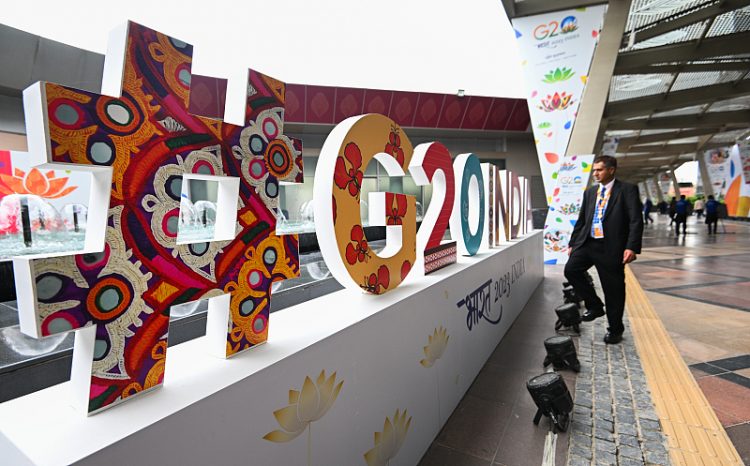
The G20 summit, held in New Delhi on September 9 to 10, is the next major milestone to push this agenda forward, ahead of the 2023 Sustainable Development Goals summit on September 18 to 19, the Summit of the Future on September 2024, and the fourth Financing for Development Conference in 2025.
The Paris summit demonstrated our goal: a world where poverty is eliminated, the health of our planet is preserved, and vulnerable countries are better equipped to face the crises that arise from climate change and conflicts.



To meet these goals, we must leverage all sources of finance, including official development assistance, domestic resources, and private investment. Moreover, we must remain united. To prevent fragmentation, governance of the international financial architecture must be transformed to make it more efficient, more inclusive, more equitable, and fit for today’s world.
Our expectations for the G20 Delhi Summit are high, standing in particular alongside the aspirations of our African partners who met in Nairobi on September 4 to 6 to unify over addressing the global climate challenge.
The African Union’s accession as a fully-fledged member of the G20 recognizes the voice and support that developing countries in all regions, including Latin America and the Caribbean, are due.
G20 membership aside, we have identified four principles that will guide the way forward:
– No country should have to choose between fighting poverty and fighting to protect and preserve the planet.
– Facing different needs, countries may need to pursue diverse transition paths while coming together to meet the goals of the 2015 Paris climate agreement. (This is why we are accelerating Just Energy Transition Partnerships and Country Packages for Forest, Climate and Nature.)
– More financial resources are needed to support vulnerable economies, lifting their populations out of poverty while protecting the planet.
– Meeting today’s global challenges, from achieving net-zero greenhouse-gas emissions to reducing inequality, will depend on scaling up the use of private capital flows to emerging and developing economies.
To back the concrete measures that were agreed or advanced in Paris this past June and in Nairobi this month, the world will need a strong financial stimulus. Fortunately, we have already achieved the target of $100 billion worth of special drawing rights (SDRs, the International Monetary Fund’s unit of account) or equivalent contributions to be channeled to the world’s most vulnerable countries, especially in Africa. We now call for additional pledges. Governments able to provide further SDR rechanneling mechanisms should do so and deliver on their pledges swiftly.
There is now a good likelihood that we will reach our target of $100 billion of climate finance this year as well. We will closely monitor this target and seek to ensure that the most vulnerable countries secure access to their fair share.
But we need to be more efficient in using this capital. Each dollar of lending by multilateral development banks (MDBs) should be complemented by at least one dollar of private finance. On that basis, we expect them to leverage at least an additional $100 billion of private money each year in developing and emerging economies.
We also expect an overall increase of $200 billion in MDBs’ lending capacity over the next ten years by optimizing their balance sheets and enabling them to take more risks. If the reforms to the MDBs now being discussed are implemented, these institutions may need more capital. We reaffirm the importance of carrying out major infrastructure projects in Africa, and we want to continue our collaboration in this area.
We need to improve the timeliness and predictability of the debt restructuring coordination mechanism for low-income countries (the G20’s Common Framework for Debt Treatments) and discuss extending it to lower-middle-income countries. We also need to accelerate debt suspension when needed, including to increase the fiscal space for countries in debt distress.
The Common Framework has already delivered for Chad and Zambia, and it can and must be used elsewhere. The truth is that countries must support each other when one is hit by a disaster. That calls for specific tools to strengthen their resilience, including a climate-crisis clause in debt contracts.
This is no doubt an ambitious agenda. All financial institutions and actors will need to work together to fulfill it. Part of this cooperative effort must involve coordinating the MDBs and public development banks in the “Finance in Common” global network of development banks. Cooperation on the energy transition can be achieved through the Climate Club, which the G7 established to fulfill the Paris climate agreement.
Still, new avenues for international taxation will need to be found, with the G20’s leadership, to meet our climate commitments. Here, governments will need to clamp down on financial flows that escape legitimate tax systems.
Beyond improved tax enforcement, developing countries will need fair partnerships that enable them to generate added value by processing raw materials and critical minerals locally, and that reinforce our commitment to strengthen healthcare and food infrastructure.
An ambitious financial replenishment of the International Development Association, a deepening of the IMF’s Poverty Reduction and Growth Facility, and increased funding for the World Bank and IMF’s other concessional facilities can also play a big part in helping the world’s poorest countries.
Here, it is clear that including climate vulnerability in the World Bank/IMF’s mission will enable more investment in projects that assist poor countries in combating climate change. Moreover, we must create a new international finance facility for forests to pay for ecosystem services. It will also be necessary to mitigate or reduce the risks, in particular foreign-exchange risks, of such investments.
To ensure that commitments translate into concrete achievements, we have set up a joint working committee including international and regional organizations, countries, and civil societies to follow this roadmap.
The G20 meeting must demonstrate that the world’s leaders are ready and serious about delivering on the Paris Agenda to achieve “One Earth, One Family, One Future.”

This commentary is also signed by: Prime Minister Pedro Sánchez (Spain and EU Presidency); President Hakainde Hichilema (Zambia); President William Ruto (Kenya); President Macky Sall (Senegal); Prime Minister Abiy Ahmed (Ethiopia); President Abdel Fattah al-Sisi (Egypt); President Patrice Talon (Benin); and Prime Minister Mia Mottley (Barbados).

Azali Assoumani is President of the Comoros and Chairperson of the African Union. Emmanuel Macron is President of France. Bola Tinubu is President of Nigeria. The article reflects the authors’ opinions and not necessarily the views of The Southern African Times.