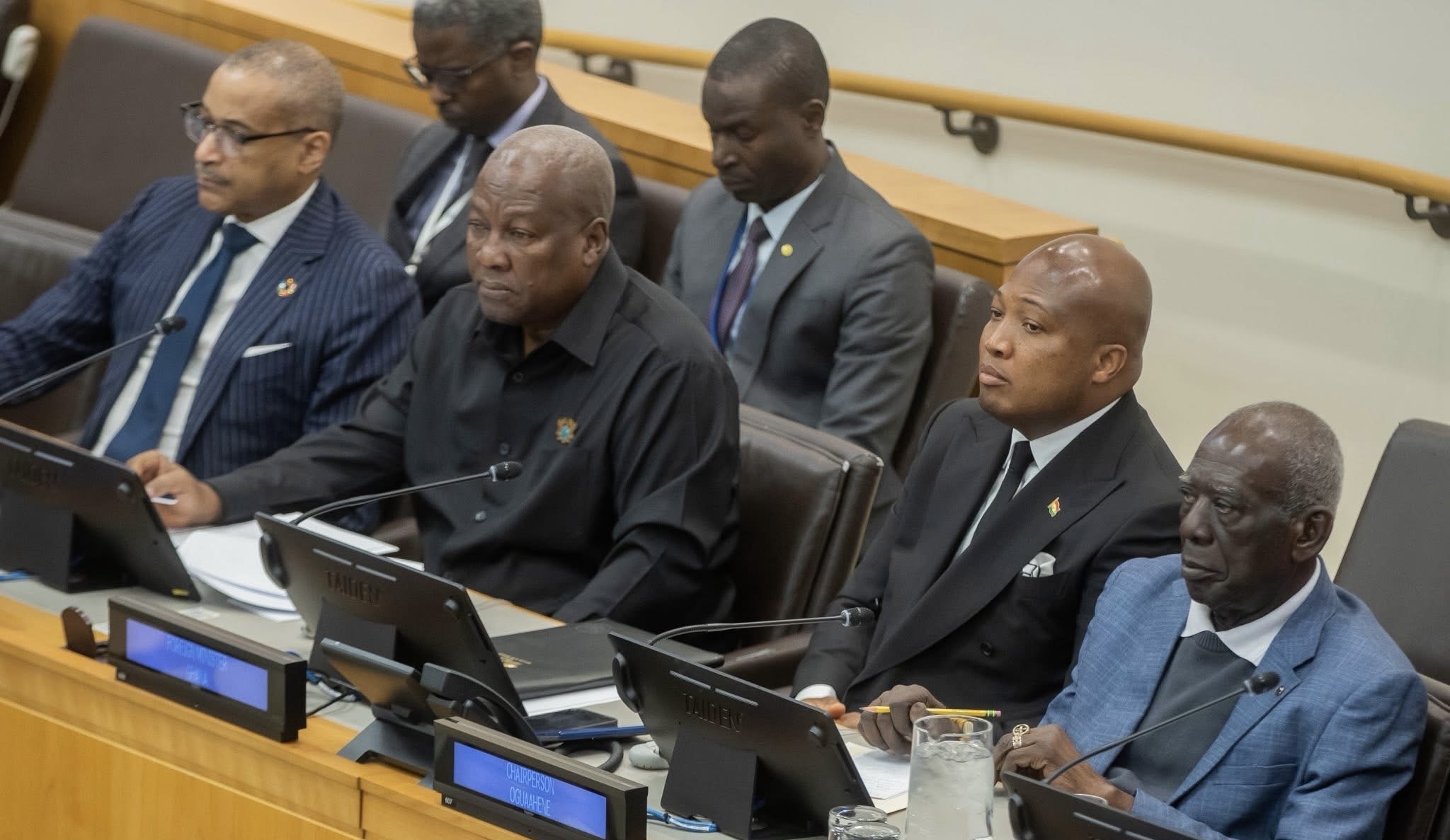
The United Nations General Assembly has adopted a resolution recognising the transatlantic enslavement of Africans as the gravest crime against humanity, marking a significant moment in ongoing global discussions on historical accountability and reparative justice. The motion, introduced by Ghana, was approved with 123 votes in favour, three against, and 52 abstentions, according to reporting by Reuters and corroborated by BBC News.
The resolution is not legally binding but carries considerable political and symbolic weight. It acknowledges the transatlantic slave trade, which forcibly displaced at least 12.5 million Africans between the fifteenth and nineteenth centuries, as a defining historical injustice whose consequences continue to shape contemporary inequalities across societies.
In adopting the measure, the General Assembly calls on member states to engage in dialogue around reparations. This includes consideration of formal apologies, financial compensation, the return of cultural artefacts, and guarantees of non repetition. The resolution reflects a growing convergence among African and Caribbean states, alongside diaspora communities, seeking to articulate a shared framework for addressing historical harm within multilateral institutions.



Support for the resolution was broad across Africa, Latin America and parts of Asia. However, it encountered resistance from several Western states. The United States and Israel voted against the measure, while European Union member states and the United Kingdom abstained. Concerns raised by these states included the potential implications of assigning relative weight to crimes against humanity and the challenges associated with applying contemporary legal standards to historical events.
Statements delivered during the debate reflected differing interpretations of responsibility and justice. Ghana’s representatives framed the resolution as part of a longer trajectory towards recognition and accountability, aligned with African Union efforts to establish a unified continental position on reparations. In contrast, some Western representatives expressed reservations about the framing of historical responsibility in ways that could influence present day resource distribution.

The Secretary General of the United Nations, António Guterres, indicated that deeper engagement would be required to address the enduring legacies of enslavement, noting that acknowledgement alone is insufficient without substantive measures. At present, only a limited number of states have issued formal apologies for their roles in the slave trade, with the Netherlands among the few European countries to have done so.
Across the African continent, the resolution resonates within a broader historical and socio economic context. Scholars and policymakers have long argued that the transatlantic slave trade contributed to structural disruptions whose effects extend beyond the period of enslavement itself, influencing patterns of development, governance and global inequality. At the same time, perspectives within Africa remain diverse, reflecting varying national histories, political priorities and engagements with the global system.
The adoption of this resolution may signal a shift in multilateral discourse, opening space for further institutional mechanisms, including proposals for a dedicated reparations framework or tribunal. Whether such initiatives gain broader international support remains uncertain. Nonetheless, the vote illustrates an evolving global conversation in which African states are asserting greater agency in shaping narratives of history, justice and collective memory within international forums.