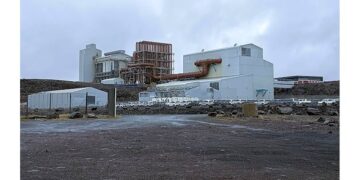
Premier African Minerals Limited, a UK-registered and London-listed mining and natural resource development company, has reached a settlement agreement with J R Goddard Contracting (Private) Limited, a Zimbabwean engineering and construction firm. The agreement concerns the Zulu lithium and tantalum project, located near Fort Rixon in southern Zimbabwe, one of Africa’s most significant lithium exploration sites.
Under the terms of the mutual release and settlement agreement, Premier African Minerals has committed to paying JRG a total of $2.4 million, with an initial $400,000 due by 30 January 2026 and the remainder by November of the same year. The deal comes in the wake of a writ of execution obtained by JRG for the seizure of movable property at the Zulu mine. However, this enforcement action has now been suspended under the terms of the forbearance agreement.
While the suspension provides temporary relief, the agreement does not nullify JRG’s original legal rights. Until full payment is made, the Zimbabwean contractor retains all enforcement entitlements. This arrangement is seen as a means of de-escalating potential disruption to operations at the Zulu project while ensuring that outstanding obligations are resolved in a structured and cooperative manner.



The Zulu mine is part of Zimbabwe’s growing prominence in the global lithium sector. With increasing international demand for lithium due to its role in battery technology and clean energy transition, the southern African nation is positioning itself as a major supplier of this strategic resource. The presence of Premier African Minerals in Zimbabwe highlights a wider trend of external investment in Africa’s critical minerals, which must be carefully navigated to ensure that development is inclusive, equitable and aligned with local interests.
The agreement also reflects the complex relationships that often underpin resource development projects in Africa, where foreign investment intersects with local business networks and community expectations. Premier African Minerals’ decision to enter a structured settlement with JRG may be read as an effort to maintain project momentum and preserve key relationships within Zimbabwe’s mining sector.

As African nations increasingly assert control over the direction and benefits of their resource economies, such agreements point to evolving models of partnership. Rather than viewing African mineral wealth solely through a lens of extraction and export, this situation calls for a deeper consideration of how international companies engage with local firms, infrastructure demands and national development goals.
The Zulu lithium project remains one of the more advanced and closely watched lithium developments in Africa. The manner in which Premier African Minerals and JRG have handled their dispute could serve as a case study in balancing corporate interests with the imperative for fairness, transparency and local accountability in Africa’s mining sector.