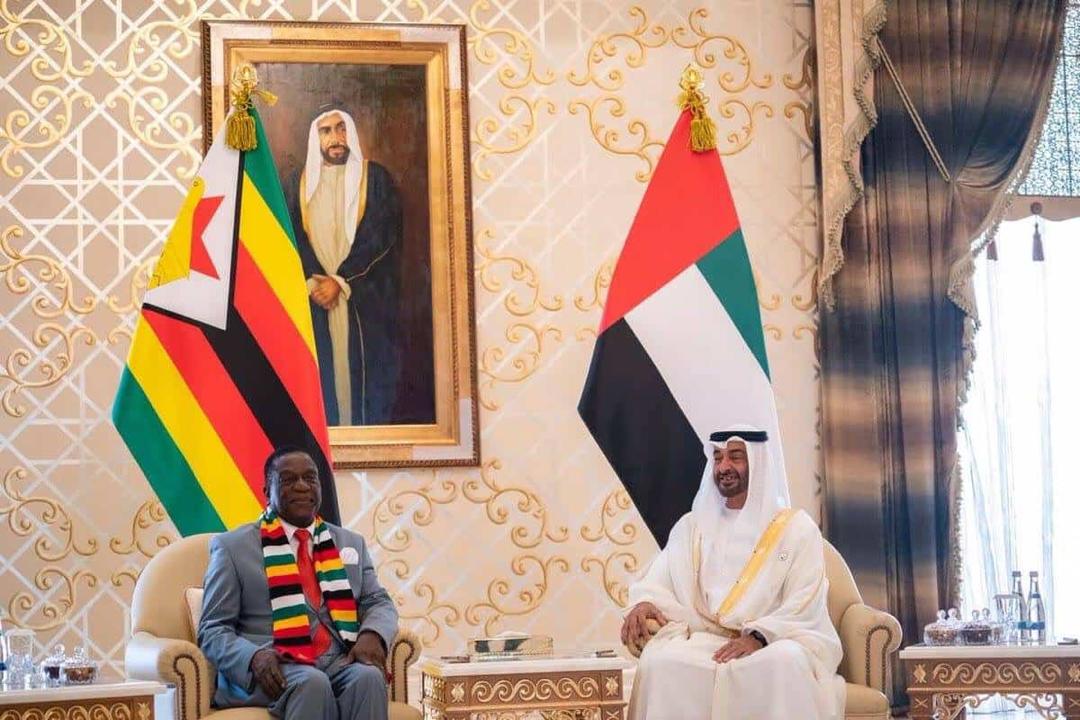
The United Arab Emirates (UAE) emerged as Zimbabwe’s leading export destination in June 2025, accounting for a commanding 54.8% of the country’s total export value, according to newly released data from the Zimbabwe National Statistics Agency (ZIMSTAT). This development marks a significant shift in Zimbabwe’s external trade orientation, with the UAE surpassing traditional partners in southern Africa and Asia.
The figures, also reported by New Ziana and TV BRICS, indicate that South Africa held the second position with 23.5% of Zimbabwe’s exports, followed by China at 8.3%. Combined, these three trading partners constituted approximately 87% of the country’s exports for the month.
The export portfolio for June 2025 was notably concentrated in mineral commodities. Semi-processed gold represented the largest share at 53.6%, reflecting Zimbabwe’s continued reliance on precious metals as a primary export driver. Nickel mattes followed with 12.7%, highlighting the country’s role in the regional base metals market.



Trade within regional economic blocs such as the Southern African Development Community (SADC), the Common Market for Eastern and Southern Africa (COMESA), and the African Continental Free Trade Area (AfCFTA) also remained significant.

Within the SADC bloc, nickel mattes were the leading export item, comprising 42% of total intra-regional shipments. Coal products accounted for 8.8%, semi-processed gold contributed 7.9%, and chromium ores made up 5.8%. These patterns reflect the ongoing industrial demand within the southern African region and Zimbabwe’s competitive advantage in mining.
Exports to COMESA countries were led by iron and steel products, which constituted 18.6%, followed by coke and semi-coke derived from coal at 10.5%. This diversification of export commodities suggests an ongoing structural transformation of Zimbabwe’s industrial base and a moderate degree of value addition in primary sectors.
AfCFTA member states also featured prominently in the distribution of Zimbabwe’s mineral exports. Nickel mattes again dominated at 41.6%, followed by coal-based coke and semi-coke at 8.8%, and unwrought gold at 7.8%. These figures underscore the role of pan-African trade in supporting Zimbabwe’s mineral and energy sectors.
While the UAE’s ascendancy as Zimbabwe’s foremost export destination signals deepening economic ties with the Gulf region, it also raises broader questions about the resilience of intra-African trade integration and the capacity of regional blocs to absorb diversified exports. Nonetheless, the month’s trade data reflect Zimbabwe’s continued leveraging of its mineral endowment to engage both regional and global markets.