Anewly released letter from the White House dated 7 July 2025, addressed to South African President Cyril Ramaphosa, has unveiled an assertive policy shift by the United States toward its trade relationship with South Africa. Signed by President Donald J. Trump, the letter outlines Washington’s intention to impose a unilateral 30% tariff on all South African exports to the US beginning 1 August 2025, citing long-standing trade deficits and a perceived lack of reciprocity in tariff and non-tariff policies.
The communication signals a marked escalation in economic rhetoric, warning that additional tariff measures would be levied should South Africa retaliate or increase its own trade barriers. Trump states unequivocally that the 30% rate is “far less than what is needed to eliminate the Trade Deficit disparity,” suggesting that South Africa has benefitted disproportionately from the current trading arrangement.
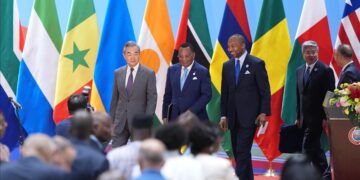
This formal message comes at a time of heightened tension. On Sunday, during a BRICS summit in Brazil, Trump publicly accused the bloc—comprising Brazil, Russia, India, China, and South Africa—of pursuing “anti-American” policies. In the remarks, he warned of a potential additional 10% tariff on countries aligned with BRICS, signalling a broader strategy to counter what he views as coordinated economic antagonism toward the United States.



In response, South African officials have attempted to de-escalate the situation. Trade ministry spokesperson Kaamil Alli reaffirmed the country’s commitment to diplomatic negotiation, stating, “We still await formal communication from the US in respect of our trade deal, but our conversations remain constructive and fruitful.” Notably, Alli insisted that South Africa is “not anti-American,” directly addressing Trump’s characterisation of BRICS and its members.
The timing of the letter aligns with bilateral trade discussions that began in May 2025, when President Ramaphosa visited Washington for direct talks with Trump. Despite a positive tone at that summit, the latest US stance reflects a significant hardening of trade policy.
The White House letter also proposes a potential pathway to resolution. It stipulates that if South Africa agrees to open its markets further and dismantle what the US deems as “Tariff, and Non-Tariff, Policies and Trade Barriers,” the 30% tariff could be adjusted. This conditional flexibility indicates that the Trump administration is leaving the door open for renegotiation, contingent on significant policy concessions from Pretoria.
In an era marked by economic nationalism and strategic decoupling, this development exemplifies the growing friction between the US and nations perceived to be aligned with emerging multipolar blocs. While Trump underscores the strength of the US market and the opportunity it presents, his administration’s posture has been unmistakably coercive, framing the current trade imbalance as a “major threat to our Economy and, indeed, our National Security.”

South Africa’s appeal to mutual understanding and ongoing dialogue may yet avert a deepening of the trade rift. However, unless formal negotiations yield substantive compromise, both nations risk plunging into a costly tariff war at a critical juncture in global trade realignment.
Tags:
international trade, South Africa, United States, Donald Trump, BRICS, tariffs, global trade policy, Cyril Ramaphosa, US foreign policy, trade negotiations, economic diplomacy, trade deficit