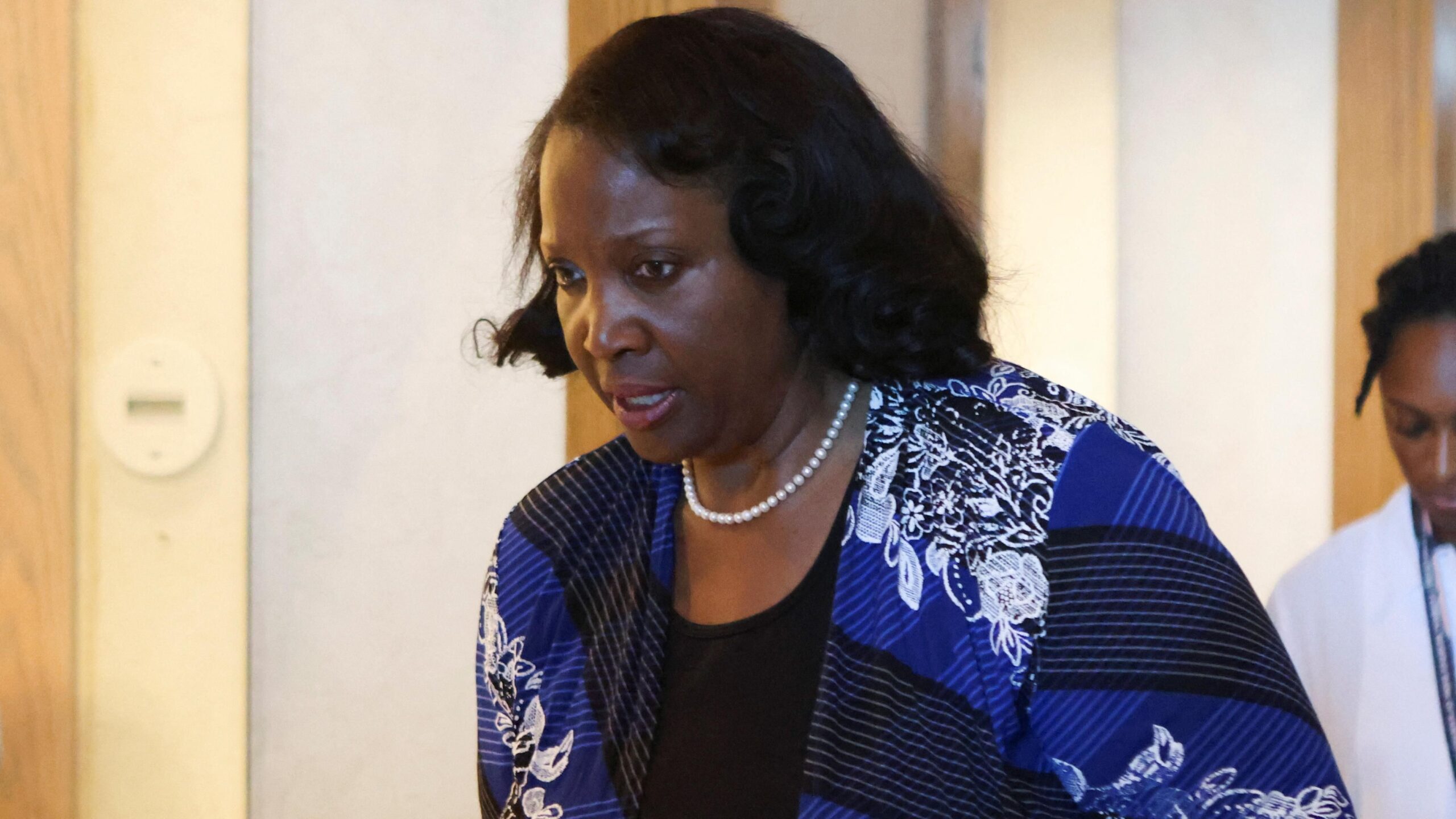
In an unprecedented move, United States President Donald Trump has dismissed Federal Reserve Governor Lisa Cook, citing allegations of mortgage irregularities. The decision has sparked widespread debate in Washington and beyond, raising fundamental questions over the legal authority of the executive to remove members of the Federal Reserve Board.
In his letter to Dr Cook, President Trump asserted that there was “sufficient cause” for her removal, accusing her of “gross negligence in financial transactions” that, in his view, undermined her credibility as a regulator. The allegations, raised by William Pulte, Director of the Federal Housing Finance Agency and a political ally of Trump, suggest that Dr Cook declared two separate properties as her primary residence when applying for mortgages. If proven, this could have secured her access to more favourable loan terms.
At present, however, no documentary evidence has been made public to substantiate these claims. Dr Cook, who in 2022 became the first African-American woman to serve on the Federal Reserve Board after being appointed by then-President Joe Biden, has strongly rejected the accusations. She has vowed to assemble evidence to address questions surrounding her personal financial arrangements, declaring that she would not be “bullied” into resigning.



The dismissal may well face a judicial challenge, as the independence of the Federal Reserve and the extent of presidential powers over its governors remain unsettled legal matters. Analysts note that while the US President appoints governors, they traditionally serve fixed terms and cannot be arbitrarily removed without statutory justification. The matter is expected to test the boundaries between executive authority and central bank autonomy.
The development occurs against the backdrop of President Trump’s ongoing criticism of the Federal Reserve’s leadership, particularly that of Chair Jerome Powell. Trump has frequently argued that interest rates remain excessively high, contending that such policies hinder ordinary Americans from entering the housing market. His rhetoric has consistently portrayed the central bank as detached from the financial realities faced by citizens, yet efforts to remove Powell have thus far been abandoned as the conclusion of his term in May approaches.
Dr Cook’s removal carries broader implications. The case intersects with issues of representation, institutional integrity, and political accountability. For African observers, it raises questions over the independence of financial regulators in contexts where executive overreach has historically weakened confidence in monetary governance. The symbolism of dismissing the first Black woman to serve in this capacity is not lost on many who follow global debates on inclusion and leadership in economic institutions.

While the United States has often positioned the Federal Reserve as a model of central bank independence, the latest development illustrates that even in advanced economies, institutional autonomy is vulnerable to political contestation. In much of the Global South, where struggles over the independence of central banks are a recurring feature of political life, the Cook dismissal resonates as a reminder of the universality of these tensions.
As proceedings unfold, legal challenges are likely to clarify whether Dr Cook’s dismissal will stand. Until then, the controversy underscores how financial governance, political authority, and personal accountability remain intertwined in shaping the credibility of economic institutions worldwide.