Russia’s war in Ukraine is raising the cost of tackling climate change, inequality, and other big development goals. While focusing on economic development support for low- and middle-income countries, big global players in development finance such as the International Monetary Fund and the World Bank have so far not been able to tackle the climate crisis and social inequality with the agility and scale needed. Regional multilateral development banks could.
Even before COVID-19, LMICs struggled to obtain $2.5 trillion needed annually to meet basic development goals.The pandemic pushed that gap to $4.2 trillion. The war in Ukraine is widening it even further.
IMF and the World Bank have taken important steps to strengthen the global economy and support countries to achieve economic growth. But as U.S. Treasury Secretary Janet Yellen recently said, neither institution is equipped to tackle the multiple global crises afflicting countries today while simultaneously dealing with climate change.



That makes it incumbent on world leaders to rethink the global financial architecture and design new ways to help countries address short-term issues like inflation but also long-term challenges like climate change — and ultimately generating financing to work toward the Sustainable Development Goals.
One thing world leaders could do immediately to address this is to empower regional multilateral development banks like the African Development Bank and the Inter-American Development Bank.
If allowed to do so, AfDB and IDB could dramatically scale up the value of $650 billion in resources that IMF has set aside to help countries overcome the COVID-19 pandemic. That includes almost $275 billion in resources — known as Special Drawing Rights — specifically for LMICs. SDRs are an international reserve asset whose value is based on a basket of five currencies.
Paradoxically, higher-income countries have access to over 57% of the total. In contrast, countries in Africa and Latin America and the Caribbean, whose needs are far greater, have access to just 5% and 8%, respectively.
World leaders are laudably encouraging higher-income economies to channel those funds to LMICs. The Group of 20 and other nations have already pledged nearly $45 billion to that effort. But this is not enough.
High-income nations could also channel those resources to regional banks like AfDB and IDB. Both banks could then use those reserve assets to provide additional lending in ways that IMF cannot. For example, if these banks received less than 1% of IMF’s resources, they could double the amount of low-cost lending that they can offer their member countries. Doing this is not hard, but it requires global leaders to act innovatively.
Granted, IMF itself is innovating. In April, the IMF executive board approved the establishment of the Resilience and Sustainability Trust. This and another IMF trust, the Poverty Reduction and Growth Trust, offer a way for countries to lend each other part of their SDR holdings to achieve long-term structural reforms. Regional development banks can complement and multiply the benefits to LMICs.
Because of that, it makes even more sense to enable regional banks to get those funds to LMICs.
Regional banks can also deliver key development results at just a fraction of the cost that countries spend on direct foreign aid: Every dollar contributed to an MDB as hybrid equity — a financial instrument which is less risky than equity but shares characteristics with equity investments — generates $4 in additional resources. At a time when every dollar counts, this is a unique value proposition for governments everywhere.
AfDB and IDB have AAA ratings and strong standing in capital markets, meaning they can absorb risk on their balance sheets and offer member countries affordable financing terms. As many governments face high post-pandemic debt burdens, this is another good reason to favor regional banks.

Regional banks could also use those IMF reserve assets to lend to in-country public development banks, which would help strengthen regional finance systems and make more financing available for sustainable development.
Because regional banks already have development effectiveness frameworks and monitoring teams in place, lending reserve assets to them would make it easier for high-income countries to track, measure, and achieve progress toward meeting the SDGs.
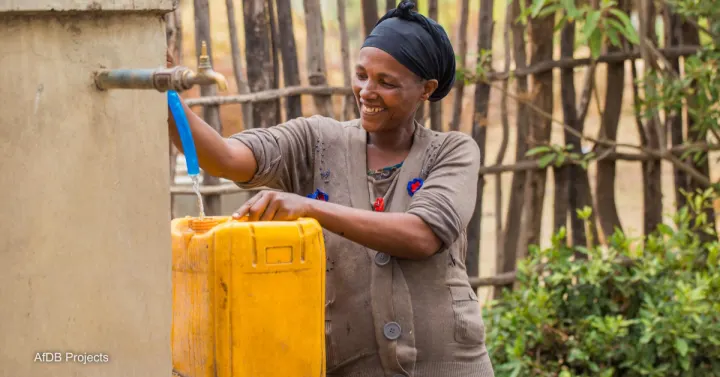
By offering financing with highly subsidized terms, regional development banks can more easily invest in countries, including in the most vulnerable nations. That would provide better access to water and sanitation services, health care, and social protection networks. It would also create job opportunities and facilitate much-needed climate action.
Finally, regional development banks are also skilled at mobilizing private sector funding to scale up investment. Last year, for example, IDB Invest, the IDB’s private sector arm, mobilized a record $3 billion, and 70% of the finance mobilized by IDB Invest was linked to a transaction that had climate finance. If it had even more capital, it could mobilize even more.
In the aftermath of the war in Ukraine, countries are desperate to find new ways to address everything from higher gas prices to rising sea levels. World leaders can help them almost immediately by using regional development banks more creatively.
Doing so would benefit all nations by making it easier for LMICs to meet our shared development goals, including combating climate change, as both AfDB and the IDB have made specific climate finance goals. And it would do so at a fraction of the cost.

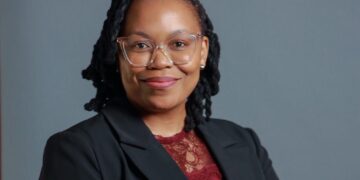
Hassatou Diop N’Sele is vice president for finance and chief financial officer at the African Development Bank. A Senegalese national, Diop N’Sele is a seasoned professional with over 30 years of banking and finance experience. She joined AfDB in 1999 as senior treasury officer and successively held positions of principal treasury officer, chief treasury officer and manager of the Capital Markets and Financial Operations Division, prior to her appointment as treasurer of the bank group in 2015.