Thursday, June 25, 2026
  • Login
The Southern African Times
  • Home
  • Southern Africa
  • Business
    • African Start ups
    • African Continental Free Trade Area
  • Technology
    • Lifestyle
      • Health
      • Culture
      • Food and Drink
      • Entertainment
  • Opinion
  • Sports
  • SAT Jobs
    • Events
  • About Us
    • Advertise with Us
    • Contact Us
No Result
View All Result
  • Home
  • Southern Africa
  • Business
    • African Start ups
    • African Continental Free Trade Area
  • Technology
    • Lifestyle
      • Health
      • Culture
      • Food and Drink
      • Entertainment
  • Opinion
  • Sports
  • SAT Jobs
    • Events
  • About Us
    • Advertise with Us
    • Contact Us
No Result
View All Result
The Southern African Times
No Result
View All Result
Home Finance

UPDATED:The ZiG: Zimbabwe rolls out world’s newest currency. Here’s what to know

by SAT Reporter
May 20, 2024
in Finance, in Southern Africa, Zimbabwe
0
UPDATED:The ZiG: Zimbabwe rolls out world’s newest currency. Here’s what to know

Last month, Zimbabwe rolled out a new gold-backed currency called the ZiG, or Zimbabwe Gold, in an effort to mitigate the currency instability and hyperinflation that has plagued the country for decades.

The country is “recalibrating its monetary policy framework to re-anchor price and exchange rate stability and to boost confidence in the local currency,” Zimbabwe’s central bank said in a statement.

Having a stable currency is paramount for an economic recovery in Zimbabwe, experts say. The World Bank notes that the country continues to grapple with fraught economic conditions as “macroeconomic volatility fueled by monetary instability and substantial exchange rate distortions keeps Zimbabwe’s economic activity below its potential.”

Restoration of stability’

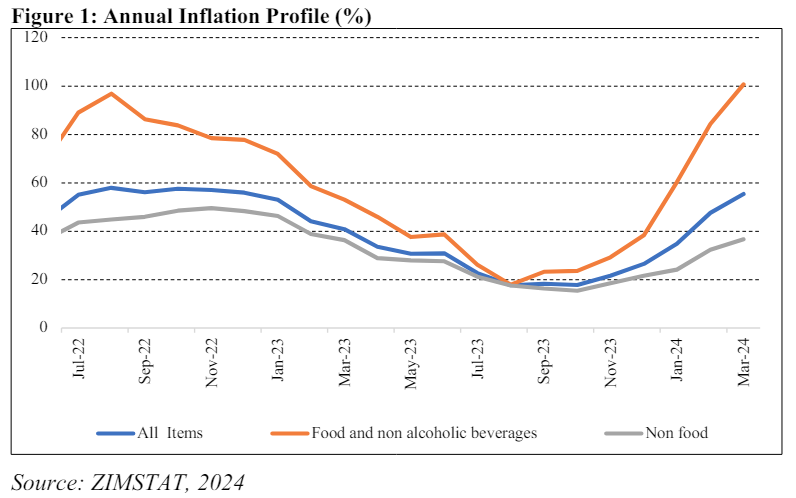
Zimbabwe has long struggled with high inflation, with inflation rates exceeding 500% in recent years. In March 2024, the annual rate of price increases at 55.3%, a seven-month high.

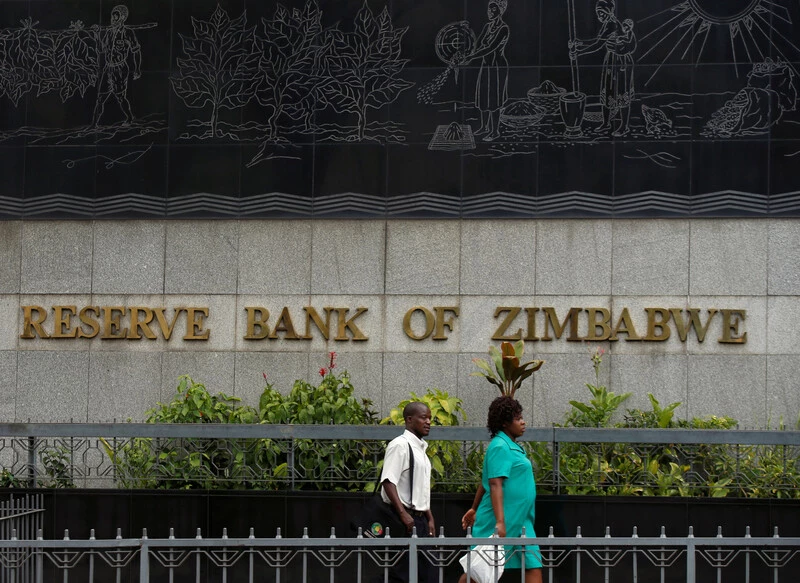
The country’s central bank, the Reserve Bank of Zimbabwe, said that the weakening of the exchange rate has contributed to a rise in annual inflation, underscoring the need to foster stability.

“The Bank’s priority policy focus is critical for supporting the economy’s growth prospects through the restoration of stability, convertibility, and transactional convenience of the local currency,” the central bank said in its statement.
With effect from 5 April, banks in Zimbabwe have been converting the country’s previous national currency, the Zimbabwe dollar, into ZiGs.

The central bank says the process aims to “foster simplicity, certainty, and predictability in monetary and financial affairs.” The ZiG, the bank added, will circulate alongside other foreign currencies in the economy.

Confidence is key

In 2008, hyperinflation peaked at staggering levels, causing the Zimbabwe dollar to lose its value and the government to abandon it in 2009. Since then, the US dollar and other foreign currencies have been widely-used throughout the economy.

It remains to be seen whether the new ZiG can gain the confidence of the public and become a stable local currency, which would allow officials to regain control over monetary policy.

Many Zimbabweans like the safety of the US dollar, which accounts for around 85% of transactions, according to the BBC. It’s for this reason the central bank decided on a mix of the ZiG and foreign currencies under a multi-currency system.

Nonetheless, authorities have been reportedly pursuing unofficial traders who continue to eschew the ZiG.

Local payment systems

Stable currencies and reliable economics conditions are critical for developing industries and attracting foreign investments, experts maintain.

Across Africa, efforts are underway to enhance payment systems for local currencies. For instance, the Pan-African Payment and Settlement System (PAPSS), which was developed by the African Union and the African Export-Import Bank, is a centralized financial market infrastructure enabling the secure flow of money across African borders.

The PAPSS allows users to make near-instant payments in their local currency, without converting to a foreign currency or using a third-party institution or bank.

Last year, an insight report from the World Economic Forum, AfCFTA: A New Era for Global Business and Investment in Africa, noted that PAPSS “will help African businesses avoid the delays in confirming payments that have long been a barrier to trade” and will “lead to increased trust and time capacity to increase trade volumes.”


Previous Post

Opposition Support or Sabotage? The West’s Role in African Politics

Next Post

Hyatt Regency Launches in Zimbabwe

SAT Reporter

Related Posts

Botswana urged to accelerate reforms as diamond slump exposes limits of growth model
Botswana

Botswana urged to accelerate reforms as diamond slump exposes limits of growth model

by Times Reporter
June 25, 2026
Zimbabwe explores mineral backed financing with China for infrastructure
in Southern Africa

Zimbabwe explores mineral backed financing with China for infrastructure

by Times Reporter
June 25, 2026
Mozambique Awards 5G Licences to Mobile Operators
in Southern Africa

Mozambique Awards 5G Licences to Mobile Operators

by Times Reporter
June 25, 2026
IMF warns Iran war fallout strains African economies
Finance

IMF warns Iran war fallout strains African economies

by Times Reporter
June 23, 2026
UNAIDS Appeals for Reconsideration as United States Moves to Withdraw HIV Funding from South Africa
in Southern Africa

UNAIDS Appeals for Reconsideration as United States Moves to Withdraw HIV Funding from South Africa

by Times Reporter
June 23, 2026
Next Post
Hyatt Regency Launches in Zimbabwe

Hyatt Regency Launches in Zimbabwe

Browse by Category

  • Africa AI
  • African Continental Free Trade Area
  • African Debt
  • African Start ups
  • Agriculture
  • AI Africa
  • Algeria
  • All News
  • Analysis
  • Angola
  • Arts / Culture
  • Asia
  • Botswana
  • BOTSWANA
  • BREAKING NEWS
  • BRICS
  • Burkina Faso
  • Burundi
  • Business
  • Business
  • Business Wire
  • Cameroon
  • Central Africa
  • Chad
  • China
  • Climate Change
  • Climate Changev
  • Community
  • Congo Republic
  • Conservation
  • Côte d’Ivoire
  • COVID 19
  • CRYPTOCURRENCY
  • Culture
  • Democratic Republic of Congo
  • Diplomacy
  • Eastern Africa
  • Economic Development
  • Economy
  • Education
  • Egypt
  • Elections 2024
  • Energy
  • Entertainment
  • Environment
  • Eritrea
  • Ethiopia
  • Europe
  • Fashion
  • Feature
  • Finance
  • Financial Inclusion
  • Food
  • Food and Drink
  • Foods
  • GABON
  • Ghana
  • Global
  • Global Africa
  • Guinea
  • Health
  • Humanitarian Aid
  • Immigration
  • in Southern Africa
  • International news
  • International Relations
  • Investment
  • Ivory Coast
  • Just In
  • Kenya
  • Lesotho
  • Libya
  • Life Style
  • Lifestyle
  • Literature
  • Malawi
  • Malawi
  • Mali
  • Markets
  • Mauritius
  • Middle East
  • Mining in Africa
  • Morocco
  • Mozambique
  • Namibia
  • Niger
  • niger
  • Nigeria
  • North Africa
  • North-Eastern Africa
  • Obituaries
  • Obituary
  • Opinion
  • PARTNER CONTENT
  • Politics
  • Property
  • Racism
  • Rwanda
  • Rwanda
  • SADC
  • SAT Interviews
  • SAT Investigation
  • SAT Jobs
  • Saudi Arabia
  • Senegal
  • Seychelles
  • Somaliland
  • South Africa
  • South Sudan
  • Sports
  • Startup Africa
  • STOCK EXCHANGE
  • Sudan
  • Sustainability
  • Sustainablity
  • Tanzania
  • Technology
  • Telecommunications
  • The Editorial Board
  • The Power Of She
  • Togo
  • Trade
  • Travel
  • Travel
  • Tunisia
  • Uganda
  • Uncategorized
  • Wealth
  • West Africa
  • World
  • World
  • ZAMBIA
  • Zambia
  • ZIMBABWE
  • Zimbabwe

Browse by Tags

#NewsUpdate #SouthAfrica #SouthernAfricanTimes #TheSouthernAfricanTimes AfCFTA africa African Continental Free Trade Area African development African Development Bank African economies African economy African Union Agriculture Angola Botswana China Climate change Cyril Ramaphosa Economic Development economic growth energy transition fiscal policy governance industrialisation Inflation Infrastructure Infrastructure Development International relations Investment Kenya Mozambique Namibia news Nigeria Regional Integration renewable energy Rwanda SADC South Africa Southern Africa sustainable development Tanzania United States Zambia Zimbabwe
ADVERTISEMENT

WHO WE ARE

The Southern African Times is a regional bloc digital newspaper that covers Southern African and world news. The paper also gives a nuanced analysis on news and covers a wide range of reporting which include sports, entertainment, foreign affairs, arts and culture.

Welcome Back!

Login to your account below

Forgotten Password?

Retrieve your password

Please enter your username or email address to reset your password.

Log In
  • Home
  • Southern Africa
  • Business
    • African Start ups
    • African Continental Free Trade Area
  • Technology
    • Lifestyle
      • Health
      • Culture
      • Food and Drink
      • Entertainment
  • Opinion
  • Sports
  • SAT Jobs
    • Events
  • About Us
    • Advertise with Us
    • Contact Us
Not enough quota to unlock this post
Unlock left : 0
Are you sure want to cancel subscription?