

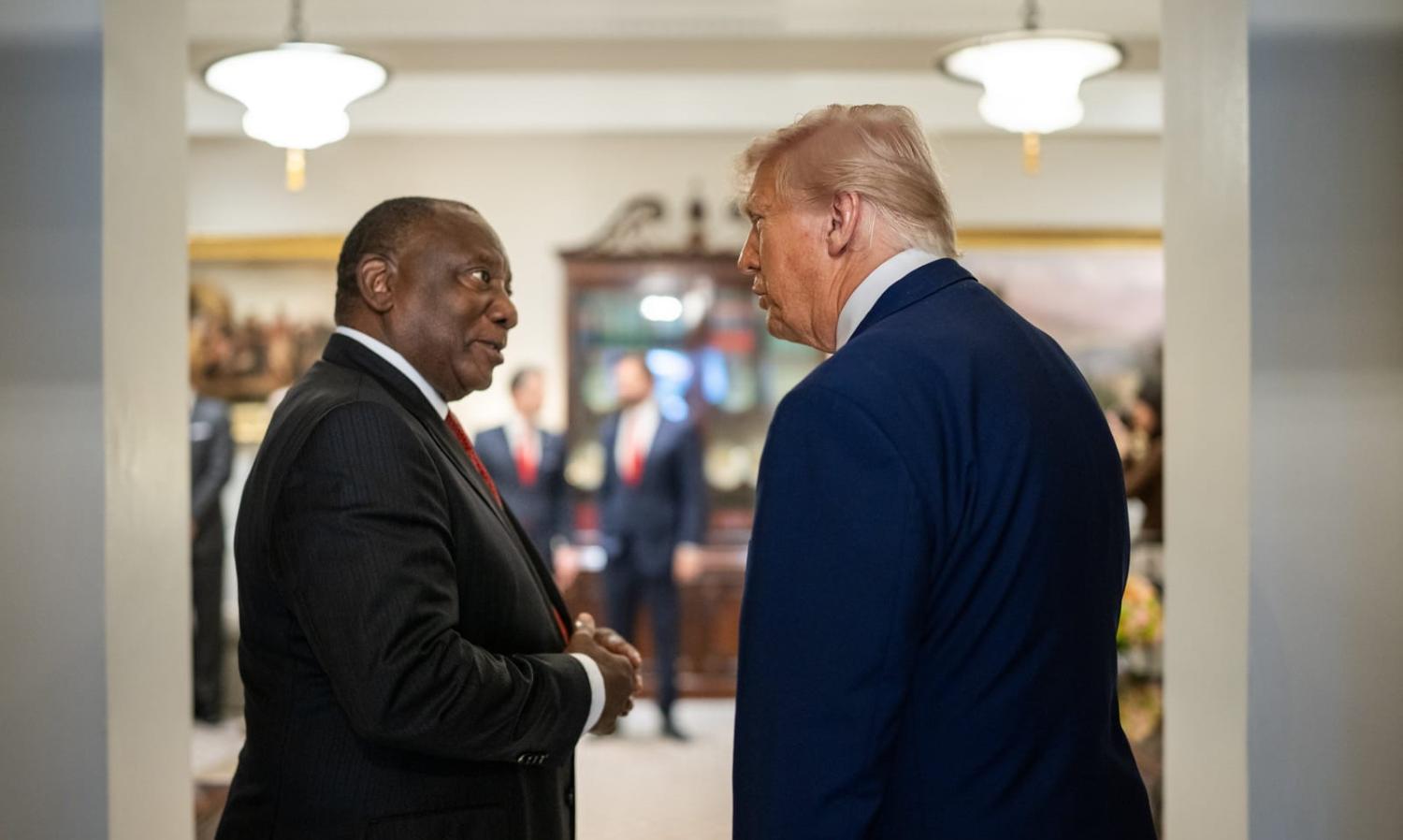
As the global balance of power continues to shift in 2026, relations between the United States and African nations are entering a phase defined by pragmatism, recalibration, and a greater assertion of African agency. Following a tumultuous 2025 that saw significant changes in Washington’s foreign policy posture under President Donald Trump’s second administration, both sides are now seeking a more stable, interest-based footing. The Southern African Times forecasts that the year ahead will be characterised not by disengagement, but by redefinition — a new equilibrium shaped by evolving economic priorities, regional resilience, and technological transformation.
The decision by Washington in 2025 to wind down the United States Agency for International Development (USAID), alongside the implementation of new tariff regimes, fundamentally altered the structure of American engagement across the continent. Longstanding partnerships, particularly with South Africa and Nigeria, have been tested by these changes. Yet analysts observe that African responses have been measured and strategic. Rather than reacting from a position of dependency, many African states have turned inwards to strengthen regional frameworks and outward to diversify their partnerships, thereby reducing exposure to the volatility of external policy shifts.
One area where cooperation is expected to persist is in critical minerals and technology. The United States remains keen to secure reliable access to the cobalt, lithium, and rare earths essential for artificial intelligence, electric vehicles, and semiconductor industries. Several African governments, particularly those in Zambia, Namibia, and the Democratic Republic of the Congo, have taken deliberate steps to move up the value chain by promoting mineral beneficiation and local manufacturing. This shift is part of a wider trend in which African policymakers are seeking to redefine the continent’s role in the global energy and technology transitions from that of a supplier of raw materials to an active participant in the industrial process.



In financial governance, African leaders are taking concrete steps to reduce external dependency. The operationalisation of the African Credit Rating Agency in 2025 marked a milestone in the continent’s long-standing effort to create fairer assessments of sovereign risk. Alongside this, African finance ministers are using regional institutions — such as the African Development Bank and the African Export–Import Bank — to pool capital and extend more affordable credit. As a result, while global borrowing costs have risen, African nations are increasingly turning to intra-continental lending mechanisms and South–South cooperation to finance infrastructure and climate projects. This movement aligns with broader calls within the African Union for a more balanced global financial architecture.
Diplomatically, 2026 is expected to bring a period of policy adjustment rather than confrontation. Washington’s recalibrated approach to Africa now emphasises trade and security over traditional development assistance. However, inconsistencies in policy execution have at times unsettled investors and governments alike. Despite this, African institutions have shown a growing ability to adapt and coordinate responses. The African Union, SADC, and ECOWAS have played important roles in maintaining policy continuity, particularly in navigating the uncertainties of external trade and investment climates.
In the field of peace and security, American engagement is likely to remain selective. The United States is expected to continue supporting short-term stabilisation measures in regions such as Sudan, Ethiopia, and Egypt, though analysts caution that such interventions often overlook the structural drivers of conflict. By contrast, African-led peace frameworks are expanding their reach. The African Union’s Peace and Security Council and regional mediation efforts are focusing increasingly on addressing governance deficits, inequality, and resource competition — issues that often underlie recurring cycles of unrest.

Technology and digital governance are emerging as transformative dimensions of the evolving relationship. The African Union’s Continental AI Strategy and the Smart Africa Digital Infrastructure Blueprint have provided a framework for member states to engage with global partners, including the United States, on more equal terms. Across the continent, feasibility studies completed in 2025 have explored the potential for Africa’s mineral reserves to support the production of semiconductors and computing components. Simultaneously, investment in telecommunications and data centres is expanding, signalling Africa’s ambition to play an active role in the digital economy rather than remaining a consumer of imported technology.
The broader global context also shapes the future of US–Africa relations. The European Union’s Global Gateway initiative and China’s ongoing recalibration of its Belt and Road partnerships have increased competition for influence in Africa’s infrastructure and digital sectors. This multipolar environment offers African states more options but also demands greater coordination and negotiation skill. As a result, Africa’s diplomacy in 2026 is expected to be guided by pragmatic non-alignment — an approach that values diversification, strategic sovereignty, and issue-based partnerships over traditional bloc politics.
Against this backdrop, The Southern African Times predicts that 2026 will not mark a rupture in US–Africa relations but a reconfiguration. The era of one-sided engagement is fading. Africa’s growing institutional maturity, demographic momentum, and technological capacity are enabling it to engage global powers from a position of increasing confidence. The United States, meanwhile, is likely to continue pursuing its own economic and security priorities while seeking to maintain influence through selective collaboration.
Ultimately, the defining feature of this relationship will be mutual calculation and managed interdependence. Both Africa and the United States are reassessing what partnership means in a world that is less hierarchical and more distributed. As African leaders and policymakers continue to assert their collective voice, the continent’s engagement with Washington — and indeed with the world — is becoming more nuanced, self-directed, and resilient.


