In Lesotho’s capital, writers gathered to celebrate African narratives, and found themselves educated instead by mountains, music, and the mysteries of dry pap. When I arrived in Maseru, the mountain-wrapped capital of Lesotho, I expected a quiet literary retreat, perhaps a few polite panels and predictable pleasantries. What I found instead was a city that hums like a half-tuned guitar; erratic, charming, and impossible to forget. I had come for the African Writers’ Conference, but the true lessons lay somewhere between the bonfire, the mountains, and a taxi called a Four One.
The night of my arrival set the tone. Delegates gathered at, Boqate Leisure Centre, where a film flickered on a sheet and a bonfire blazed with unrestrained enthusiasm. The air smelled of smoke and spirit, the liquid kind. Stories and toasts were exchanged in equal measure until one MoTswana writer, having sampled too many of the concoctions, delivered a speech of heroic incoherence to roaring applause. By the time the fire burned low, everyone felt profoundly inspired, though no one could quite recall by what.
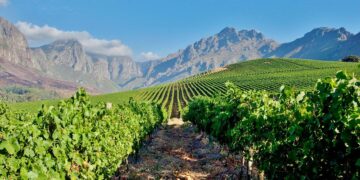
The following morning, slightly less poetic but still adventurous, we decided to hike Boqate Mountain before the Writers’ Mingle scheduled for three. The climb was steady, the conversation sporadic, punctuated mostly by heavy breathing disguised as profound thought. Among the caves we stumbled upon a, natural spring, its water clear and startlingly cold. We drank from it reverently, half expecting enlightenment; none arrived, though the chill revived us enough to pretend otherwise. From the ridge, Ha Leqele, Maseru sprawled below in miniature, tin roofs glinting under a generous sun, the city appearing calm from a distance, which is how most cities prefer to be seen.



By afternoon we had transformed ourselves from hikers to panelists at Alliance Française, Maseru. The Writers’ Mingle, hosted by Mosa Majolothoane of Writers Space Lesotho, featured a lively cast: Zimbabwe’s Mimi Machakaire, UK-based Nigerian Brendan Amadi, Lesotho’s Reekelitsoe Rapoeea, the unflappable Anthony Onugba, Botswana’s Laone Mangwa and myself attempting coherence. We spoke of identity, language, and the endurance required to be an African writer in a world still baffled by our existence. The discussion was animated, occasionally profound, and mercifully sober.
Saturday brought the main conference at Limkokwing University Lesotho, its theme, “Celebrating African Narratives: Uniting Cultures and Empowering Creatives” as ambitious as the mountains surrounding us. The keynote address came from Lesotho’s literary matriarch Mme Matšeliso Lesupi, author of “Bophelo ba Lillo”, who spoke with such authority that even the air listened. The panel discussion, deftly moderated by Lineo Segoete, featured Zambia’s Jimmy Kinzobya, Lesotho’s Mpho Letima and Pitso Mathethebale, and myself. We wrestled politely with colonial ghosts and the politics of language. The audience clapped, gasped, and occasionally argued back, always a promising sign.

If theory dominated the morning, performance conquered the afternoon. Three high-school girls delivered spoken-word pieces so stirring that cynicism momentarily went out of fashion. The day’s MC, Manako Tetsoane Oa Thamae, followed with her own poem, a reminder that eloquence need not come with a university degree.

That night, intellectualism surrendered to rhythm. Maseru’s nightlife pulsed with energy; South African beats rattled the walls while chilled drinks materialised from nowhere. The crowd swelled until management, startled by success, began charging an entrance fee. Writers and locals danced as equals, proof that literature, like music, thrives best slightly off-balance. One of the writers balanced a can of the local brew while dancing much to the delight of the on-watchers
The next day’s picnic at Soyinka Book Club Bar was a gentler affair, fuelled by sunlight, storytelling, and heroic amounts of bottled water. Laughter flowed, reputations were repaired, and when the afternoon waned, a celebratory cake was ceremoniously sliced and shared, proof that no creative gathering is complete without carbohydrates and sentiment.
From there, our convoy snaked its way through the scenic, bending, ascending, and descending landscape of Maseru. Hills rolled into valleys, the air thinned and cooled, and soon the frivolity of the picnic gave way to the quiet reverence of Thaba Bosiu Cultural Village.
Thaba Bosiu, “the mountain at night”, is where the Basotho nation was born under the vision of King Moshoeshoe I. The cultural village beneath it thrums with life: thatched huts, rhythmic dances, women in Seanamarena blankets weaving stories into craft. The place feels less like a museum and more like a heartbeat, history made visible.
Of course, Maseru’s lessons are not confined to academia or altitude. At the city’s bustling food market I met pap so dry it might have been designed for construction, accompanied by chicken sliced into long, thin strips more befitting a butcher’s sketch of bacon. The locals devoured it gleefully, undisturbed by taxonomy or texture. I followed suit, chewing bravely and reconsidering every culinary decision of my life.
Then there are the taxis, the famed Four Ones, Honda Fit hatchbacks that ferry four passengers and one driver through a choreography of chaos. There are no stops, no timetables, only cryptic hand signals and negotiated fares. Yet, miraculously, everyone arrives where they intended, which makes the system superior to several governments I could name.

By the time I left Maseru, I had grown fond of its honest disorder. The city is at once modest and magnificent, a place where history and humour coexist without ceremony. The African Writers Conference, succeeded in uniting cultures and empowering creatives, but it was Lesotho itself that told the greater story, of resilience, laughter, and a people who treat strangers like slightly lost cousins.
When I boarded my flight home, my notebook was full, my shoes were dusty, and the taste of that stubborn pap lingered, defying both memory and digestion. Yet what stayed with me most was the sense that in the Mountain Kingdom, stories do not merely get told, they live, dance, and occasionally hitch a ride in a Four One!