Saturday, May 30, 2026
  • Login
The Southern African Times
  • Home
  • Southern Africa
  • Business
    • African Start ups
    • African Continental Free Trade Area
  • Technology
    • Lifestyle
      • Health
      • Culture
      • Food and Drink
      • Entertainment
  • Opinion
  • Sports
  • SAT Jobs
    • Events
  • About Us
    • Advertise with Us
    • Contact Us
No Result
View All Result
  • Home
  • Southern Africa
  • Business
    • African Start ups
    • African Continental Free Trade Area
  • Technology
    • Lifestyle
      • Health
      • Culture
      • Food and Drink
      • Entertainment
  • Opinion
  • Sports
  • SAT Jobs
    • Events
  • About Us
    • Advertise with Us
    • Contact Us
No Result
View All Result
The Southern African Times
No Result
View All Result
Home Opinion

The Global South is left to shoulder the climate burden

by SAT Reporter
November 26, 2024
in Opinion
0
“Baku Summit Concludes with Finance Deal, But Fails to Address Escalating Climate Crisis

The 29th Conference of the Parties to the UN Framework Convention on Climate Change (COP29), held in Baku, Azerbaijan, shone a spotlight on the profound inequities that define global climate action. While nations in the Global South have consistently risen to the challenge of addressing the climate crisis, their efforts remain constrained by the lack of sufficient financial and structural support from wealthier countries. This imbalance not only undermines the collective fight against climate change but also reveals a troubling double standard in how responsibilities and resources are distributed globally.

Despite being the least responsible for historical emissions, the Global South has taken remarkable strides in climate innovation. Countries such as Kenya, Brazil and Grenada stood out at COP29 for their ambitious projects aimed at mitigating climate impacts and enhancing resilience.

Kenya, for example, highlighted its solar-powered irrigation systems, a crucial initiative to bolster food security while reducing emissions. Brazil reiterated its commitment to protecting the Amazon rainforest, a critical global carbon sink that absorbs billions of tons of carbon dioxide each year. Grenada and other countries reaffirmed their dedication to the Global Cooling Pledge, an ambitious plan to reduce cooling-related emissions by 68 percent by 2050 through sustainable technology and energy efficiency measures.


ADVERTISEMENT

However, these efforts come at a steep cost. African nations alone will need approximately $280 billion annually by 2030 for climate adaptation and mitigation, a figure far beyond their financial means. The operationalization of the Loss and Damage Fund during COP29 was a positive step toward addressing these needs, with $700 million pledged to assist nations already grappling with climate-induced disasters. Yet, this funding is far from adequate, considering the estimated approximately $580 billion required annually by 2030 to cope with the escalating impacts of climate change.

In contrast, the promises made by wealthier nations remain largely unfulfilled. The $100 billion annual climate finance commitment, first pledged in 2009, has yet to materialize in full. This persistent shortfall has eroded trust in the ability of developed countries to act as reliable partners in global climate efforts.

Furthermore, major emitters such as the United States and the European Union have not aligned their Nationally Determined Contributions (NDCs) with the Paris Agreement’s target of limiting global warming to 1.5 degrees Celsius. Instead, many continue to subsidize fossil fuels and invest in carbon-intensive industries, actions that directly undermine their public commitments to climate action.

This hypocrisy was a recurring theme at COP29, with leaders from the Global South calling for accountability and equitable action. As the most vulnerable regions bear the brunt of climate-induced disasters – including severe droughts, floods and biodiversity loss – they are forced to shoulder a disproportionate share of the climate burden. This imbalance not only exacerbates existing vulnerabilities, but also hampers the scalability of successful initiatives in the Global South, which often rely on external funding to sustain their momentum.
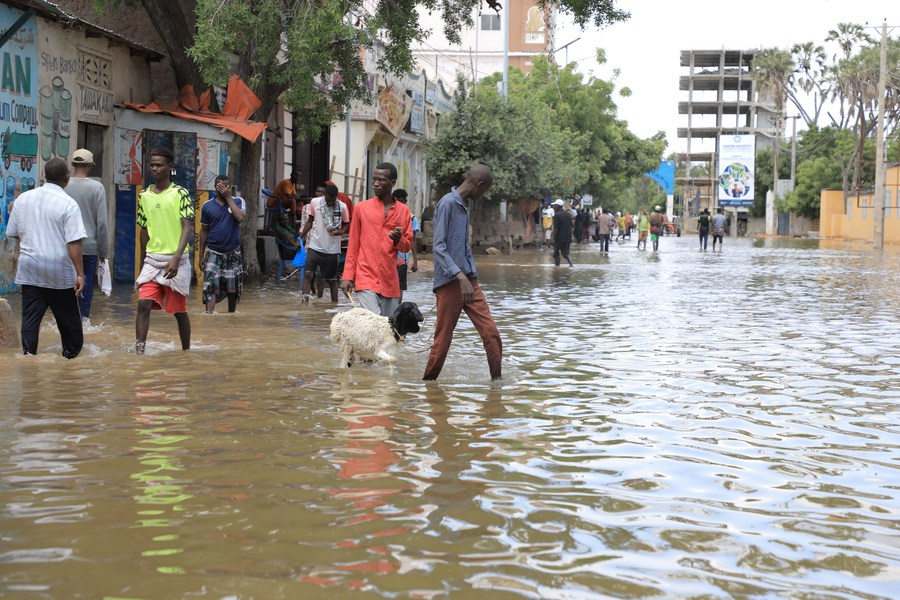
People walk through flooded streets in Beledweyne district, central Somalia, May 12, 2023.

The implications of this disparity are stark. Without adequate financial support and technology transfer from wealthier nations, the global effort to combat climate change will remain fragmented and ineffective. For instance, the lack of sufficient funding for adaptation measures means that climate-induced losses in Africa alone could reach $50 billion annually by 2040. Meanwhile, the inability to scale up renewable energy solutions limits the potential of Global South nations to transition away from fossil fuels and build resilient, low-carbon economies.

COP29 also underscored the importance of empowering the Global South through tailored investments. Supporting just transitions in these regions is critical to creating sustainable development pathways that address both economic and environmental vulnerabilities. For example, investments in sustainable cooling technologies – aligned with the Global Cooling Pledge – could lead to a reduction of nearly 78 billion tons of carbon dioxide emissions by 2050, according to the UN Environment Programme.

COP29 laid the groundwork for meaningful progress, but the real test lies in translating commitments into action. The Global South has demonstrated remarkable resilience and ingenuity in tackling the climate crisis, often with limited resources and minimal support. It is now up to wealthier nations to step up, not as benefactors, but as genuine partners in a shared global effort.

The path forward demands urgent action from developed countries. First, they must fulfill their longstanding financial commitments, including meeting and exceeding the $100 billion annual target. Second, they need to significantly increase their contributions to the Loss and Damage Fund to ensure it can meet the needs of vulnerable nations.

Moreover, they must realign their NDCs with the 1.5 degrees Celsius target by phasing out fossil fuels, prioritizing renewable energy investments, and ending subsidies for carbon-intensive industries. Finally, transparent mechanisms for tracking and enforcing climate finance and policy commitments are essential to rebuild trust and ensure accountability.


Stephen Ndegwa, is the executive director of South-South Dialogues, a Nairobi-based communications development think tank. The article reflects the author’s opinions and not necessarily the views of The Southern African Times.


Previous Post

Namibian President Calls for Calm Ahead of Landmark Elections

Next Post

London Screening of ‘Mugabe and Me’ Explores the Complex Legacy of Zimbabwe’s Former Leader

SAT Reporter

Related Posts

AI Needs Oversight, Not Faith: Lessons from South Africa’s Policy Reversal
Opinion

AI Needs Oversight, Not Faith: Lessons from South Africa’s Policy Reversal

by Sonny Iroche
May 27, 2026
Africa Day 2026 | The Century Is Quietly Turning Towards Africa
The Editorial Board

Africa Day 2026 | The Century Is Quietly Turning Towards Africa

by The Editorial Board
May 25, 2026
How China-Africa Cooperation Can Accelerate Africa’s Industrialisation
Opinion

How China-Africa Cooperation Can Accelerate Africa’s Industrialisation

by SAT Reporter
May 25, 2026
France Is Trying to Get New Stripes in Africa – but will it work?
Opinion

France Is Trying to Get New Stripes in Africa – but will it work?

by Development Reimagined
May 14, 2026
When AI Gets It Wrong, Humans Must Get It Right
Opinion

When AI Gets It Wrong, Humans Must Get It Right

by Dr Brighton Chireka
May 14, 2026
Next Post
London Screening of ‘Mugabe and Me’ Explores the Complex Legacy of Zimbabwe’s Former Leader

London Screening of 'Mugabe and Me' Explores the Complex Legacy of Zimbabwe’s Former Leader

Browse by Category

  • Africa AI
  • African Continental Free Trade Area
  • African Debt
  • African Start ups
  • Agriculture
  • AI Africa
  • Algeria
  • All News
  • Analysis
  • Angola
  • Arts / Culture
  • Asia
  • Botswana
  • BOTSWANA
  • BREAKING NEWS
  • BRICS
  • Burkina Faso
  • Burundi
  • Business
  • Business
  • Business Wire
  • Cameroon
  • Central Africa
  • Chad
  • China
  • Climate Change
  • Climate Changev
  • Community
  • Congo Republic
  • Conservation
  • Côte d’Ivoire
  • COVID 19
  • CRYPTOCURRENCY
  • Culture
  • Democratic Republic of Congo
  • Diplomacy
  • Eastern Africa
  • Economic Development
  • Economy
  • Education
  • Egypt
  • Elections 2024
  • Energy
  • Entertainment
  • Environment
  • Eritrea
  • Ethiopia
  • Europe
  • Fashion
  • Feature
  • Finance
  • Financial Inclusion
  • Food
  • Food and Drink
  • Foods
  • GABON
  • Ghana
  • Global
  • Global Africa
  • Guinea
  • Health
  • Humanitarian Aid
  • Immigration
  • in Southern Africa
  • International news
  • International Relations
  • Investment
  • Ivory Coast
  • Just In
  • Kenya
  • Lesotho
  • Libya
  • Life Style
  • Lifestyle
  • Literature
  • Malawi
  • Malawi
  • Mali
  • Markets
  • Mauritius
  • Middle East
  • Mining in Africa
  • Morocco
  • Mozambique
  • Namibia
  • Niger
  • niger
  • Nigeria
  • North Africa
  • North-Eastern Africa
  • Obituaries
  • Obituary
  • Opinion
  • PARTNER CONTENT
  • Politics
  • Property
  • Racism
  • Rwanda
  • Rwanda
  • SADC
  • SAT Interviews
  • SAT Investigation
  • SAT Jobs
  • Saudi Arabia
  • Senegal
  • Seychelles
  • Somaliland
  • South Africa
  • South Sudan
  • Sports
  • Startup Africa
  • STOCK EXCHANGE
  • Sudan
  • Sustainability
  • Sustainablity
  • Tanzania
  • Technology
  • Telecommunications
  • The Editorial Board
  • The Power Of She
  • Togo
  • Trade
  • Travel
  • Travel
  • Tunisia
  • Uganda
  • Uncategorized
  • Wealth
  • West Africa
  • World
  • World
  • ZAMBIA
  • Zambia
  • Zimbabwe
  • ZIMBABWE

Browse by Tags

#NewsUpdate #SouthAfrica #SouthernAfricanTimes #TheSouthernAfricanTimes AfCFTA africa African Continental Free Trade Area African development African Development Bank African economies African economy African Union Agriculture Angola Botswana China Climate change Cyril Ramaphosa Economic Development economic growth energy transition Ghana governance industrialisation Inflation Infrastructure Infrastructure Development International relations Investment Kenya Mozambique Namibia news Nigeria Regional Integration renewable energy Rwanda SADC South Africa Southern Africa sustainable development Tanzania United States Zambia Zimbabwe
ADVERTISEMENT

WHO WE ARE

The Southern African Times is a regional bloc digital newspaper that covers Southern African and world news. The paper also gives a nuanced analysis on news and covers a wide range of reporting which include sports, entertainment, foreign affairs, arts and culture.

Welcome Back!

Login to your account below

Forgotten Password?

Retrieve your password

Please enter your username or email address to reset your password.

Log In
  • Home
  • Southern Africa
  • Business
    • African Start ups
    • African Continental Free Trade Area
  • Technology
    • Lifestyle
      • Health
      • Culture
      • Food and Drink
      • Entertainment
  • Opinion
  • Sports
  • SAT Jobs
    • Events
  • About Us
    • Advertise with Us
    • Contact Us
Not enough quota to unlock this post
Unlock left : 0
Are you sure want to cancel subscription?