Sunday, June 21, 2026
  • Login
The Southern African Times
  • Home
  • Southern Africa
  • Business
    • African Start ups
    • African Continental Free Trade Area
  • Technology
    • Lifestyle
      • Health
      • Culture
      • Food and Drink
      • Entertainment
  • Opinion
  • Sports
  • SAT Jobs
    • Events
  • About Us
    • Advertise with Us
    • Contact Us
No Result
View All Result
  • Home
  • Southern Africa
  • Business
    • African Start ups
    • African Continental Free Trade Area
  • Technology
    • Lifestyle
      • Health
      • Culture
      • Food and Drink
      • Entertainment
  • Opinion
  • Sports
  • SAT Jobs
    • Events
  • About Us
    • Advertise with Us
    • Contact Us
No Result
View All Result
The Southern African Times
No Result
View All Result
Home Analysis

BRICS Has Overtaken The G7 In Global GDP

by SAT Reporter
April 1, 2023
in Analysis
0
BRICS Has Overtaken The G7 In Global GDP

The India-based Megh Updates platform, one of the world’s largest online informational platforms in terms of views, has stated that BRICS countries have officially overtaken G7 in share of world PPP GDP, and that this trend can be expected to continue.

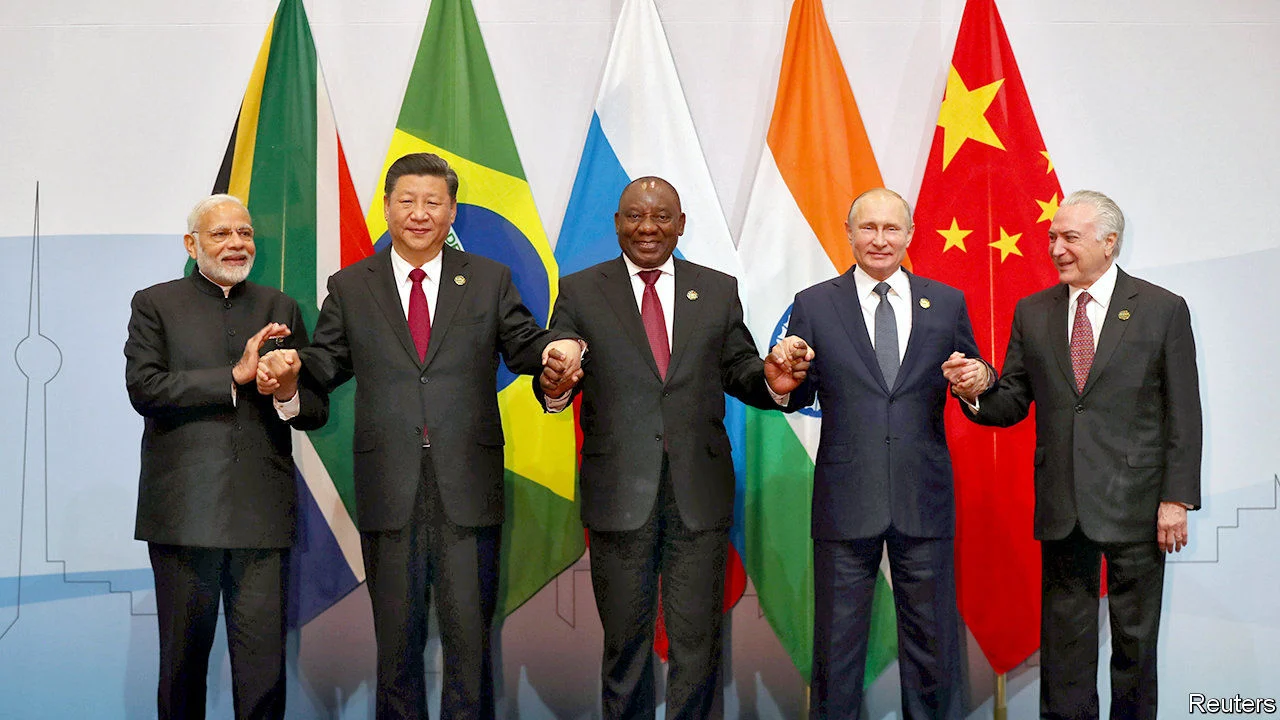
The BRICS currently include Brazil, Russia, India, China and South Africa, while the G7 includes Canada, France, Germany, Italy, Japan, the United Kingdom, and the United States, as well as the European Union.

The BRICS is also expanding – Bangladesh, Egypt and the UAE have all just joined the BRICS New Development Bank, with numerous other countriespoised to do the same.


ADVERTISEMENT

A real shake up is also to be expected these coming days with Mexico, long part of the North American free trade bloc NAFTA (now superseded by the Canada-United States-Mexico Agreement (CUSMA) agreement) poised to join BRICS. That will be seen as a direct affront to Mexico’s US relations and a sign that global economies, even on America’s border, are having serious doubts about the US ability to trade on fair and equal terms.

The current BRICS five now contribute 31.5% of global GDP, while the G7 share has fallen to 30%. The BRICS is expected to contribute over 50% of global GDP by 2030, with the proposed enlargement almost certainly bringing that forward. China’s GDP actually overtook that of the United States in 2015 when comparing economies in purchasing parity terms.

This will usher in significant global changes – exactly the sentiment that Chinese President Xi Jinping stated in his parting words to Russian President Vladimir Putin as he departed Moscow back to Beijing following their summit last week. The main issue is that the BRICS grouping – including proposed new members – are very much in China and Russia’s orbit, with the G7, including the EU and United States losing tractional influence among them.

That has been down to numerous issues, including an overall mistrust of the United States foreign policy, a desire to ring-fence against sanctions by creating an alternative trade bloc to the G7, what is seen as EU greed in global markets, and long-held animosity against various European legacies from colonial times.

It can also be expected to usher in the much-discussed change from a unilateral global base, led by the United States, to a multipolar one, led by the major BRICS economies. With China’s Xi Jinping having just visited Russia, and Brazil’s President Luiz Inácio Lula da Silva due in Beijing this week, the BRICS is going through changes in terms of importance and global reach.

This will, commencing from now, lead to greater insistence from the BRICS in insisting upon reforms within multiple global institutions, where they feel they are under-represented. These include the structure of the United Nations, shareholdings in the World Bank and IMF, and membership and renewal in terms of strengthening global bodies such as the WTO and WHO. This can be expected to be slow to begin with but develop into increasing pressure upon the G7 to relinquish control.

The geopolitical battlefield for the rest of this decade is going to become increasingly partisan, with the danger of global divisions occurring unless the West can find ways to accommodate both China, Russia and the now Western ambivalent new global order that is currently coalescing.

Previous Post

Kamala Harris wraps up Ghana visit, heads to Tanzania

Next Post

Policymakers keep solving the wrong banking problem

SAT Reporter

Related Posts

Approaching Equity Investing During High Geopolitical and Stagflation Risks
Analysis

Approaching Equity Investing During High Geopolitical and Stagflation Risks

by SAT Reporter
April 27, 2026
Zimbabwe’s Fuel Boom Masks a Laundering Economy
Analysis

Zimbabwe’s Fuel Boom Masks a Laundering Economy

by SAT Reporter
April 22, 2026
LONG READ: Why Sanctions Will Not Solve the Rwanda–DRC Conflict
Analysis

LONG READ: Why Sanctions Will Not Solve the Rwanda–DRC Conflict

by The Editorial Board
April 12, 2026
Kagame’s Wake Up Call: The End of Leadership Without Consequence?
Analysis

Kagame’s Wake Up Call: The End of Leadership Without Consequence?

by Farai Muvuti
April 4, 2026
UPDATED: Leveraging AfCFTA for Continental Trade Integration: Lessons from KEDA Ceramics
Analysis

UPDATED: Leveraging AfCFTA for Continental Trade Integration: Lessons from KEDA Ceramics

by Development Reimagined
March 12, 2026
Next Post
Policymakers keep solving the wrong banking problem

Policymakers keep solving the wrong banking problem

Browse by Category

  • Africa AI
  • African Continental Free Trade Area
  • African Debt
  • African Start ups
  • Agriculture
  • AI Africa
  • Algeria
  • All News
  • Analysis
  • Angola
  • Arts / Culture
  • Asia
  • Botswana
  • BOTSWANA
  • BREAKING NEWS
  • BRICS
  • Burkina Faso
  • Burundi
  • Business
  • Business
  • Business Wire
  • Cameroon
  • Central Africa
  • Chad
  • China
  • Climate Change
  • Climate Changev
  • Community
  • Congo Republic
  • Conservation
  • Côte d’Ivoire
  • COVID 19
  • CRYPTOCURRENCY
  • Culture
  • Democratic Republic of Congo
  • Diplomacy
  • Eastern Africa
  • Economic Development
  • Economy
  • Education
  • Egypt
  • Elections 2024
  • Energy
  • Entertainment
  • Environment
  • Eritrea
  • Ethiopia
  • Europe
  • Fashion
  • Feature
  • Finance
  • Financial Inclusion
  • Food
  • Food and Drink
  • Foods
  • GABON
  • Ghana
  • Global
  • Global Africa
  • Guinea
  • Health
  • Humanitarian Aid
  • Immigration
  • in Southern Africa
  • International news
  • International Relations
  • Investment
  • Ivory Coast
  • Just In
  • Kenya
  • Lesotho
  • Libya
  • Life Style
  • Lifestyle
  • Literature
  • Malawi
  • Malawi
  • Mali
  • Markets
  • Mauritius
  • Middle East
  • Mining in Africa
  • Morocco
  • Mozambique
  • Namibia
  • Niger
  • niger
  • Nigeria
  • North Africa
  • North-Eastern Africa
  • Obituaries
  • Obituary
  • Opinion
  • PARTNER CONTENT
  • Politics
  • Property
  • Racism
  • Rwanda
  • Rwanda
  • SADC
  • SAT Interviews
  • SAT Investigation
  • SAT Jobs
  • Saudi Arabia
  • Senegal
  • Seychelles
  • Somaliland
  • South Africa
  • South Sudan
  • Sports
  • Startup Africa
  • STOCK EXCHANGE
  • Sudan
  • Sustainability
  • Sustainablity
  • Tanzania
  • Technology
  • Telecommunications
  • The Editorial Board
  • The Power Of She
  • Togo
  • Trade
  • Travel
  • Travel
  • Tunisia
  • Uganda
  • Uncategorized
  • Wealth
  • West Africa
  • World
  • World
  • ZAMBIA
  • Zambia
  • ZIMBABWE
  • Zimbabwe

Browse by Tags

#NewsUpdate #SouthAfrica #SouthernAfricanTimes #TheSouthernAfricanTimes AfCFTA africa African Continental Free Trade Area African development African Development Bank African economies African economy African Union Agriculture Angola Botswana China Climate change Cyril Ramaphosa Economic Development economic growth energy transition Ghana governance industrialisation Inflation Infrastructure Infrastructure Development International relations Investment Kenya Mozambique Namibia news Nigeria Regional Integration renewable energy Rwanda SADC South Africa Southern Africa sustainable development Tanzania United States Zambia Zimbabwe
ADVERTISEMENT

WHO WE ARE

The Southern African Times is a regional bloc digital newspaper that covers Southern African and world news. The paper also gives a nuanced analysis on news and covers a wide range of reporting which include sports, entertainment, foreign affairs, arts and culture.

Welcome Back!

Login to your account below

Forgotten Password?

Retrieve your password

Please enter your username or email address to reset your password.

Log In
  • Home
  • Southern Africa
  • Business
    • African Start ups
    • African Continental Free Trade Area
  • Technology
    • Lifestyle
      • Health
      • Culture
      • Food and Drink
      • Entertainment
  • Opinion
  • Sports
  • SAT Jobs
    • Events
  • About Us
    • Advertise with Us
    • Contact Us
Not enough quota to unlock this post
Unlock left : 0
Are you sure want to cancel subscription?