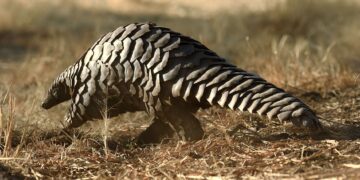
Ten years ago, a conversation in a Harare jewellery studio gave rise to an unlikely partnership between art and wildlife conservation. What began as a discussion about the growing number of pangolins arriving at the Tikki Hywood Foundation has since developed into one of the more distinctive collaborations between Zimbabwean craftsmanship and conservation, with the Pangolin Collection providing a platform through which jewellery has helped draw attention to the plight of one of the world’s most trafficked mammals.
The story began when Lisa Hywood, founder of the Tikki Hywood Foundation and a long-standing friend of Patrick Mavros Jr, visited the Patrick Mavros Studios in Umwinsidale, Harare. During their conversation, Hywood spoke about the increasing number of pangolins being received by the foundation, which specialises in rescuing, rehabilitating and releasing animals affected by illegal wildlife trafficking. For Mavros Jr, the discussion prompted a question that would shape the next decade of the studio’s work: how could jewellery bring pangolin conservation to the forefront?
It was a moment that transformed the pangolin from an object of artistic fascination into a cause with which he felt a personal responsibility. The resulting collection was conceived not simply as an exercise in design, but as a commercial initiative with a conservation commitment. Ten per cent of the proceeds from every piece sold would be donated to the Tikki Hywood Foundation. The proposition was straightforward, but its implications were considerable. Could an object of adornment become a vehicle for communicating the urgency of protecting a threatened species? Could the appeal of fine craftsmanship persuade people to engage with a conservation challenge they might otherwise have overlooked?



The design process required Mavros Jr to reconsider the relationship between representation and value. The intention was not merely to reproduce the physical characteristics of the pangolin in precious materials, but to encourage people to recognise that the living animal was worth infinitely more than any object fashioned in its image. The collection comprises earrings, pendants, cuffs and rings, with the pangolin’s distinctive scales providing the principal design inspiration. Their intricate detailing translates the animal’s natural armour into wearable forms, allowing the wearer to carry a representation of the species while engaging with the conservation cause behind it.
Yet the collection’s greater ambition lay beyond aesthetics. At the time of its introduction, public understanding of the pangolin’s plight remained limited. Despite being among the most heavily trafficked mammals in the world, pangolins attracted considerably less public attention than many other endangered species. Their secretive behaviour and nocturnal habits also made them less visible to the wider public. The challenge, therefore, was to make the animal recognisable and its predicament more widely understood without reducing conservation to a marketing exercise.
An unexpected contribution came through photography. Around the launch of the collection, Patrick Mavros Jr and his brother Alexander met photographer Adrian Steirn, who was introduced to the story behind the initiative during a conversation over tea. The encounter inspired Steirn to produce the now widely circulated images known as The Pangolin Men. The photographs helped bring the collection to a much wider audience, generating international attention and creating momentum around the conservation message. Their reach contributed to the collection becoming one of the most successful projects produced by Patrick Mavros Studios, while strengthening its relationship with the Tikki Hywood Foundation.
The partnership also illustrates how conservation initiatives can draw strength from institutions and individuals working beyond the traditional boundaries of wildlife protection. The foundation’s work now involves collaboration with the Zimbabwe Parks and Wildlife Management Authority, commonly known as ZimParks, bringing together conservation practitioners, wildlife regulators and private sector partners around the protection of pangolins. Over the past decade, the Tikki Hywood Foundation has also expanded its reach beyond Zimbabwe, with operations extending into 15 African countries. Its work has developed beyond the rescue and rehabilitation of pangolins to include public education and post-release monitoring. Tracking animals after their return to the wild allows conservation teams to observe their movements and identify potential signs of renewed threats, including possible poaching.
This broader approach is important because rescuing an animal is only one part of the conservation process. Long-term protection also depends on understanding the threats that persist in natural habitats, improving public awareness and strengthening the capacity of institutions responsible for wildlife protection. The Pangolin Collection’s contribution to this work is particularly interesting because it has approached conservation through a discipline not traditionally associated with wildlife campaigns. Public education initiatives often rely heavily on scientific information, statistics and warnings about the consequences of illegal trafficking. These remain essential, but the collection sought to establish an emotional and visual connection with the animal through design.

Mavros Jr has described the philosophy behind this approach with a characteristically direct observation: “A spreadsheet is not as good to look at as art.”

The remark captures the thinking behind the collection. Rather than presenting conservation information exclusively through figures and reports, the project used craftsmanship to create an object that could invite curiosity and conversation. The jewellery became an entry point through which customers could learn about the pangolin and the pressures threatening its survival. There is a broader lesson here about the role of the creative industries in public-interest campaigns. Art does not replace scientific research, conservation policy or the work of organisations on the ground. Its contribution lies in making complex or unfamiliar issues more accessible, giving audiences a visual reference point and creating opportunities for engagement that conventional awareness campaigns may not always achieve.
The collection also raises an important question about the responsibilities of businesses operating in creative industries. Commercial success and social impact are not necessarily competing objectives. When a product is connected to a clearly defined cause, its commercial reach can help finance work that extends well beyond the transaction itself. The effectiveness of such a model, however, ultimately rests on transparency, accountability and demonstrable benefits to the intended cause. For the Tikki Hywood Foundation, the decade-long relationship has provided a platform for expanding the public conversation around pangolin protection. For Patrick Mavros Studios, it has established a collection whose identity is inseparable from the conservation purpose that inspired it.
As the Pangolin Collection marks its tenth anniversary, Mavros Jr hopes that customers who have purchased pieces have come away understanding that their contribution extends beyond ownership of a jewellery item. He wants them to recognise that they have participated in supporting pangolin conservation. That distinction is central to the project’s enduring significance. The value of the collection cannot be measured solely by its commercial success or the craftsmanship of its individual pieces. It must also be understood through the awareness it has generated, the partnerships it has helped sustain and the conservation work it has supported.

A decade after that initial conversation in Umwinsidale, the Pangolin Collection offers a compelling example of what can happen when creative expression is directed towards a cause larger than itself. It has brought jewellery and wildlife protection into an unexpected partnership, demonstrating that the arts can do more than interpret the world around us. They can also help persuade people to protect it.
Written by Thabani Ndlovu