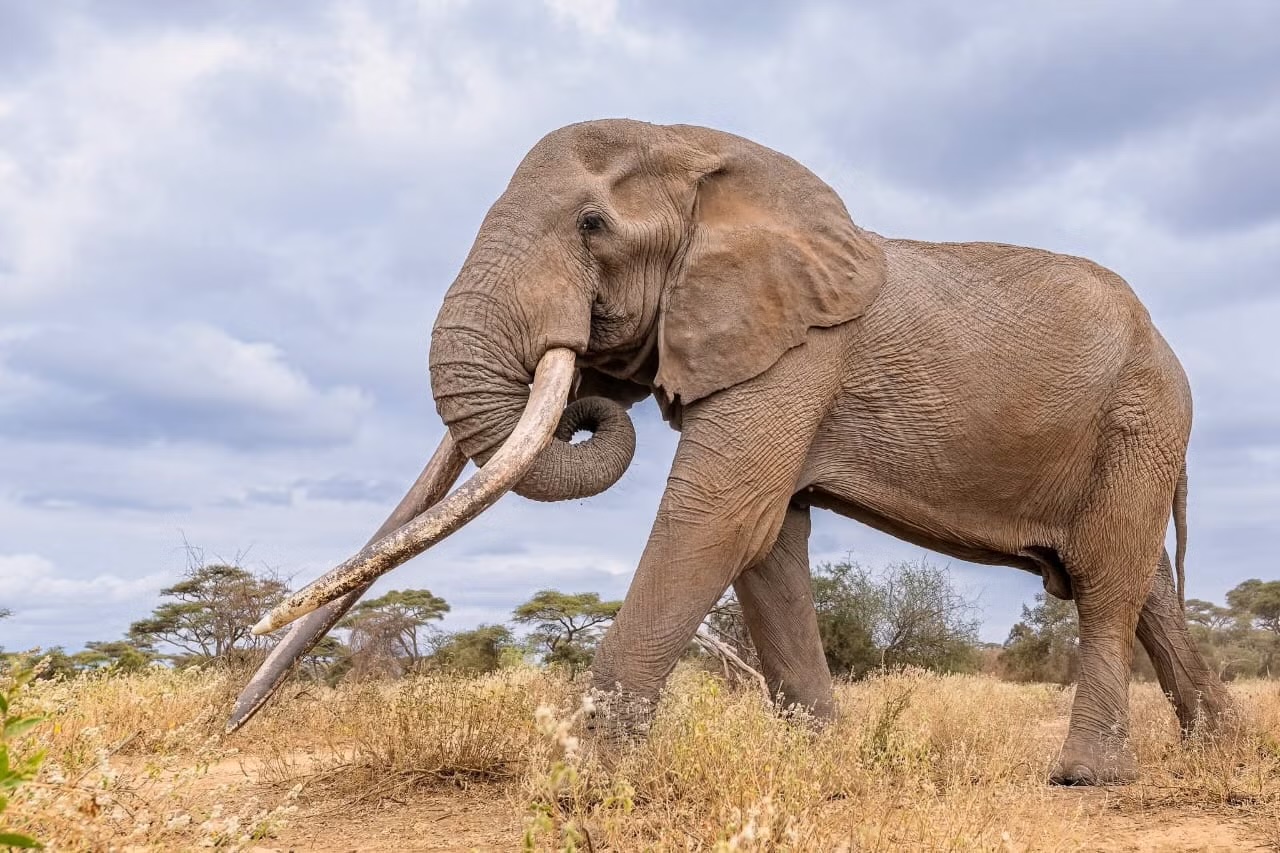
Kenya’s wildlife conservation community is in mourning following the death of Craig, a 54-year-old elephant celebrated across Africa for his immense tusks and serene presence. The Kenya Wildlife Service (KWS) confirmed the passing of the revered bull, describing him as a “true icon” whose life embodied the success of community-driven conservation in the region.
Craig, born in January 1972, was among the last remaining “super tuskers” in Africa, a rare category of bull elephants whose tusks each exceed 45 kilograms in weight. These majestic elephants are increasingly rare due to decades of poaching and habitat loss across the continent. Craig’s survival to an advanced age is being hailed by conservationists as a testament to the resilience of wildlife in protected ecosystems such as Amboseli National Park, located in southern Kenya near the Tanzanian border.
For decades, Craig stood as a living monument to Africa’s natural heritage. His gentle demeanour and imposing stature made him a favourite among visitors, photographers and conservationists alike. Beyond his fame, Craig contributed to the continuity of his species, having fathered several calves that continue his bloodline within the Amboseli ecosystem.



The Kenya Wildlife Service highlighted that Craig’s long life was secured through consistent monitoring, strong anti-poaching strategies, and the stewardship of local communities. “His life demonstrated what collective commitment to wildlife conservation can achieve,” the agency noted in its statement from Nairobi.

Across Africa, elephants hold deep cultural and ecological significance, serving as keystone species vital to the balance of savannah and forest ecosystems. Craig’s passing resonates beyond Kenya’s borders, symbolising both the fragility and endurance of Africa’s wildlife heritage.
Amboseli’s elephant population has been widely studied by researchers for over four decades, contributing valuable insights into elephant social structures, migration patterns and interactions with human communities. Conservation initiatives such as those championed by KWS and the Amboseli Trust for Elephants have become models for integrated conservation that respect both wildlife and the livelihoods of people living alongside them.
Craig’s calm presence and towering tusks turned him into a global ambassador for African elephants, yet his story remains profoundly local. It reflects a narrative not of tragedy but of coexistence — an example of how African-led conservation, grounded in traditional knowledge and modern scientific practice, can produce enduring legacies.

While the continent has lost one of its most recognisable elephants, Craig’s life and legacy will continue to inspire conservationists and communities alike to protect Africa’s remaining wildlife. His passing is a poignant reminder of the delicate equilibrium between nature and humanity, one sustained through mutual respect and shared responsibility.