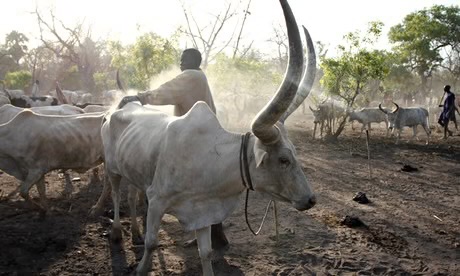
Under the fading light of Muglad, a town in Sudan’s West Kordofan once celebrated as a pastoral haven, 55-year-old herder Abdul-Khaliq Saeed stands among the remnants of his herd. Once the proud owner of 800 sheep and several camels, he now tends just 200. His hands, weathered by years of desert sun, rest on a tired ewe as he recounts his losses. Armed groups looted most of his livestock, others succumbed to hunger and disease, and the fodder stores that once sustained them were reduced to ash.
“I used to have enough to feed my family and others,” Saeed said, adjusting his white turban as he watched his animals graze on a barren stretch of land. “Now I sell one animal to feed the rest.” His voice carries the quiet resolve of someone who has learned endurance not as a choice but as a necessity.
Saeed’s story echoes across Sudan’s pastoral heartlands. Millions of herders in Kordofan and Darfur face a similar struggle, caught between violence, economic collapse, and ecological decline. For decades, livestock was not merely a means of livelihood but a cornerstone of Sudan’s social and economic identity. Before the war erupted in April 2023, the livestock sector contributed over 20 per cent of the national GDP and supported around seven million people. The country’s estimated 140 million animals once represented both wealth and stability.



Now, the sector lies in disarray. The Food and Agriculture Organization (FAO) reports that widespread looting, the burning of rangelands, and the destruction of veterinary centres have brought herders to the brink. According to the Environmental Conflict Centre, West Kordofan alone has seen herd numbers fall by roughly 40 per cent since the onset of fighting. Markets have collapsed, trade routes have closed, and fuel prices have tripled, making the transportation of fodder and water prohibitively expensive.
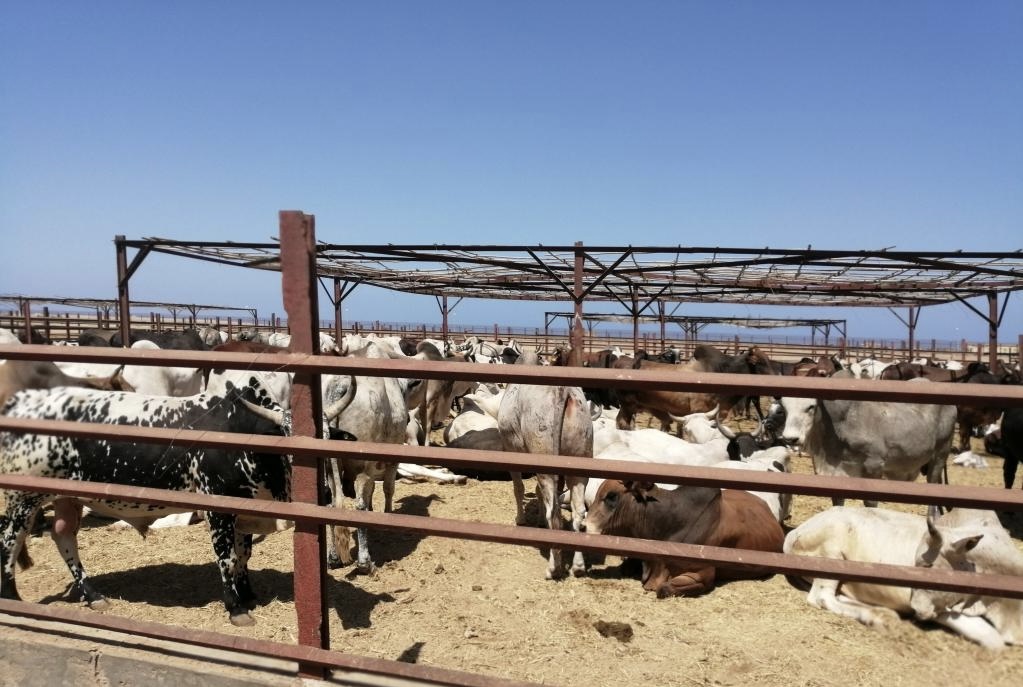
In the absence of functioning markets, pastoralists resort to survival tactics that erode their herds even further. “Water and pasture are so scarce that we sometimes hire vehicles to bring water from towns,” said Fadallah Makin, a herder from Al-Fula. “Fodder is almost impossible to find.” The consequences stretch beyond immediate hardship. As animals die or are sold prematurely, the long-term reproductive potential of herds diminishes, compounding economic fragility.
Sudan’s once-vibrant livestock export industry has also suffered staggering losses. According to World Bank data and national trade reports, the country has lost over one billion US dollars in export revenues in just the first half of 2025. This decline reverberates across the economy, depriving communities of income and the state of vital foreign currency.
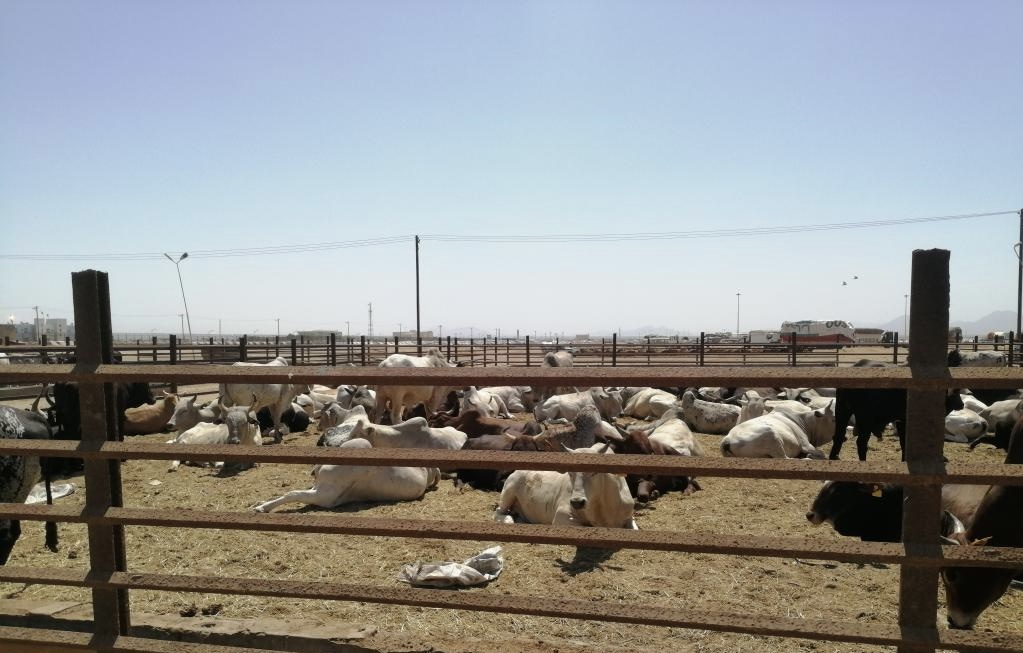
Yet amid this collapse, there are small but notable signs of resilience. In September 2025, Sudan managed to export four million head of livestock—a 10 per cent increase over the previous year—driven largely by consistent demand from Saudi Arabia and Egypt. The increase, though modest, underscores the enduring importance of pastoral production even in conditions of instability.

At the policy level, efforts to stabilise the sector are underway. The Ministry of Animal Resources and Fisheries, working with the FAO and local associations, has launched community vaccination campaigns covering nearly 70 per cent of herds in relatively secure regions. Ammar Al-Sheikh Idris, Undersecretary at the Ministry, explained that a new five-year national livestock strategy aims to restore production and build resilience through a combination of structural and environmental reforms.
The government’s plan includes creating livestock production cities, establishing fodder factories, localising vaccine production, and rehabilitating degraded rangelands. These initiatives, if realised, could reduce the country’s reliance on imports and strengthen its internal capacity for animal health management. “The livestock sector paid the price of war,” said Husham Saleh of the Livestock Exporters Association. “We lost slaughterhouses, quarantine stations, and research centres, and many animals died. Yet herders and the government have shown remarkable resilience.”
That resilience is most evident among pastoralists themselves. In areas where formal support has failed, informal networks of cooperation have emerged. Herders share grazing land, pool resources for fodder, and help one another transport water and animals to safer areas. This sense of solidarity underscores a longstanding communal ethic central to Sudanese pastoral life—an ethic of mutual care that often sustains communities when state institutions falter.
The current crisis, however, extends beyond the loss of animals. It threatens an entire way of life. Pastoralism in Sudan is not simply an economic activity but a deeply rooted cultural practice, shaping social structures, oral traditions, and communal identity. To lose livestock is to lose more than wealth—it is to lose continuity, memory, and belonging.
Yet the Sudanese herders’ endurance mirrors that of pastoral communities across Africa. From the Horn of Africa to the Sahel, herders are confronting overlapping crises of conflict, climate change, and displacement. The struggles of Sudanese pastoralists thus speak to a continental challenge: how to protect traditional livelihoods while fostering peace and development. As regional bodies such as the African Union and the Intergovernmental Authority on Development (IGAD) advocate for pastoral resilience programmes, Sudan’s experience offers a poignant case study of both vulnerability and perseverance.
As the sun dips below the horizon in Muglad, Saeed watches his remaining animals gather in a cloud of dust. “Livestock is not just a trade,” he says quietly. “It is our life.” His words, heavy with both loss and hope, capture the enduring spirit of Sudan’s pastoralists—people who continue to stand firm, even when the ground beneath them shifts.
The story unfolding in Sudan’s pastoral belt is not one of passive suffering but of survival against extraordinary odds. It is a reminder that African resilience is neither abstract nor romanticised. It lives in the daily choices of herders who refuse to abandon their flocks, in communities that share what little they have, and in nations that persist in rebuilding, even amid ruins.