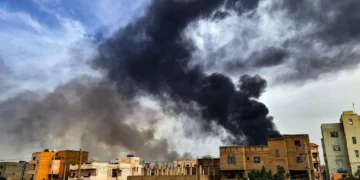
The Sudanese Armed Forces have formally announced their entry into the city of Dilling, situated in the South Kordofan region, marking a significant development in the ongoing conflict between the national military and the paramilitary Rapid Support Forces (RSF). The siege, which had persisted for over two years, had cut off essential supplies and deeply affected the civilian population.
According to a statement released by the Sudanese military on Monday, the operation involved the coordinated engagement of allied forces who successfully reopened the main access route into Dilling. Military officials confirmed the destruction of RSF-controlled vehicles and infrastructure surrounding the city. The operation has reportedly enabled the restoration of civilian movement and the resumption of vital supply routes.
Eyewitness accounts shared with The Southern African Times describe scenes of celebration and cautious relief as military units advanced into the city following days of skirmishes in its outskirts. Footage circulating across social media platforms, while unverified, appears to show local residents emerging to greet the incoming government forces. At the time of reporting, the RSF had not issued an official response to the developments in Dilling.



Dilling’s strategic and symbolic significance stems from its geographic position in the South Kordofan region, a site historically associated with intermittent conflict. The protracted siege began in the early phase of the power struggle that broke out in April 2023 between the Sudanese army and the RSF, originally a government-aligned paramilitary unit that later assumed a rival posture. The two-year blockade of Dilling has had devastating humanitarian consequences, compounding food insecurity and access to medical aid in a region already burdened by limited infrastructure.
While military officials have framed the development as a critical breakthrough, observers caution that the situation on the ground remains complex and volatile. The conflict between the national military and the RSF has resulted in the deaths of tens of thousands and the displacement of over seven million people, with many forced to flee to neighbouring countries. Sudan’s urban and rural areas alike have seen institutions and basic services collapse under the weight of ongoing violence.
On the same day as the Dilling announcement, General Abdel Fattah al Burhan, head of Sudan’s Sovereign Council and commander of the national military, reiterated his administration’s position in a separate statement. He reaffirmed the army’s intent to “end the rebellion” and secure national integrity, a sentiment that continues to shape the language of military campaigns across the country.
However, framing Sudan’s conflict solely through the lens of state authority versus insurgency overlooks deeper historical and political undercurrents. The emergence of the RSF and other non state actors reflects longstanding questions about marginalisation, uneven development and contestations over identity, resources and autonomy within the Sudanese state. A pan African lens demands a more layered understanding of these dynamics, especially in regions such as South Kordofan and Darfur, where cycles of violence have recurrently surfaced over decades.


International humanitarian organisations have repeatedly raised alarm over restricted access to besieged regions, including Dilling, warning of deteriorating conditions and the urgent need for corridors that allow the delivery of aid. As the army reclaims territory, the hope among many civil society actors is that such changes on the ground might permit renewed efforts toward negotiated settlements and reconstruction. However, durable peace in Sudan is unlikely to be achieved through military advances alone.
The developments in Dilling offer a moment for reflection not only on Sudan’s internal political calculus but on broader continental questions around peacebuilding, inclusive governance and the future of civilian protection in conflict zones. It is essential that African-led approaches to conflict resolution remain central to these discussions, resisting reductive or externally imposed frameworks that too often fail to capture the full scope of lived realities.