Across the African continent, a profound shift is redefining the way goods move. In what is being described as a logistical reawakening, Africa is undergoing a transition from road-based freight to a new railway-centric paradigm. This evolution is not merely infrastructural but emblematic of deeper transformations in how African states are asserting control over their development trajectories while navigating the demands of global energy transitions and environmental accountability.
At the heart of this shift lies the strategic reconsideration of transport logistics. Currently, approximately 80 percent of freight in Africa still moves by road. This imbalance, particularly evident in the mineral-rich Copperbelt spanning the Democratic Republic of the Congo and Zambia, imposes severe economic, infrastructural and ecological costs. One heavy-duty truck transporting 30 tonnes of copper exerts as much strain on road surfaces as ten thousand private cars. The consequences are acute: crumbling roads, prohibitively high maintenance costs and protracted transit delays that stifle economic fluidity. The dependence on road freight also impedes intra-African trade, undermining the objectives of the African Continental Free Trade Area.
The situation is particularly critical in the Democratic Republic of the Congo, which accounts for around seventy percent of global cobalt supply. Transporting ore by road from the DRC to ports such as Durban or Dar es Salaam can take over thirty days. Along these corridors, operators contend with logistical bottlenecks, unofficial levies at border crossings and security risks. For mining companies, the financial implications of having inventory immobilised on remote roads amid volatile commodity prices are considerable.



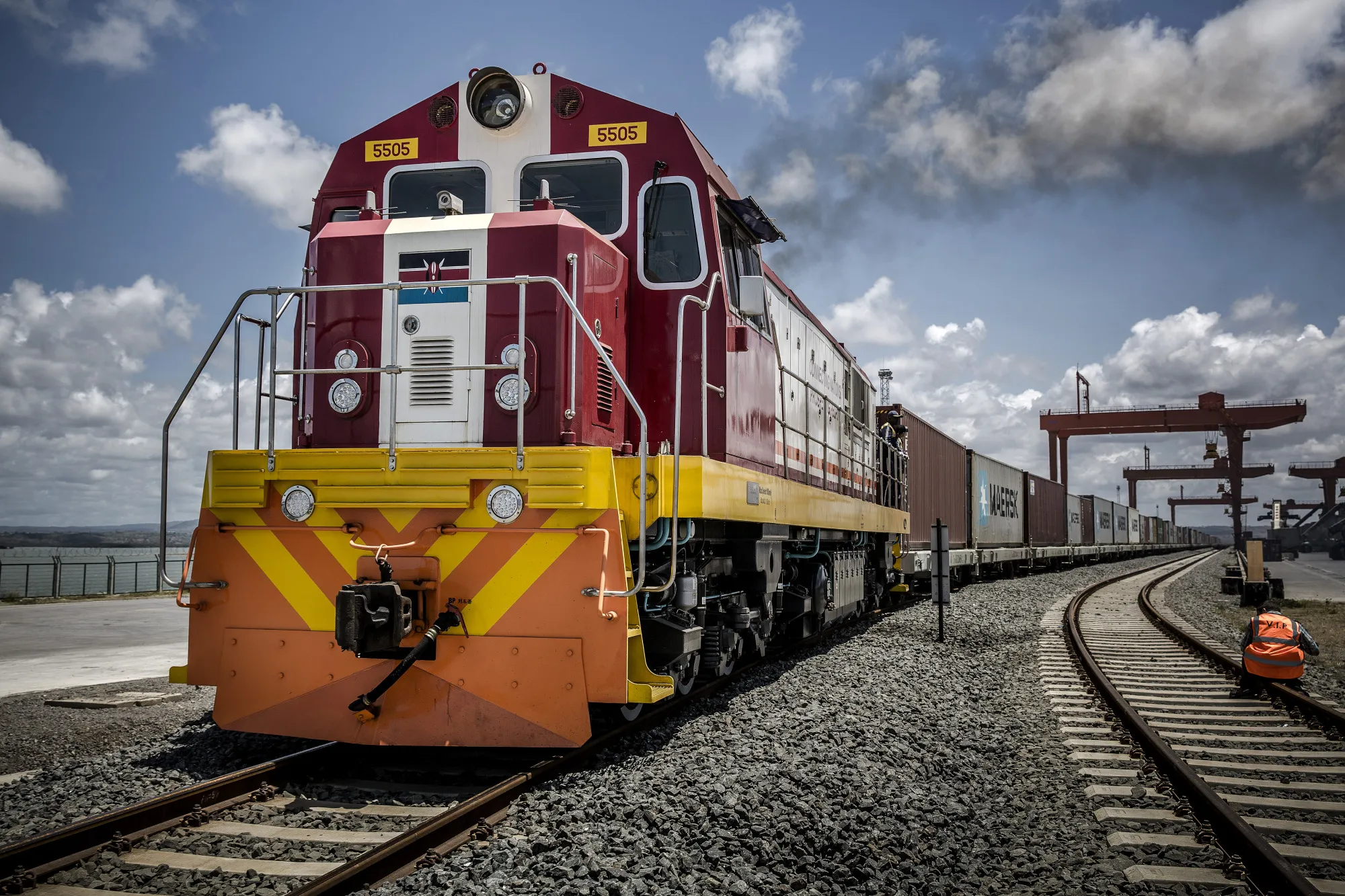
A single freight train, by contrast, can remove approximately one hundred trucks from circulation, significantly reducing emissions and circumventing some of the systemic inefficiencies inherent in overland trucking. According to the Roadmap for the Freight Logistic System in South Africa, the incapacity of the rail network to facilitate export is cited as the most pressing constraint on national economic growth after electricity shortfalls. Freight rail, therefore, is not merely a technical solution but an economic imperative.
In response, African states, supported by international financiers, are mobilising billions in investment to reconfigure the continent’s transport corridors. These initiatives are not unidirectional nor dominated by a single geopolitical actor. Rather, a multi-nodal contest is unfolding, shaped by both external interest and African agency.
In the west, the Lobito Corridor has emerged as a pivotal gateway. Spearheaded through a partnership between Angola, the Democratic Republic of the Congo and Zambia, the Lobito Atlantic Railway represents a flagship infrastructure project of the G7’s Partnership for Global Infrastructure and Investment. With over one billion US dollars in commitments from the United States and European Union, the project aims to provide an alternative to China’s established Belt and Road corridors. The corridor links the Congolese mineral heartlands with the Atlantic port of Lobito, offering exporters a ten-day route to ocean access compared to month-long journeys by road.
The Lobito Atlantic Railway Consortium, comprised of Trafigura, Mota-Engil and Vecturis, has secured a thirty-year concession to manage and upgrade the 1,300 kilometre railway. The inaugural copper shipment via the corridor was completed in August 2024, marking a significant operational milestone and demonstrating proof of concept. Proponents argue that the line could catalyse regional economic integration, facilitating not only mining exports but also agricultural trade.
To the east, the revival of the TAZARA railway underscores a parallel trajectory. Originally constructed in the 1970s with Chinese support, the line extends nearly 1,900 kilometres from Kapiri Mposhi in Zambia to Dar es Salaam in Tanzania. Although freight volumes had dwindled below 500,000 tonnes by 2023, a new $1 billion investment from China is set to transform the line. The modernisation includes full signalling upgrades, reinforced track and new rolling stock capable of handling increased axle loads. The reanimation of TAZARA offers Chinese firms a reliable conduit to Indian Ocean ports and aligns with China’s longstanding infrastructural partnerships across the continent.
These competing corridors should not be construed through a binary lens. While Western and Chinese-backed projects may reflect broader geopolitical alignments, the choice of infrastructure routes is being made through a pragmatic calculus by African governments that are increasingly vocal in defining their developmental needs.
A less visible but equally significant driver of the rail renaissance is the expanding influence of ESG criteria. The decarbonisation of supply chains has become non-negotiable for international investors. Scope 3 emissions, which account for the indirect environmental impact of a company’s operations, have become a focal point for regulatory bodies and shareholders. In response, companies such as Barrick Gold, which operates the Lumwana mine in Zambia, have committed to slashing Scope 3 emissions by thirty percent by the end of the decade. Given that mining companies cannot directly control the emissions generated by downstream smelters, optimising logistics is emerging as a critical mitigation tool.
Barrick’s proposed expansion of Lumwana into a super pit, positioning it among the world’s major copper producers, is contingent on a viable rail solution. In public statements, the company has affirmed that sustainable transport is integral to the long-term viability of its operations. Similarly, the European Union’s Carbon Border Adjustment Mechanism, which will levy tariffs on carbon-intensive imports, is expected to increase pressure on exporters to demonstrate low-emission supply chains.
The transformation underway is not without complexity. Financing, coordination across borders and the legacy of decades of underinvestment all pose formidable challenges. Yet, across the continent, there is a growing recognition that modern, efficient and sustainable rail infrastructure is essential not only for mineral exports but also for broad-based economic development.

The narrative emerging from this shift is distinctly African. While global actors remain influential, African governments and institutions are asserting a decisive role in shaping infrastructure futures. Rather than being passive recipients of foreign infrastructure, states are leveraging competition to secure terms aligned with local priorities. The goal is not simply to move minerals faster or cheaper but to reconfigure the economic geography of the continent in a way that enhances sovereignty, reduces environmental harm and creates long-term value for citizens.

As these corridors are rebuilt, so too are the pathways to regional integration, economic resilience and a more autonomous role for African countries in global supply chains. The road to transformation, it seems, increasingly runs on rails.