Saturday, April 25, 2026
  • Login
The Southern African Times
  • Home
  • Southern Africa
  • Business
    • African Start ups
    • African Continental Free Trade Area
  • Technology
    • Lifestyle
      • Health
      • Culture
      • Food and Drink
      • Entertainment
  • Opinion
  • Sports
  • SAT Jobs
    • Events
  • About Us
    • Advertise with Us
    • Contact Us
No Result
View All Result
  • Home
  • Southern Africa
  • Business
    • African Start ups
    • African Continental Free Trade Area
  • Technology
    • Lifestyle
      • Health
      • Culture
      • Food and Drink
      • Entertainment
  • Opinion
  • Sports
  • SAT Jobs
    • Events
  • About Us
    • Advertise with Us
    • Contact Us
No Result
View All Result
The Southern African Times
No Result
View All Result
Home Opinion

Sri Lanka’s infrastructure projects expose Chinese debt trap fallacy

by SAT Reporter
August 9, 2021
in Opinion
0
Sri Lanka’s infrastructure projects expose Chinese debt trap fallacy

The international port in Hambantota in southern Sri Lanka, formally named the Magampura Mahinda Rajapaksa Port but popularly known as the Hambantota Port, came a step closer to its aim of becoming a marine fuel supply hub in the region. In March it launched marine bunker fuel supply services with its Chinese partner Sinopec.

The increasing services the port is offering to vessels going through the Indian Ocean indicate the results of investments, much of which is from China and aimed to stimulate growth for the island and the region.

In fact, the Hambantota case demonstrates that Chinese investments in major ports across the world are aimed at strengthening strategic partnerships through unconditional innovation. The claims that China is creating a debt trap with such investments in low-income countries have been busted further with the recent construction of the Colombo Port City. Officially known as the Colombo International Financial City, it is a special economic zone and financial center.


ADVERTISEMENT

Though the American Ambassador to Sri Lanka, Alaina Teplitz, tried to cast a shadow on the project, saying its easy business rules could see it become a money laundering haven, the truth is it is a venture sanctioned by Sri Lanka’s parliament and regarded by cabinet ministers as being “fully Sri Lankan”. Moreover, it is expected to create 200,000 jobs and contribute $11.8 billion to the island’s GDP per year.
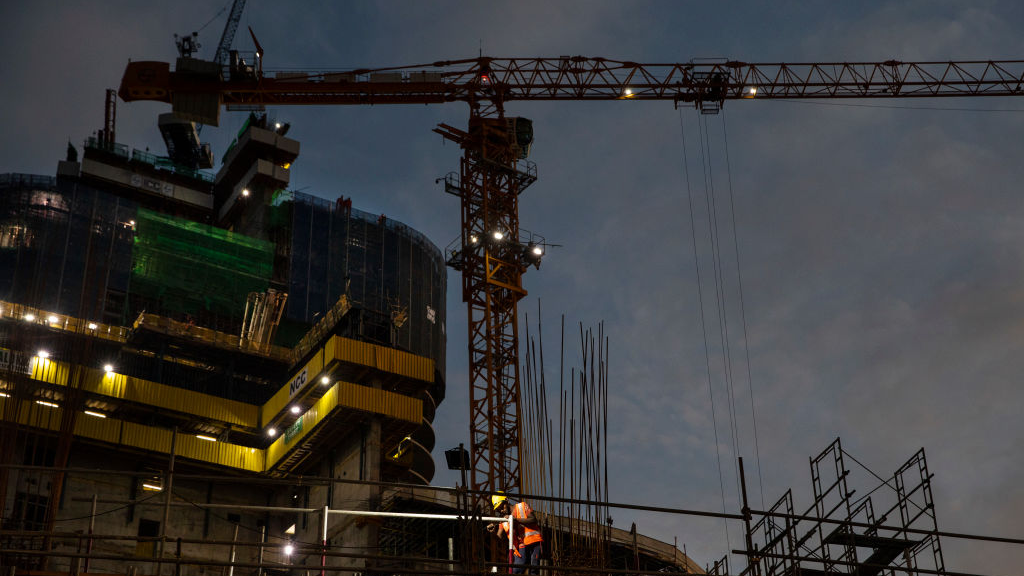
The construction site along the Galle Face in Colombo, Sri Lanka, November 20, 2018. /Getty

It is also deemed to be transparent and hinges upon a policy of non-alignment. The relationship between Beijing and Colombo is defined by their respective foreign policies as being close, based on mutual respect and geared at promotion of economic ties.

Chinese investments in the port, such as by Sinopec, have eased the difficulties Sri Lanka encountered while attempting to secure loans from the International Monetary Fund in 2020. Before the Chinese loans and investments came in, Sri Lanka’s foreign debt was close to $64 billion.

The Chinese investments, recently made as part of the Belt and Road Initiative, have led to the creation of industrial parks, special economic zones and platforms for marine gas oil exports, enabling Colombo to realize its economic potential. There is no military dimension to them, despite U.S. researchers and political scientists attempting since 2004 to depict them as endangering the security of the Indian Ocean.

Another case in point is the Gwadar Port in Pakistan, a flagship Belt and Road project. That too is based on trade and investments and with no hegemonic design.

The question is, why are respective U.S. administrations bent on challenging the Chinese narrative regarding investments in countries such as Sri Lanka despite such irrefutable evidence to the contrary. The alarmist arguments continue to be based on superficial and preconceived notions about the Belt and Road Initiative.

The pro-China sentiment in Sri Lanka shows how the people regard the reckless projections of Chinese investments as creating debt traps or encouraging corruption that will threaten Sri Lanka’s economy – as implausible. 

Hamzah Rifaat Hussain is a former visiting fellow at the Stimson Center in Washington and serves as assistant researcher at the Islamabad Policy Research Institute (IPRI) in Pakistan. The article reflects the author’s opinions and not necessarily the views of TSAT.

Previous Post

Samsung’s presence in Middle East, Africa phone market falls in Q2

Next Post

Op-Ed: Normalising the conversation around menopause in the workplace

SAT Reporter

Related Posts

Feeding the Future: Why AI and Agriculture Must Work Together
Opinion

Feeding the Future: Why AI and Agriculture Must Work Together

by Sonny Iroche
April 19, 2026
Julius Malema Sentenced to Five Years in Firearm discharge case
Opinion

Malema’s Sentence: A Test of South Africa’s Rule of Law in a Polarized Age

by Kundai Vambe
April 18, 2026
Zambia’s Copper and the Social Cost of Extraction Deals
The Editorial Board

Zambia’s Copper and the Social Cost of Extraction Deals

by Nothando Ndlovu
April 17, 2026
Op-Ed by Yemi Osinbajo, Former Vice President of Nigeria: Africa Is Losing the Iran War
Opinion

Op-Ed by Yemi Osinbajo, Former Vice President of Nigeria: Africa Is Losing the Iran War

by SAT Reporter
April 13, 2026
A Superpower Under Strain: Iran and the Limits of American Power
Opinion

A Superpower Under Strain: Iran and the Limits of American Power

by Kundai Vambe
April 8, 2026
Next Post
Op-Ed: Normalising the conversation around menopause in the workplace

Op-Ed: Normalising the conversation around menopause in the workplace

Browse by Category

  • Africa AI
  • African Continental Free Trade Area
  • African Debt
  • African Start ups
  • Agriculture
  • AI Africa
  • Algeria
  • All News
  • Analysis
  • Angola
  • Arts / Culture
  • Asia
  • BOTSWANA
  • Botswana
  • BREAKING NEWS
  • BRICS
  • Burkina Faso
  • Burundi
  • Business
  • Business
  • Business Wire
  • Cameroon
  • Central Africa
  • Chad
  • China
  • Climate Change
  • Climate Changev
  • Community
  • Congo Republic
  • Conservation
  • Côte d’Ivoire
  • COVID 19
  • CRYPTOCURRENCY
  • Culture
  • Democratic Republic of Congo
  • Diplomacy
  • Eastern Africa
  • Economic Development
  • Economy
  • Education
  • Egypt
  • Elections 2024
  • Energy
  • Entertainment
  • Environment
  • Eritrea
  • Ethiopia
  • Europe
  • Fashion
  • Feature
  • Finance
  • Financial Inclusion
  • Food
  • Food and Drink
  • Foods
  • GABON
  • Ghana
  • Global
  • Global Africa
  • Guinea
  • Health
  • Immigration
  • in Southern Africa
  • International news
  • International Relations
  • Investment
  • Ivory Coast
  • Just In
  • Kenya
  • Lesotho
  • Libya
  • Life Style
  • Lifestyle
  • Literature
  • Malawi
  • Malawi
  • Mali
  • Markets
  • Mauritius
  • Middle East
  • Mining in Africa
  • Morocco
  • Mozambique
  • Namibia
  • Niger
  • niger
  • Nigeria
  • North Africa
  • North-Eastern Africa
  • Obituaries
  • Obituary
  • Opinion
  • PARTNER CONTENT
  • Politics
  • Property
  • Racism
  • Rwanda
  • Rwanda
  • SADC
  • SAT Interviews
  • SAT Investigation
  • SAT Jobs
  • Saudi Arabia
  • Senegal
  • Seychelles
  • Somaliland
  • South Africa
  • South Sudan
  • Sports
  • Startup Africa
  • STOCK EXCHANGE
  • Sudan
  • Sustainability
  • Sustainablity
  • Tanzania
  • Technology
  • Telecommunications
  • The Editorial Board
  • The Power Of She
  • Togo
  • Trade
  • Travel
  • Travel
  • Tunisia
  • Uganda
  • Uncategorized
  • Wealth
  • West Africa
  • World
  • World
  • Zambia
  • ZAMBIA
  • ZIMBABWE
  • Zimbabwe

Browse by Tags

#NewsUpdate #SouthAfrica #SouthernAfricanTimes #TheSouthernAfricanTimes AfCFTA africa African Continental Free Trade Area African development African Development Bank African economies African economy African Union Agriculture Angola Botswana Business China Climate change Cyril Ramaphosa Economic Development economic growth energy transition fiscal policy industrialisation Inflation Infrastructure Infrastructure Development International relations Investment Kenya Mozambique Namibia news Nigeria Regional Integration renewable energy Rwanda SADC South Africa Southern Africa sustainable development Tanzania United States Zambia Zimbabwe
ADVERTISEMENT

WHO WE ARE

The Southern African Times is a regional bloc digital newspaper that covers Southern African and world news. The paper also gives a nuanced analysis on news and covers a wide range of reporting which include sports, entertainment, foreign affairs, arts and culture.

Welcome Back!

Login to your account below

Forgotten Password?

Retrieve your password

Please enter your username or email address to reset your password.

Log In

  • Home
  • Southern Africa
  • Business
    • African Start ups
    • African Continental Free Trade Area
  • Technology
    • Lifestyle
      • Health
      • Culture
      • Food and Drink
      • Entertainment
  • Opinion
  • Sports
  • SAT Jobs
    • Events
  • About Us
    • Advertise with Us
    • Contact Us
Are you sure want to unlock this post?
Unlock left : 0
Are you sure want to cancel subscription?