

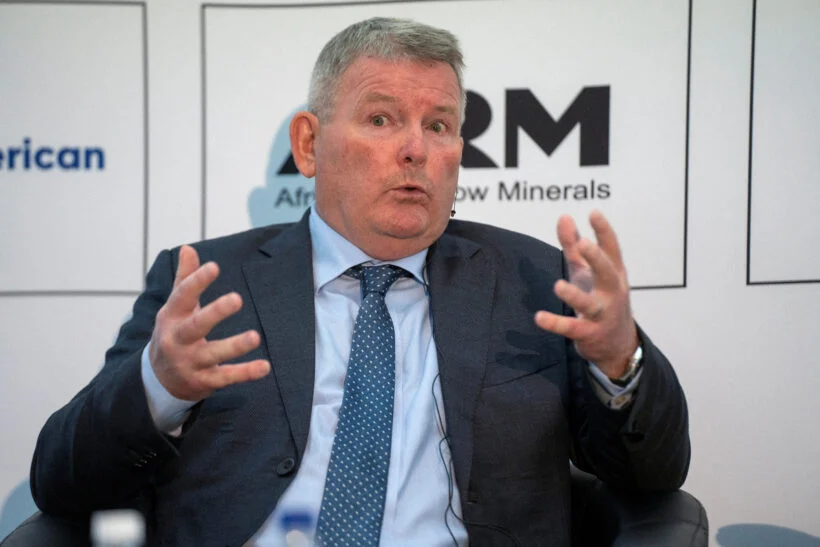
South Africa’s platinum mining industry, long a cornerstone of the nation’s economy, has entered an era of irreversible decline, exacerbated by sustained low prices and the burgeoning rise of battery electric vehicles (BEVs). Paul Dunne, CEO of Northam Platinum, articulated the grim outlook on Friday, signalling the waning dominance of the white metal that once commanded prices exceeding $2,000 per ounce.
The precipitous drop in platinum’s value, which has tumbled by 13% since the start of last year to a current price of $939 an ounce, underscores the mounting challenges faced by the sector. Northam Platinum, South Africa’s fourth-largest platinum producer, reported an alarming 81.6% plunge in headline earnings per share for the year ending June, a decline from 24.15 rand to a mere 4.45 rand. This sharp contraction in earnings is emblematic of the broader malaise afflicting the industry, as palladium and rhodium—platinum’s sister metals—also face significant price declines. Palladium has seen a 40% decrease in 2023, while rhodium, once trading near $30,000 an ounce in 2021, now languishes at around $4,750 an ounce.
These dismal financial results were reflected in Northam’s share price, which fell by 8.2% by early afternoon trading on Friday. The broader implications for South Africa’s mining industry are profound, with Dunne forecasting a 10% reduction in national platinum output over the next five years, decreasing from the current level of approximately 3.9 million ounces to around 3.5 million ounces.
Despite the sector’s struggles, Northam Platinum aims to stabilise its output at roughly 1 million ounces annually, bolstered by increased production at the Eland mine, acquired in 2017. However, Dunne’s expectations are tempered by the industry-wide decline, which he attributes to a failure to invest in new mines. This underinvestment has compounded the natural depletion of South Africa’s ageing mining shafts, further accelerating the industry’s decline.
“We haven’t replaced that asset base and the asset base is a depleting asset, all mines are depleting assets from day one,” Dunne remarked. He estimates that the country’s platinum output will diminish by approximately 500,000 ounces every five years, as investors remain reluctant to commit to new mining projects in an increasingly uncertain market.
The decline of South Africa’s platinum industry mirrors the fate of its once-mighty gold sector, which has seen its global standing plummet from the world’s largest producer to a distant twelfth. The erosion of South Africa’s mining prowess is compounded by the high operational costs of its platinum mines, many of which are among the deepest and least mechanised in the world.
Impala Platinum CEO Nico Muller echoed Dunne’s sentiments, suggesting that the construction of new mines in South Africa is “highly improbable” under the current market conditions. The retreat of these once-dominant industries signals a profound shift in South Africa’s economic landscape, as the nation grapples with the long-term implications of a diminishing mining sector that still employs over 181,000 workers directly.
As South Africa’s platinum miners navigate this perilous period, the industry’s future hinges on its ability to adapt to the twin challenges of depleted resources and the accelerating transition towards electric vehicles, which threaten to render traditional autocatalyst metals increasingly obsolete.





