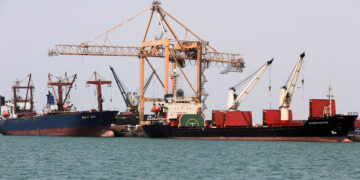
South Africa’s automotive sector recorded its highest ever vehicle export volume in 2025, reaching 414,268 units, according to the latest quarterly review published by the National Association of Automobile Manufacturers of South Africa, known as NAAMSA. The figure represents a 5.9 percent increase from the 391,128 units exported in 2024 and accounts for 70.3 percent of the country’s light vehicle production.
The data, released by NAAMSA, indicates that South Africa exported both left hand drive and right hand drive vehicles to 109 countries. The industry remains one of the most globally integrated manufacturing sectors on the continent and is closely tied to international trade frameworks and market access arrangements.
Despite the overall increase in export volumes, shipments to North America declined significantly. Exports to the United States and Canada fell from 25,554 units in 2024 to 6,530 units in 2025. NAAMSA attributes much of this contraction to the Section 232 automotive duties imposed by the United States under its trade expansion legislation. Details of these measures are available through the United States International Trade Commission, which outlines the national security based tariffs affecting vehicle imports.



Exports to Asia also decreased from 29,265 units to 19,287 units, largely due to reduced shipments to Japan. These shifts underscore the sensitivity of South Africa’s export performance to policy changes and demand fluctuations in key destination markets.
In contrast, exports to Europe rose markedly. A total of 332,695 vehicles were shipped to European markets in 2025, up from 295,762 units the previous year. Europe accounted for 80.3 percent of total vehicle exports, meaning that four out of every five vehicles exported from South Africa were destined for the European Union or the United Kingdom. According to NAAMSA, 57 percent of domestic light vehicle production was directed to this region.
This performance reflects the continuing importance of the Economic Partnership Agreement between the Southern African Development Community and the European Union, as well as the parallel agreement with the United Kingdom. Information on these frameworks can be accessed through the European Commission trade portal and the United Kingdom government trade agreements page. These arrangements provide preferential market access for qualifying South African manufactured goods, including motor vehicles.
The sector’s resilience in 2025 therefore appears closely linked to diversified export destinations and established trade partnerships. However, the concentration of exports in Europe also exposes the domestic industry to regulatory transitions underway in that region. The European Union has legislated to end the sale of new internal combustion engine vehicles from 2035, a policy direction that is reshaping global automotive value chains. South Africa’s production base, which historically specialised in internal combustion engine platforms for export, will need to adapt to electrification and associated technological shifts if it is to maintain its role in global supply networks.

The implications of these changes extend beyond assembly plants. Automotive manufacturing in South Africa supports a broad supplier ecosystem spanning component manufacturers, logistics operators, and service providers across several provinces. A reduction in export volumes to any major market has cascading effects on upstream suppliers, economies of scale, and employment. Conversely, growth in export demand contributes to foreign exchange earnings and industrial stability within the Southern African region.
From a pan African perspective, South Africa’s export performance highlights both the opportunities and vulnerabilities inherent in export oriented industrialisation. While preferential trade agreements have enabled sustained access to major markets, long term competitiveness will depend on technological upgrading, regional value chain integration, and alignment with evolving global standards. The African Continental Free Trade Area also presents scope for deeper intra African automotive trade, complementing established transcontinental linkages.
The 2025 export record should therefore be understood not only as a statistical milestone but also as a reflection of structural dynamics within global trade and manufacturing. South Africa’s automotive industry remains firmly embedded in international markets, yet its future trajectory will be shaped by policy developments abroad, domestic industrial strategy, and the broader transformation of mobility worldwide.