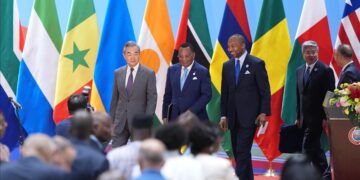
London Mayor Sadiq Khan has announced that the capital will host its first London-Africa Business Summit in 2026. The declaration was made during an ongoing trade mission across the African continent, where the mayor is engaging with policymakers, investors, and business leaders in Nigeria, Ghana, and South Africa.
The summit, which will convene stakeholders from all 54 African nations, is intended to expand commercial ties between London and Africa. It will bring together entrepreneurs, institutional investors, government representatives, and trade organisations with a shared objective of advancing economic cooperation. According to the Greater London Authority, the initiative is part of a broader strategy to position London as a more prominent gateway for African innovation, capital, and trade.
Mr Khan, who commenced his mission in Lagos earlier this week and will continue to Accra, Johannesburg, and Cape Town, highlighted the untapped potential of stronger bilateral ties. “Expanding ties with Africa will be key to delivering our international trade ambitions, creating thousands of good jobs in the next five years and beyond,” the mayor stated. He further noted that London’s deep-rooted historical and cultural linkages with the continent remain an enduring asset in fostering collaboration.




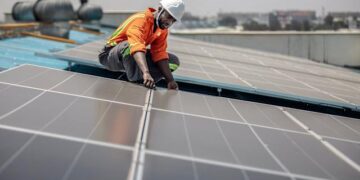
According to figures provided by City Hall, Africa currently accounts for approximately 1.25% of foreign direct investment (FDI) into London. While this represents a relatively small proportion, there is growing recognition of Africa’s economic dynamism, especially in digital technology, infrastructure, and clean energy sectors. In 2024, total trade in goods and services between the United Kingdom and Africa amounted to £49 billion, as reported by the Office for National Statistics.
The summit’s focus on innovation aligns with recent developments in Africa’s urban tech hubs. Lagos has been widely recognised as the leading technology ecosystem in Africa, while London maintains its position as Europe’s foremost tech centre. “Lagos is the number one tech city in Africa and London is the number one tech city in Europe. I’m hoping to create partnerships that lead to wealth, prosperity and jobs,” the mayor told BBC News.
Among those welcoming the initiative is Nigerian restaurateur Kolawole Ajayi, whose entrepreneurial ventures in Peckham exemplify the success of diaspora enterprise. “We have a lot of brains in Nigeria that if London can nest that and create an opportunity, there will be big growth,” he said. His comments reflect a growing sentiment among African entrepreneurs in London that strategic collaboration can unlock significant economic value on both sides.


Labour MP and Foreign Secretary David Lammy, who represents the Tottenham constituency in north London, also expressed support for the summit. “London is a global city where the world comes to do business,” he remarked. His endorsement underscores the UK’s continued repositioning of its role in African development and diplomacy, particularly in the post-Brexit era.
However, the trade mission has not been without criticism. Conservative Shadow Chancellor Mel Stride expressed reservations, suggesting that the mayor should prioritise domestic urban issues, including retail crime, over international travel. Nevertheless, City Hall maintains that such international engagement is essential for securing inward investment and enhancing London’s global economic footprint.
The planned summit builds on broader trends in international investment, where Africa’s youthful demographics, mobile penetration, and growing middle class are attracting interest from global investors. The emphasis on mutual benefit and long-term partnership is seen as crucial in reshaping the UK-Africa economic relationship.
The London-Africa Business Summit is set to be a landmark event, one that could herald a recalibration of London’s commercial outreach toward the African continent. More details regarding the summit programme, participant registration, and sector-specific forums are expected to be released by the Greater London Authority in the coming months.