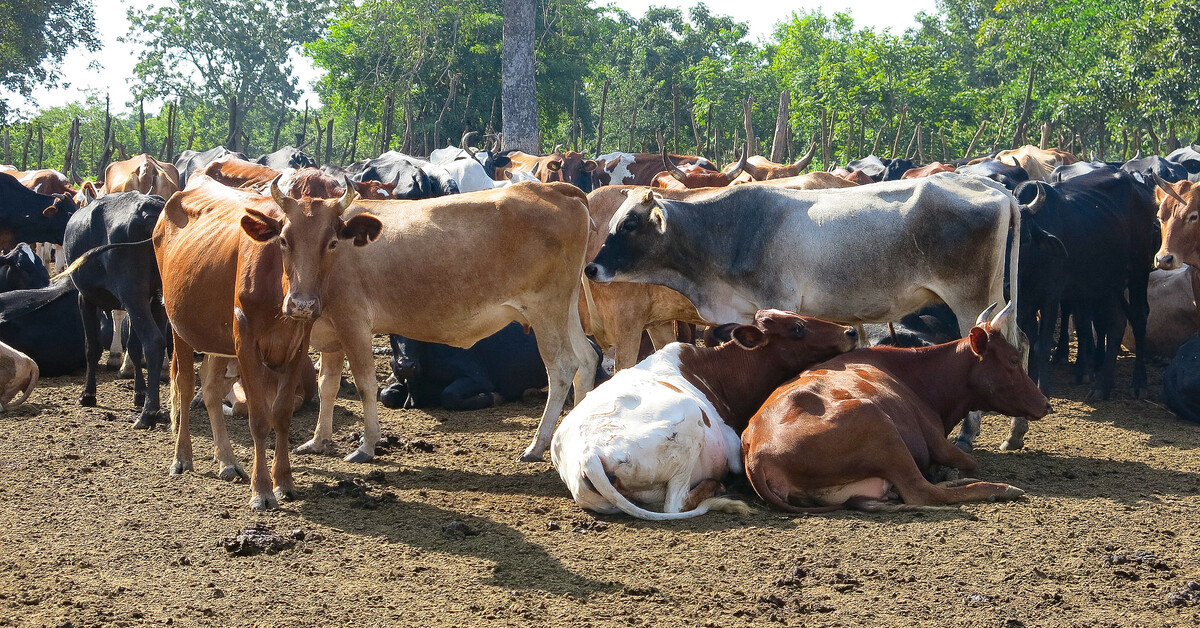
International research organisations have launched a sophisticated digital application aimed at revolutionising livestock management across sub-Saharan Africa.
The International Livestock Research Institute (ILRI), headquartered in Nairobi, and the Centre for Tropical Livestock Genetics and Health (CTLGH) jointly unveiled the Dairy Data App under the African Asian Dairy Genetics Gains initiative. This innovative tool, designed for Android smartphones, seeks to bolster livestock health, improve feeding practices, and streamline artificial insemination efforts.
Between September and October, the app was introduced in Ethiopia, Kenya, Tanzania, and Uganda, providing farmers with unprecedented access to real-time data on their herds. With capabilities to log and retrieve historical information on livestock feeding, health, breeding, and productivity, the application promises to alleviate long-standing challenges faced by smallholder farmers.
Dr Raphael Mrode, ILRI principal scientist and CTLGH researcher, highlighted the app’s transformative potential for animal husbandry in Africa. “By empowering farmers to record their own data, we reduce the cost of information collection while improving accuracy and accessibility. This tool represents a significant step forward for smallholder farming communities,” said Mrode.
In addition to enabling seamless data entry and retrieval, the Dairy Data App features modules that track critical metrics such as milk yield, farm size, animal traits, and pedigree. This data-driven approach equips farmers with the knowledge to make informed decisions, fostering greater productivity and sustainability.
Jennifer Volk, Senior Information and Data Systems Lead at CTLGH, emphasised the app’s intuitive design and its potential to address the unique challenges faced by smallholder farmers. “The user-friendly interface and real-time feedback will enable farmers to monitor and manage livestock more effectively, ultimately enhancing yields,” Volk noted.
To further expand its reach, the app will soon be translated into local African dialects, ensuring accessibility for farmers in diverse linguistic regions.
This pioneering initiative underscores the vital role of digital innovation in advancing agriculture across Africa, paving the way for a more resilient and productive livestock sector.