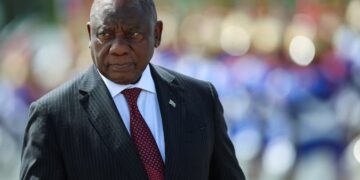
South African President Cyril Ramaphosa has dismissed Higher Education Minister Nobuhle Nkabane, a move aimed at easing tensions within the country’s fragile coalition government ahead of a key parliamentary vote on the national budget.
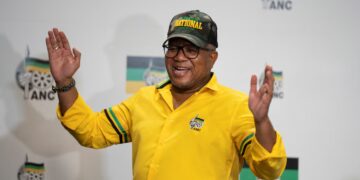
The announcement was made by the presidency on Monday, following sustained pressure from the Democratic Alliance, the second largest party in the coalition. The DA accused Nkabane of misconduct, alleging that she played a role in appointing individuals with ties to the ruling African National Congress to the boards of key skills development entities, and subsequently misled parliament to conceal those actions.
Nkabane has strongly denied the allegations. According to local broadcaster eNCA, she issued a statement saying it had been a privilege to serve in her ministerial role. The DA, meanwhile, welcomed the decision to remove her from office, calling it a necessary step in holding government ministers to account.



Her dismissal comes just days before parliament is due to vote on the Appropriation Bill, the final major piece of budget legislation for the financial year. The DA had threatened to vote against budget allocations for departments led by ANC ministers accused of misconduct, including Nkabane, raising concerns that the vote could become a flashpoint in the coalition’s short history.
The dispute also follows another recent dismissal within the coalition, when Ramaphosa fired the DA’s deputy minister for trade after she travelled abroad without securing presidential approval. That incident further strained the already delicate relationship between the ANC and DA, whose uneasy alliance has defined South Africa’s political landscape since the country’s historic election earlier this year failed to produce a clear majority.

The decision to remove Nkabane is widely seen as a strategic attempt by Ramaphosa to protect the cohesion of the government and secure parliamentary support for the national budget. Analysts say it reflects the complex dynamics of a power-sharing arrangement that is still finding its footing.
Ramaphosa’s ANC, while still the largest party in parliament, now relies on coalition partners such as the DA to pass legislation and govern effectively. The arrangement has forced unprecedented compromises between parties with significantly different political priorities and governing styles.
With the Appropriation Bill scheduled for debate and a vote on Wednesday, the spotlight remains firmly on the stability of the coalition and whether its leaders can keep the government functioning without further political fallout.
The removal of Nkabane may have bought the president time and political capital. But the underlying tensions remain unresolved, and observers warn that future flashpoints are likely as the coalition navigates its first full year in power.