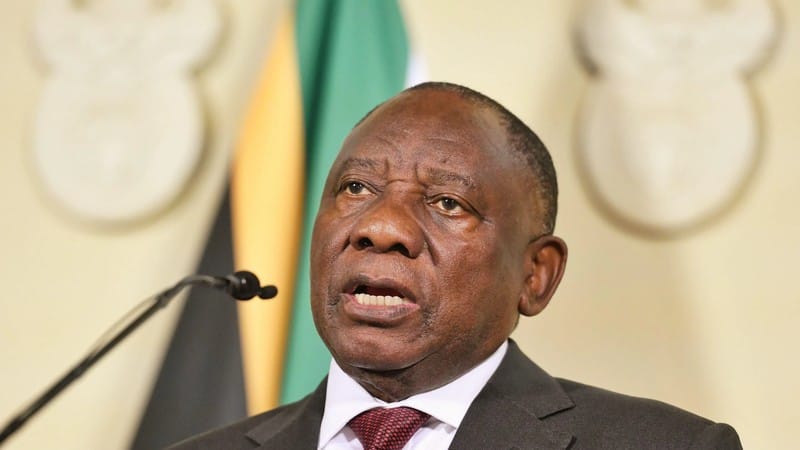
In an unprecedented move, President Cyril Ramaphosa announced the formation of a Government of National Unity (GNU), encompassing eleven political parties. This decision follows the landmark election held on 29 May, where South Africans mandated political cooperation for transformation, growth, and renewal.
The GNU comprises the African National Congress (ANC), Democratic Alliance (DA), Patriotic Alliance, Inkatha Freedom Party, Good Party, Pan Africanist Congress of Azania, Freedom Front Plus, United Democratic Movement, Al Jama-ah, Rise Mzansi, and the United Africans Transformation. This coalition is guided by a Statement of Intent, emphasizing constitutional respect, transparent governance, evidence-based policy-making, and the professionalization of the public service.
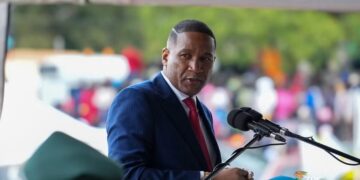
President Ramaphosa highlighted the collaborative spirit that marked the discussions leading to the GNU’s formation. “We have shown that there are no problems too difficult or too intractable that they cannot be solved through dialogue,” he said.
The new administration aims to address critical issues such as poverty, inequality, and sustainable economic growth. To facilitate these goals, several government portfolios have been restructured. Notably, the ministries of Electricity and Energy have been merged, while new separate ministries for Mineral and Petroleum Resources, and Higher Education and Science, Technology and Innovation have been established.
The National Executive appointments include:
- Deputy President: Paul Mashatile
- Minister of Agriculture: John Steenhuisen
- Minister of Land Reform and Rural Development: Mzwanele Nyhontso
- Minister of Basic Education: Siviwe Gwarube
- Minister of Communications and Digital Technologies: Solly Malatsi
- Minister of Defence and Military Veterans: Angie Motshekga
- Minister of Electricity and Energy: Kgosientsho Ramokgopa
- Minister of Science, Technology and Innovation: Blade Nzimande
- Minister of Employment and Labour: Nomakhosazana Meth
- Minister of Finance: Enoch Godongwana
- Minister of Forestry, Fisheries and the Environment: Dion George
- Minister of Health: Aaron Motsoaledi
- Minister of Higher Education: Nobuhle Nkabane
- Minister of Home Affairs: Leon Schreiber
- Minister of Human Settlements: Mmamoloko Kubayi
- Minister of International Relations and Cooperation: Ronald Lamola
- Minister of Justice and Constitutional Development: Thembi Nkadimeng
- Minister of Mineral and Petroleum Resources: Gwede Mantashe
- Minister of Planning, Monitoring and Evaluation: Maropene Ramokgopa
- Minister of Police: Senzo Mchunu
- Minister in the Presidency: Khumbudzo Ntshavheni
- Minister of Public Service and Administration: Mzamo Buthelezi
- Minister of Public Works and Infrastructure: Dean Macpherson
- Minister of Small Business Development: Stella Ndabeni-Abrahams
- Minister of Social Development: Sisisi Tolashe
- Minister of Sport, Arts and Culture: Gayton McKenzie
- Minister of Tourism: Patricia De Lille
- Minister of Trade, Industry and Competition: Parks Tau
- Minister of Transport: Barbara Creecy
- Minister of Water and Sanitation: Pemmy Majodina
- Minister of Women, Youth and Persons with Disabilities: Sindisiwe Chikunga
- Minister of Correctional Services: Pieter Groenewald
This diverse and inclusive executive is tasked with addressing the nation’s urgent challenges. President Ramaphosa called for national support and participation in a forthcoming National Dialogue, aimed at uniting various sectors of society to confront these issues collectively.
In his concluding remarks, President Ramaphosa emphasized the responsibility and commitment of the new government to serve all South Africans, underscoring a collective dedication to national progress and unity.