Sunday, July 5, 2026
  • Login
The Southern African Times
  • Home
  • Southern Africa
  • Business
    • African Start ups
    • African Continental Free Trade Area
  • Technology
    • Lifestyle
      • Health
      • Culture
      • Food and Drink
      • Entertainment
  • Opinion
  • Sports
  • SAT Jobs
    • Events
  • About Us
    • Advertise with Us
    • Contact Us
No Result
View All Result
  • Home
  • Southern Africa
  • Business
    • African Start ups
    • African Continental Free Trade Area
  • Technology
    • Lifestyle
      • Health
      • Culture
      • Food and Drink
      • Entertainment
  • Opinion
  • Sports
  • SAT Jobs
    • Events
  • About Us
    • Advertise with Us
    • Contact Us
No Result
View All Result
The Southern African Times
No Result
View All Result
Home Opinion

Piece by piece, the BRICS really are building a multipolar world

by SAT Reporter
August 29, 2023
in Opinion
0
Piece by piece, the BRICS really are building a multipolar world

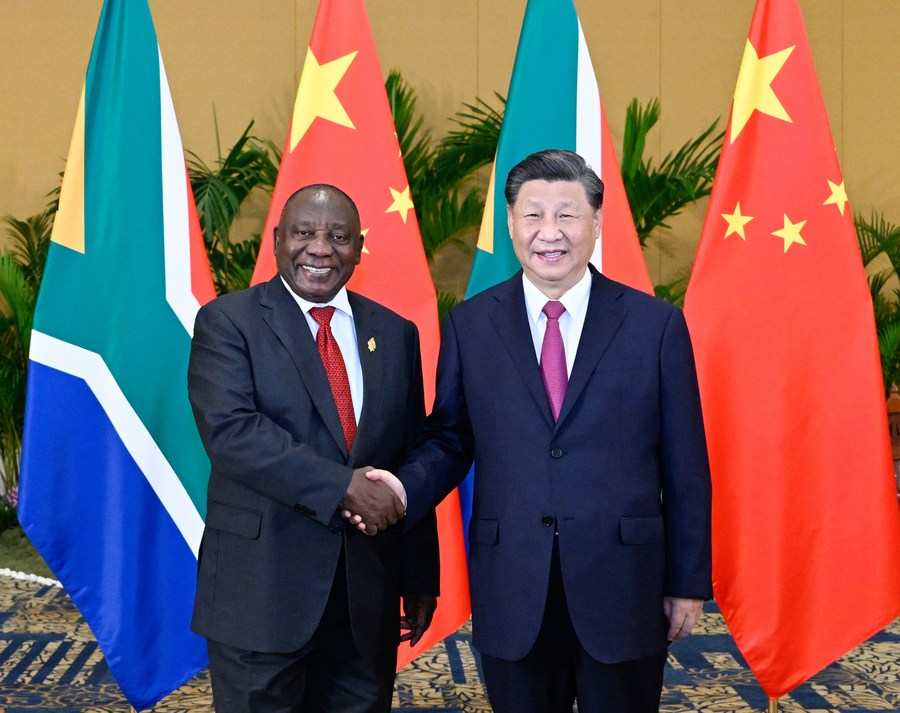
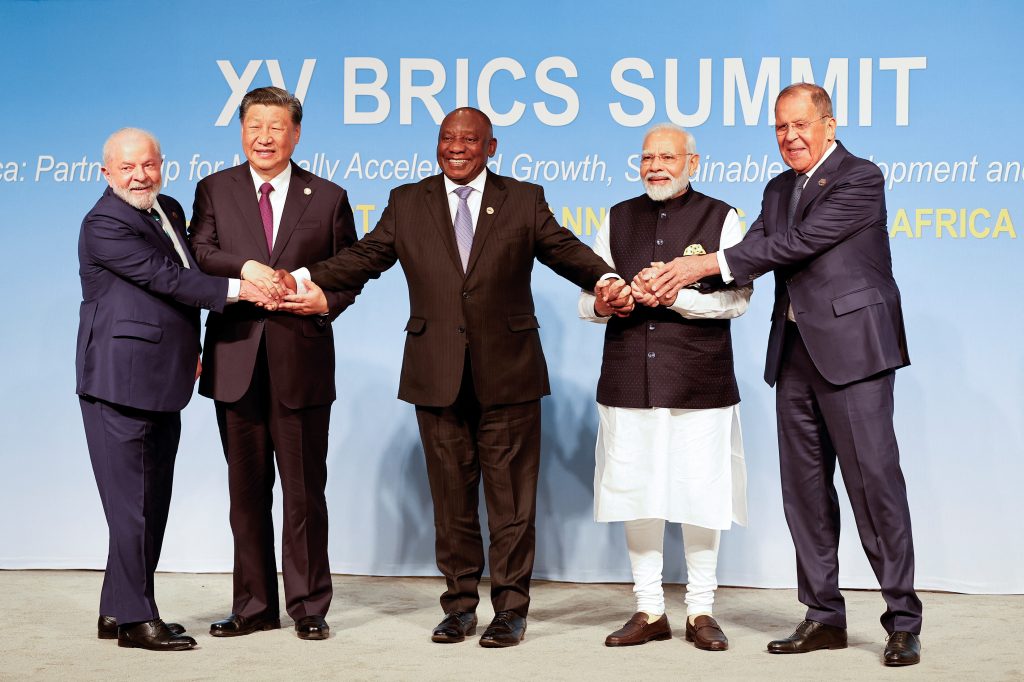
Since its origin in 2001 as shorthand for a set of fast-growing, populous emerging markets, the BRICS group of Brazil, Russia, India, China, and South Africa has emerged as a formidable economic and geopolitical power. The fifteenth BRICS summit this week in Johannesburg, South Africa, will be one of the most consequential in the bloc’s history. What comes out of the summit has the potential to fast-track the transition to a multipolar world through the expansion of the group and the forging of a new financial architecture not dependent on the US dollar.

Together, the BRICS countries have already overtaken the Group of Seven (G7) advanced economies in terms of their contribution to global gross domestic product, with the group now accounting for almost a third of worldwide economic activity measured by purchasing power parity. The consequences of this economic rise have reverberated through a number of areas, including trade. While trade between Russia and the G7 has fallen by more than 36 percent since 2014 under the weight of economic and financial sanctions, trade between it and the other BRICS nations has soared, increasing by more than 121 percent over the same period. China and India have become the largest importers of Russian oil following bans imposed by the European Union. China’s trade with Russia hit a record of $188.5 billion dollars last year, a 97 percent increase from 2014 and around 30 percent greater than in 2021. The surge occurred as Russia more than doubled its rail exports of liquefied petroleum gas as part of a drive to diversify its exports under the harsh sanctions regime.

By opting not to comply with western-led economic and financial sanctions, the solidarity of BRICS has been a balm for Russia. The bloc has offered trade diversion and other relief to one of its founding members and, in the process, weakened the effectiveness of US-led sanctions as a tool for advancing economic and geopolitical interests.


ADVERTISEMENT

currencies in cross-border transactions. Their use is helping to sustain and boost cross-border trade between members, even amid a challenging operating environment of heightened geopolitical risks. It is also loosening the balance of payments constraints associated with dollar funding, bolstering local economies.

Although China and India may have diverging security interests, they each stand to benefit from the increased use of local currencies. BRICS nations are already using their own currencies for some bilateral trade payment settlement, and Saudi Arabia is considering signing a deal with China to settle oil transactions in renminbi. Meanwhile India is expanding the use of local currencies for bilateral trade payment and settlement beyond the BRICS group, inviting more than twenty countries to open special vostro bank accounts to settle trade in rupees. In a history-making move, India made its first oil payment to the United Arab Emirates in rupees earlier this month.

If the BRICS group expands its membership, then it could increase the risk of a divergence of interests and raise more coordination challenges—but it could also dramatically expand the group’s consumption power, with significant economic and geopolitical implications. Expansion could create scale and enhance the transition from bilateral to multilateral clearing, and perhaps ultimately toward a common BRICS currency. This would address one of the major challenges associated with the use of local currencies for bilateral trade payment settlement: the difficulty of deploying these currencies once imbalances arise. Lately, such challenges led to the suspension of bilateral trade arrangements that had allowed India to settle imports of Russian oil in rupees, with Russia accumulating billions of Indian rupees that it could not use.

Meanwhile, membership expansion could further weaken the effectiveness of US-led economic sanctions and accelerate the multipolarization of the global monetary order. Several members of the Organization of Petroleum Exporting Countries have already said they wish to join the BRICS group, which would increase the shared benefits associated with the use of local currencies for cross-border transactions and could further curtail the volume of global trade conducted in dollars.

To be sure, the stickiness of institutional arrangements, along with the breadth and depth of US financial markets is such that dollar dominance will remain a key feature of the global financial architecture for some time. But following membership expansion, the BRICS group could set in motion its transformation into an even more powerful geopolitical coalition that could accelerate the process of dedollarization and the transition to a multipolar world.


Hippolyte Fofack is the chief economist and director of research at the African Export-Import Bank (Afreximbank).The article reflects the author’s opinions and not necessarily the views of The Southern African Times.


Previous Post

French Ambassador Remains in Niger Amidst Coup Fallout, Defying Ultimatum

Next Post

Botswanan President Urges WHO’s Focus on Dual Health Burden and Digital Innovations

SAT Reporter

Related Posts

The Algorithm Didn’t Create Xenophobia. It Made It Impossible to Ignore
Opinion

The Algorithm Didn’t Create Xenophobia. It Made It Impossible to Ignore

by Kundai Vambe
July 4, 2026
LONG READ | The Oldest Alibi: South Africa’s Xenophobia and the Economic Ruin It Presages
Opinion

LONG READ | The Oldest Alibi: South Africa’s Xenophobia and the Economic Ruin It Presages

by Times Reporter
June 30, 2026
President Cyril Ramaphosa’s Opinion: How South Africa’s Natural Splendour Can Drive Inclusive Growth
Opinion

Op-Ed by President Ramaphosa | Protest Is Both a Right and a Responsibility

by Times Reporter
June 29, 2026
The Insurance Hack More Drivers Should Know
Opinion

The Insurance Hack More Drivers Should Know

by Times Reporter
June 22, 2026
Southern African Times Announces Brendan Amadi as Recipient of the 2026 Editorial Recognition of the Year Award
The Editorial Board

Southern African Times Announces Brendan Amadi as Recipient of the 2026 Editorial Recognition of the Year Award

by The Editorial Board
June 19, 2026
Next Post
Botswanan President Urges WHO’s Focus on Dual Health Burden and Digital Innovations

Botswanan President Urges WHO's Focus on Dual Health Burden and Digital Innovations

Browse by Category

  • Africa AI
  • African Continental Free Trade Area
  • African Debt
  • African Start ups
  • Agriculture
  • AI Africa
  • Algeria
  • All News
  • Analysis
  • Angola
  • Arts / Culture
  • Asia
  • BOTSWANA
  • Botswana
  • BREAKING NEWS
  • BRICS
  • Burkina Faso
  • Burundi
  • Business
  • Business
  • Business Wire
  • Cameroon
  • Central Africa
  • Chad
  • China
  • Climate Change
  • Climate Changev
  • Community
  • Congo Republic
  • Conservation
  • Côte d’Ivoire
  • COVID 19
  • CRYPTOCURRENCY
  • Culture
  • Democratic Republic of Congo
  • Diplomacy
  • Eastern Africa
  • Economic Development
  • Economy
  • Education
  • Egypt
  • Elections 2024
  • Energy
  • Entertainment
  • Environment
  • Eritrea
  • Ethiopia
  • Europe
  • Fashion
  • Feature
  • Finance
  • Financial Inclusion
  • Food
  • Food and Drink
  • Foods
  • GABON
  • Ghana
  • Global
  • Global Africa
  • Guinea
  • Health
  • Humanitarian Aid
  • Immigration
  • in Southern Africa
  • International news
  • International Relations
  • Investment
  • Ivory Coast
  • Just In
  • Kenya
  • Lesotho
  • Libya
  • Life Style
  • Lifestyle
  • Literature
  • Malawi
  • Malawi
  • Mali
  • Markets
  • Mauritius
  • Middle East
  • Mining in Africa
  • Morocco
  • Mozambique
  • Namibia
  • Niger
  • niger
  • Nigeria
  • North Africa
  • North-Eastern Africa
  • Obituaries
  • Obituary
  • Opinion
  • PARTNER CONTENT
  • Politics
  • Property
  • Racism
  • Rwanda
  • Rwanda
  • SADC
  • SAT Interviews
  • SAT Investigation
  • SAT Jobs
  • Saudi Arabia
  • Senegal
  • Seychelles
  • Somaliland
  • South Africa
  • South Sudan
  • Sports
  • Startup Africa
  • STOCK EXCHANGE
  • Sudan
  • Sustainability
  • Sustainablity
  • Tanzania
  • Technology
  • Telecommunications
  • The Editorial Board
  • The Power Of She
  • Togo
  • Trade
  • Travel
  • Travel
  • Tunisia
  • Uganda
  • Uncategorized
  • Wealth
  • West Africa
  • World
  • World
  • Zambia
  • ZAMBIA
  • Zimbabwe
  • ZIMBABWE

Browse by Tags

#NewsUpdate #SouthAfrica #SouthernAfricanTimes #TheSouthernAfricanTimes AfCFTA africa African Continental Free Trade Area African development African Development Bank African economies African economy African Union Agriculture Angola Botswana China Climate change critical minerals Cyril Ramaphosa Economic Development economic growth energy transition governance industrialisation Inflation Infrastructure Infrastructure Development International relations Investment Kenya Mozambique Namibia news Nigeria Regional Integration renewable energy Rwanda SADC South Africa Southern Africa sustainable development Tanzania United States Zambia Zimbabwe
ADVERTISEMENT

WHO WE ARE

The Southern African Times is a regional bloc digital newspaper that covers Southern African and world news. The paper also gives a nuanced analysis on news and covers a wide range of reporting which include sports, entertainment, foreign affairs, arts and culture.

Welcome Back!

Login to your account below

Forgotten Password?

Retrieve your password

Please enter your username or email address to reset your password.

Log In
  • Home
  • Southern Africa
  • Business
    • African Start ups
    • African Continental Free Trade Area
  • Technology
    • Lifestyle
      • Health
      • Culture
      • Food and Drink
      • Entertainment
  • Opinion
  • Sports
  • SAT Jobs
    • Events
  • About Us
    • Advertise with Us
    • Contact Us
Not enough quota to unlock this post
Unlock left : 0
Are you sure want to cancel subscription?