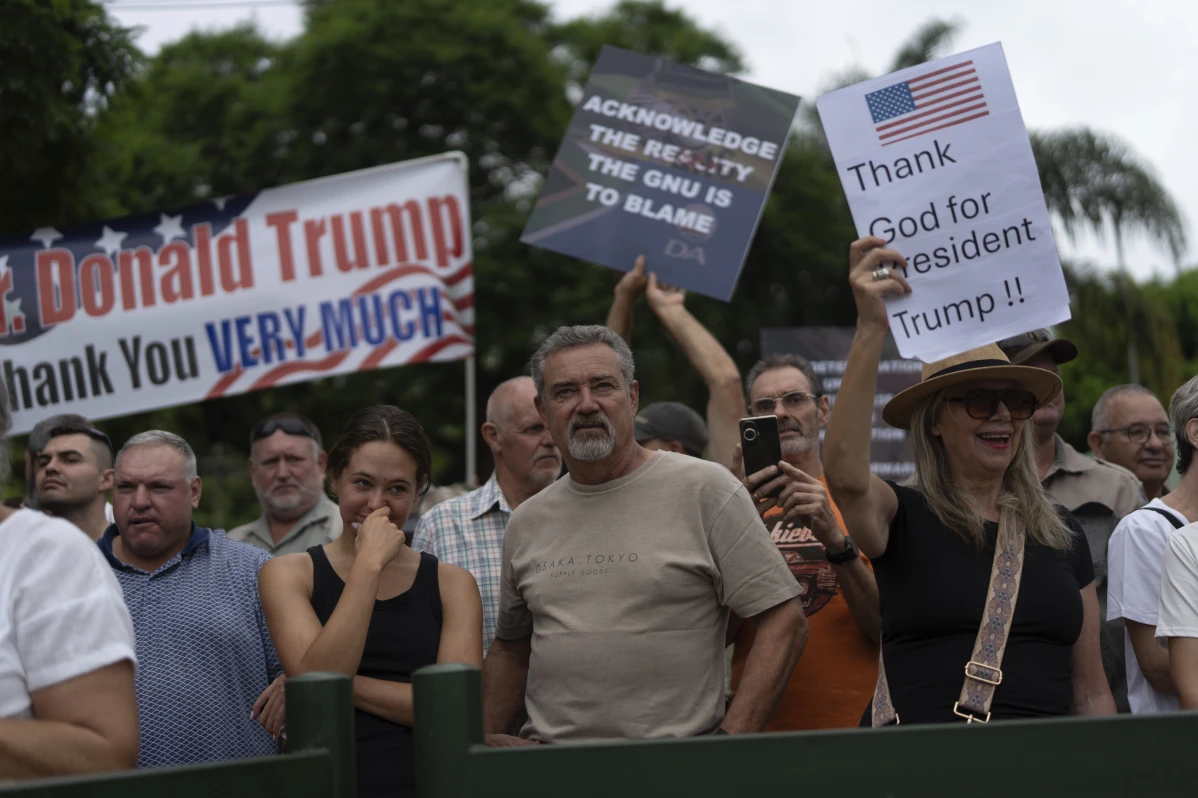
The United States Embassy in South Africa has received a list of over 67,000 individuals expressing interest in obtaining refugee status in the U.S. This surge of interest follows President Donald Trump’s executive order issued on 7 February, which proposed the resettlement of Afrikaners—a white minority group in South Africa—citing alleged racial discrimination by the Black-led government.
The executive order specifically references Afrikaners, descendants of Dutch and French settlers from the 17th century, directing Secretary of State Marco Rubio and Secretary of Homeland Security Kristi Noem to prioritise humanitarian relief for those purportedly facing “unjust racial discrimination.” This move stands in contrast to the administration’s broader policy stance, which has sought to curtail the U.S. refugee resettlement programme.
The South African Chamber of Commerce in the U.S. compiled the list of interested individuals, noting that it primarily comprises persons aged between 25 and 45, many with children. Neil Diamond, the chamber’s president, emphasised that while they have been inundated with inquiries since the executive order, the list does not constitute official applications. He stated that only U.S. authorities could formally process resettlement applications and that the chamber has sought guidance from the State Department and the U.S. Embassy in Pretoria to establish appropriate channels for information and registration.



The South African government has categorically rejected the allegations of discrimination and land seizures without compensation. President Cyril Ramaphosa dismissed these claims as a “completely false narrative,” asserting that no land has been expropriated under the new law. He emphasised that the legislation aims to address historical injustices stemming from apartheid, where land ownership was predominantly reserved for the white minority.

Further complicating diplomatic relations, the executive order also criticised South Africa’s foreign policy, particularly its decision to accuse Israel of genocide against Palestinians in Gaza at the International Court of Justice. The U.S. administration has accused South Africa of supporting groups like Hamas and adopting an anti-American stance, leading to the expulsion of the South African ambassador from the U.S.
The response from the Afrikaner community has been mixed. While some have expressed interest in the resettlement programme, organisations such as Afriforum, which advocates for Afrikaans speakers, have declined the offer. Kallie Kriel, CEO of Afriforum, stated that Afrikaners see their future in South Africa and are committed to finding local solutions. He emphasised that Afrikaners are indigenous to South Africa and have no intention of relocating.
The historical context is crucial in understanding this development. During apartheid, institutionalised racial segregation ensured that the white minority, including Afrikaners, held significant economic and political power. Despite the end of apartheid in 1994, economic disparities persist, with white South Africans, who constitute approximately 8% of the population, owning a disproportionate share of the country’s wealth. The land expropriation law seeks to rectify these imbalances by allowing the state to expropriate land without compensation if deemed “just, equitable, and in the public interest”.
Critics argue that President Trump’s executive order selectively favours white South Africans while neglecting other vulnerable refugee groups worldwide. This selective approach raises concerns about the perpetuation of white minority interests, as it appears to prioritise the needs of a historically privileged group over others facing genuine persecution.
The interest expressed by over 67,000 Afrikaners in the U.S. refugee programme highlights the complexities of South Africa’s socio-political landscape and its historical context. While the U.S. administration cites alleged discrimination as justification for the executive order, the South African government and various local organisations dispute these claims, emphasising the importance of addressing historical inequalities. This situation underscores the need for nuanced and informed discussions on land reform, racial discrimination, and the enduring impact of past policies on present socio-economic realities.