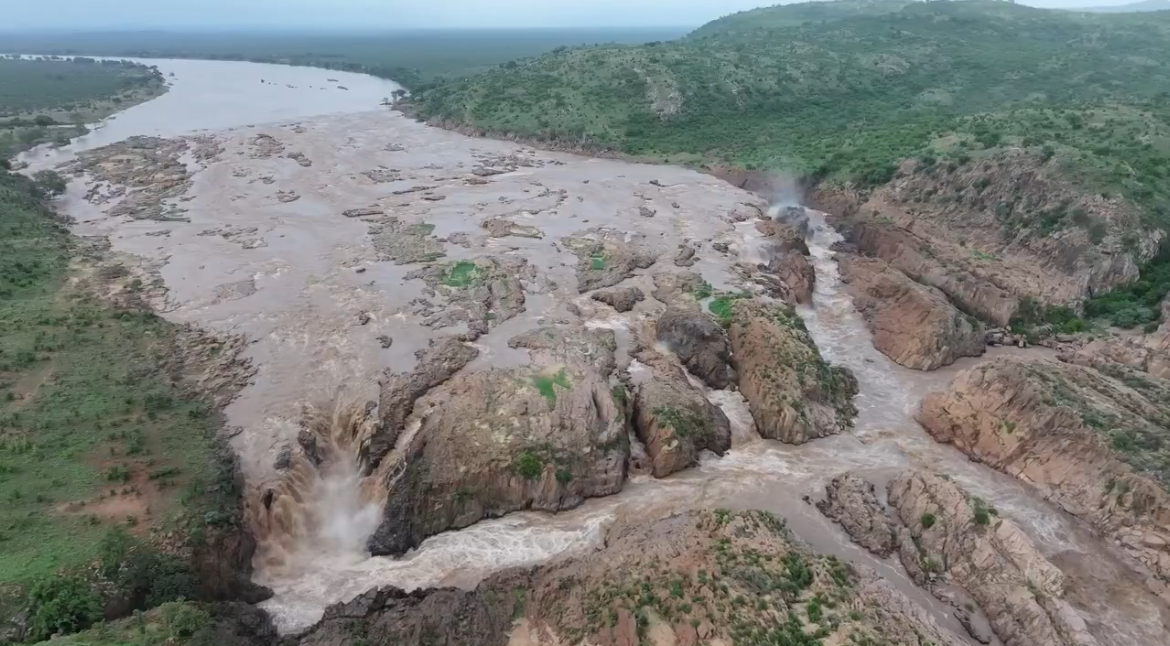
Africa’s infrastructure gap remains one of the continent’s most discussed, least addressed challenges. But every so often, a project emerges that combines scale, strategy, and symbolism. The Runde-Tende Dam, under construction in southern Zimbabwe, is precisely that kind of infrastructure. More than a dam, it is a gateway to transboundary cooperation, economic rebalancing, rural industrialisation, and long-horizon investor yield.
Located at the confluence of the Runde and Tende rivers in Chivi South, Masvingo Province, the dam is projected to cost approximately US$600 million, making it one of Zimbabwe’s most ambitious post-independence water infrastructure initiatives. Its planned storage capacity of 1.8 billion cubic metres would make it among the largest inland water bodies in Southern Africa. For context, the Tokwe-Mukosi Dam, completed in 2017 by Italian contractor Salini Impregilo, holds about 1.75 billion cubic metres. The same contractor has returned for Runde-Tende, bringing continuity in engineering experience and project delivery.

The implications of Runde-Tende are both local and regional. On the Zimbabwean side, the dam is expected to irrigate more than 50,000 hectares, unlocking agriculture-led development in Chikombedzi, Mwenezi, and Matabeleland South. In these traditionally water-scarce areas, reliable year-round water access will enable a shift from subsistence farming to commercial horticulture, citrus farming, and sugarcane expansion. According to the Ministry of Lands, Agriculture, Fisheries, Water and Rural Development, the government’s ambition is to irrigate at least 100,000 hectares by 2025, with Runde-Tende playing a pivotal role.




The downstream uses do not stop at Zimbabwe’s borders. A notable feature of the project is its regional integration function. Zimbabwe is planning to export up to 15 million litres of water per month to South Africa’s Limpopo Province. Given Limpopo’s persistent drought vulnerability and water insecurity, this cross-border transfer is strategically significant. It turns water into a tradable utility and positions Zimbabwe not just as a landlocked state but as a water-secure, cross-border economic partner.
This water diplomacy element is central to the dam’s investment narrative. By aligning infrastructure with the needs of a neighbouring country, Runde-Tende elevates its financial and geopolitical profile. South African banks have shown interest in co-financing the pipeline component of the project, particularly the stretch between Beitbridge and Musina. This involvement is not philanthropic. It is commercial, motivated by the strategic imperative to secure water for South African farmers, municipalities, and agro-industrial clients.
For investors seeking long-duration infrastructure yield with defensible cashflows, Runde-Tende offers a textbook opportunity. The capital structure under development blends government equity, development finance institution (DFI) support, and private capital. With offtake agreements secured for water exports and irrigation licenses likely to support agro-industrial clusters, the dam is being monetised not merely as a utility, but as an asset with embedded revenue streams.
This is where blended finance enters as a catalytic tool. Given Zimbabwe’s credit constraints and high sovereign risk premium, traditional debt is insufficient to raise the necessary capital at scale. However, by layering concessional finance from DFIs or climate adaptation funds with commercial tranches from regional banks, the project can reduce weighted average cost of capital and attract institutional capital. Sustainability-linked instruments—such as green bonds or social impact-linked debt—could also be employed, given the project’s contributions to climate resilience, job creation, and rural transformation.
It is not lost on any serious investor that water is fast becoming one of the most investible commodities of the 21st century. Globally, funds are seeking water-linked opportunities that combine environmental, social, and governance (ESG) compliance with long-term cash yield. Runde-Tende checks multiple boxes: it is renewable, developmental, hedgeable against climate volatility, and linked to food production. It also presents regional arbitrage. South African water prices are significantly higher than those in Zimbabwe, offering potential for stable hard currency revenue.
Crucially, Runde-Tende also represents a strategy of repurposing existing assets. The water it captures will release pressure on Zhove, Mutirikwi, Manyuchi, and Manjirenji Dams, which have traditionally supported the low-margin sugar sector. These freed reservoirs will now be reassigned to emerging horticultural and citrus industries in Zimbabwe’s southern corridor, which command higher market prices and hold greater export potential. Thus, the dam is not only creating new capacity but re-optimising historical infrastructure.
It would be naïve to discuss large-scale water infrastructure in Zimbabwe without acknowledging the controversial legacy of displacement, particularly the widely reported struggles during the Tokwe-Mukosi development phase. Thousands of families were displaced, some without adequate compensation or resettlement planning. Runde-Tende, however, appears to be absorbing these lessons. The project’s masterplan reportedly includes community consultations and integration of displaced households into the agro-industrial economy through employment, land access, and benefit-sharing arrangements.
Beyond social considerations, there is an ecological dimension. Runde-Tende lies upstream of Gonarezhou National Park, a key component of the Great Limpopo Transfrontier Conservation Area. The hydrology of the Runde River is essential for downstream ecosystems. Environmental experts have raised concerns that any alteration in flow, sedimentation or seasonal discharge patterns could affect the park’s flora and fauna, including aquatic species and riparian habitats.
There is, as yet, no firm evidence that the dam will directly encroach on park territory. However, any large upstream barrier inevitably modifies the river’s behaviour downstream. Sediment trapping, altered dry-season flows, and reduced flooding frequency can affect biodiversity. Investors with ESG frameworks should demand full Environmental Impact Assessments (EIAs) and insist on catchment management strategies that safeguard biodiversity while securing water for economic use.
These environmental concerns, if managed transparently and proactively, do not negate the investment case. On the contrary, they provide an opportunity for responsible investors to shape the project’s governance and social license. Through green bond covenants, impact-linked equity, or structured ESG instruments, financiers can hold the executing agencies accountable for delivering not only water but sustainability.
The broader macroeconomic context only strengthens the case. Runde-Tende is emerging within the framework of Zimbabwe’s National Development Strategy 1 (NDS1), which emphasises infrastructure-led growth, rural transformation, and industrial value addition. More importantly, it is fully aligned with continental goals under the African Continental Free Trade Area (AfCFTA), which calls for the development of cross-border infrastructure that enables intra-African trade, logistics fluidity, and agricultural competitiveness.
When considered within the SADC Regional Trunk Road Network, the Runde-Tende project takes on added importance. Zimbabwe’s Beitbridge border is the busiest land port in Southern Africa, linking Harare to Gauteng and beyond. Water infrastructure that supports agri-processing zones in Mwenezi or Beitbridge will also drive truckload volume, cold chain development, and regional logistics value chains. What starts as a dam becomes an enabler of cross-border trade corridors.
This is the kind of African infrastructure that global investors say they want: commercially viable, environmentally accountable, socially inclusive, and regionally transformative. But timing is key. The project is currently in its early financing and engineering phases. Investors who engage now—either through blended facilities, equity vehicles, or syndication structures—stand to capture first-mover advantages, shape term sheets, and gain reputational leadership in Africa’s green infrastructure ecosystem.

To miss Runde-Tende is to miss more than a dam. It is to miss the conversion of water into diplomacy, of hydro-engineering into rural employment, and of infrastructure into trade. Zimbabwe may not be the continent’s most obvious investment destination. But with Runde-Tende, it may be building one of its most consequential assets.
Written by Farai Ian Muvuti, the Chief Executive Officer of The Southern African Times, 2023 winner of the Young Entrepreneur of the Year award by the South African Chamber of Commerce UK, an advisor on the board of the Africa Chamber of Commerce, and a contributor to Arise News, Al Jazeera, and the BBC.