Tuesday, June 30, 2026
  • Login
The Southern African Times
  • Home
  • Southern Africa
  • Business
    • African Start ups
    • African Continental Free Trade Area
  • Technology
    • Lifestyle
      • Health
      • Culture
      • Food and Drink
      • Entertainment
  • Opinion
  • Sports
  • SAT Jobs
    • Events
  • About Us
    • Advertise with Us
    • Contact Us
No Result
View All Result
  • Home
  • Southern Africa
  • Business
    • African Start ups
    • African Continental Free Trade Area
  • Technology
    • Lifestyle
      • Health
      • Culture
      • Food and Drink
      • Entertainment
  • Opinion
  • Sports
  • SAT Jobs
    • Events
  • About Us
    • Advertise with Us
    • Contact Us
No Result
View All Result
The Southern African Times
No Result
View All Result
Home Opinion

Opinion: Equal vaccine access isn’t charity, it’s our best tool

by SAT Reporter
November 11, 2021
in Opinion
0
Opinion: Equal vaccine access isn’t charity, it’s our best tool

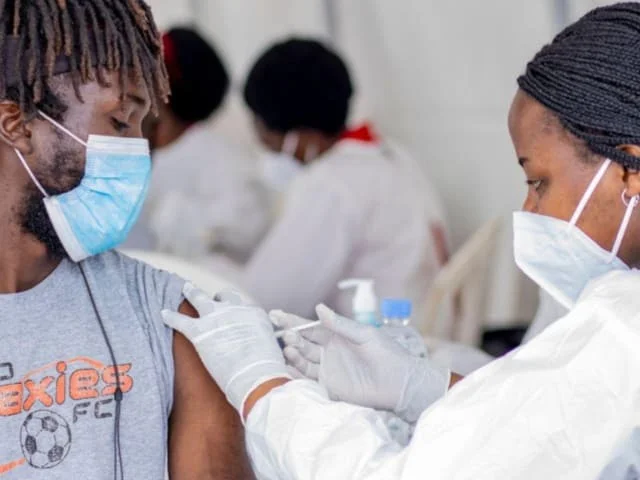
Among all the challenges facing the global COVID-19 vaccination effort, inequity is perhaps the biggest one. And as a region, Africa has borne the brunt of this reality. Today, less than 6% of Africa’s population of 1.2 billion has been fully vaccinated. There’s a moral quandary there that we must reckon with.

There’s also a real global threat. The United States Centers for Disease Control and Prevention has been warning for months now that we are a few evolutionary leaps away from a vaccine-proof variant. Each iteration of the virus we’ve seen so far has proven more resilient and deadly than the last. 

As wealthy countries continue to weigh the trade-offs between providing booster shots, vaccinating children, waiting for hesitant populations to come around, or diverting vaccines — which are sometimes discarded — to countries whose citizens want but cannot access even a single dose — that reality must be part of the math. Vaccinating the world is in every country’s national interest.

ADVERTISEMENT

There is good news. Africa has the experience and robust plans for large-scale vaccination. It’s clear what works: leveraging health extension workers, community leaders, and social networks to create vaccine confidence and making vaccines as conveniently available as possible. It’s also clear what’s needed, which is primarily capacity.

Africa’s readiness has been built by successfully addressing other public health crises like Ebola, HIV/AIDS, and malaria. Last year, for example, Ethiopia vaccinated 15 million children against measles in 10 days, even during a lockdown. By the beginning of this year, most African countries already had robust vaccine roll-out plans in place.

That planning is why Ghana was able to get the majority of its first-batch of vaccines out to priority populations in just 20 days. It’s why Rwanda was able to move freshly-acquired vaccine doses from Kigali to fourteen remote locations within 24 hours, early on in the pandemic. It’s why, even now, nearly 70% of available vaccines on the continent have already been administered. Vaccines are getting out of the door exponentially faster than they are coming in.

Africa has done its part. Early this year, the African Vaccine Acquisition Trust and the African Union negotiated a historic agreement to purchase 400 million single-dose vaccines from Johnson & Johnson. These vaccines were intended to complement the 400 million doses guaranteed under COVAX, enabling Africa to vaccinate its entire adult population by the end of 2022. In August, AVAT-purchased vaccines began rolling out across the continent. By the end of the year, AVAT aims to have shipped up to 50 million vaccine doses across the continent. It’s time for the world to hold up its end of the bargain.

Last month, President Biden convened a global COVID-19 summit on the sidelines of the United Nations General Assembly to urge action on three priorities: enabling global vaccination; ensuring equitable access to oxygen, tests, personal protective equipment, and therapeutics; and strengthening our collective ability to detect and respond to the next infectious disease outbreak. This month, the G-20 meets hoping to reaffirm the power of multilateralism to address global challenges — particularly COVID-19. To make progress on any of these goals, we must get behind Africa’s pandemic response.

Today, more than 50 countries have missed the World Health Organization‘s target of having 10% of their populations fully vaccinated against COVID-19 by the end of September. Most of these are in Africa. By reallocating significantly more vaccine doses, testing kits, and therapeutics, as well as putting more resources behind the logistics of vaccine delivery in Africa, we can significantly — and quickly — drive up coverage rates and get back on track to meet global vaccination targets of immunizing 70% of the world’s population by the end of 2022.

What’s important to note is that Africa is not asking for more donations or commitments. African leaders want to purchase the vaccines. Wealthier nations that have already vaccinated significant swathes of their populations can relieve the pressure on manufacturers by repositioning themselves in the global queue.

But to build back better, the Africa CDC has highlighted that we need a new “Public Health Order:” One in which regional health security is the backbone of global health security. That requires investing in African public health institutions who are responsible for raising the alarm on outbreaks. Institutions like the Africa CDC are nascent and growing. They need the capacity to carry out their work. It also means expanding Africa’s capacity to manufacture its own vaccines and medical products. 

One of the needs is for a pipeline of talent that can meet workforce demand at every stage of the vaccine value chain. The African Union is already working towards a bold target of ensuring that 60% of Africa’s vaccine demand is met through domestic production by 2040. If Africa had that kind of capacity now, the world wouldn’t be facing supply challenges.

Perhaps the most important thing global leaders can do is listen. Listen to African leaders and to Africa’s plans in order to find the right opportunities to invest. Because at the end of the day, the world is only as secure against COVID-19, and ready for the next biological threat, as Africa is.


Previous Post

How to make decarbonization economically sustainable

Next Post

South Africa spending restraint plans lifts rand, gvt bonds

SAT Reporter

Related Posts

LONG READ | The Oldest Alibi: South Africa’s Xenophobia and the Economic Ruin It Presages
Opinion

LONG READ | The Oldest Alibi: South Africa’s Xenophobia and the Economic Ruin It Presages

by Times Reporter
June 30, 2026
President Cyril Ramaphosa’s Opinion: How South Africa’s Natural Splendour Can Drive Inclusive Growth
Opinion

Op-Ed by President Ramaphosa | Protest Is Both a Right and a Responsibility

by Times Reporter
June 29, 2026
The Insurance Hack More Drivers Should Know
Opinion

The Insurance Hack More Drivers Should Know

by Times Reporter
June 22, 2026
Southern African Times Announces Brendan Amadi as Recipient of the 2026 Editorial Recognition of the Year Award
The Editorial Board

Southern African Times Announces Brendan Amadi as Recipient of the 2026 Editorial Recognition of the Year Award

by The Editorial Board
June 19, 2026
LONG READ | No Longer the World’s Dustbin: China’s Waste Ban and Africa’s Circular Economy Moment
Opinion

LONG READ | No Longer the World’s Dustbin: China’s Waste Ban and Africa’s Circular Economy Moment

by Times Reporter
June 12, 2026
Next Post
South Africa spending restraint plans lifts rand, gvt bonds

South Africa spending restraint plans lifts rand, gvt bonds

Browse by Category

  • Africa AI
  • African Continental Free Trade Area
  • African Debt
  • African Start ups
  • Agriculture
  • AI Africa
  • Algeria
  • All News
  • Analysis
  • Angola
  • Arts / Culture
  • Asia
  • Botswana
  • BOTSWANA
  • BREAKING NEWS
  • BRICS
  • Burkina Faso
  • Burundi
  • Business
  • Business
  • Business Wire
  • Cameroon
  • Central Africa
  • Chad
  • China
  • Climate Change
  • Climate Changev
  • Community
  • Congo Republic
  • Conservation
  • Côte d’Ivoire
  • COVID 19
  • CRYPTOCURRENCY
  • Culture
  • Democratic Republic of Congo
  • Diplomacy
  • Eastern Africa
  • Economic Development
  • Economy
  • Education
  • Egypt
  • Elections 2024
  • Energy
  • Entertainment
  • Environment
  • Eritrea
  • Ethiopia
  • Europe
  • Fashion
  • Feature
  • Finance
  • Financial Inclusion
  • Food
  • Food and Drink
  • Foods
  • GABON
  • Ghana
  • Global
  • Global Africa
  • Guinea
  • Health
  • Humanitarian Aid
  • Immigration
  • in Southern Africa
  • International news
  • International Relations
  • Investment
  • Ivory Coast
  • Just In
  • Kenya
  • Lesotho
  • Libya
  • Life Style
  • Lifestyle
  • Literature
  • Malawi
  • Malawi
  • Mali
  • Markets
  • Mauritius
  • Middle East
  • Mining in Africa
  • Morocco
  • Mozambique
  • Namibia
  • Niger
  • niger
  • Nigeria
  • North Africa
  • North-Eastern Africa
  • Obituaries
  • Obituary
  • Opinion
  • PARTNER CONTENT
  • Politics
  • Property
  • Racism
  • Rwanda
  • Rwanda
  • SADC
  • SAT Interviews
  • SAT Investigation
  • SAT Jobs
  • Saudi Arabia
  • Senegal
  • Seychelles
  • Somaliland
  • South Africa
  • South Sudan
  • Sports
  • Startup Africa
  • STOCK EXCHANGE
  • Sudan
  • Sustainability
  • Sustainablity
  • Tanzania
  • Technology
  • Telecommunications
  • The Editorial Board
  • The Power Of She
  • Togo
  • Trade
  • Travel
  • Travel
  • Tunisia
  • Uganda
  • Uncategorized
  • Wealth
  • West Africa
  • World
  • World
  • Zambia
  • ZAMBIA
  • ZIMBABWE
  • Zimbabwe

Browse by Tags

#NewsUpdate #SouthAfrica #SouthernAfricanTimes #TheSouthernAfricanTimes AfCFTA africa African Continental Free Trade Area African development African Development Bank African economies African economy African Union Agriculture Angola Botswana China Climate change critical minerals Cyril Ramaphosa Economic Development economic growth energy transition governance industrialisation Inflation Infrastructure Infrastructure Development International relations Investment Kenya Mozambique Namibia news Nigeria Regional Integration renewable energy Rwanda SADC South Africa Southern Africa sustainable development Tanzania United States Zambia Zimbabwe
ADVERTISEMENT

WHO WE ARE

The Southern African Times is a regional bloc digital newspaper that covers Southern African and world news. The paper also gives a nuanced analysis on news and covers a wide range of reporting which include sports, entertainment, foreign affairs, arts and culture.

Welcome Back!

Login to your account below

Forgotten Password?

Retrieve your password

Please enter your username or email address to reset your password.

Log In
  • Home
  • Southern Africa
  • Business
    • African Start ups
    • African Continental Free Trade Area
  • Technology
    • Lifestyle
      • Health
      • Culture
      • Food and Drink
      • Entertainment
  • Opinion
  • Sports
  • SAT Jobs
    • Events
  • About Us
    • Advertise with Us
    • Contact Us
Not enough quota to unlock this post
Unlock left : 0
Are you sure want to cancel subscription?