Although a few key industries delivered some hope of resilience in the first quarter of 2023, the South African economy continues to take severe local and international strain as the world is likely to enter a recession.
The gross domestic product (GDP) data released on Tuesday by Statistics South Africa shows that the country’s quarterly GDP expanded by a modest 0.4% in the first quarter of 2023 after contracting by 1.1% in the fourth quarter of 2022. Most sectors performed well in the first quarter, but we need to keep in mind this is from the low base in the fourth quarter of 2022. The impact of load shedding, South Africa’s dysfunctional ports and other systemic issues is clear once you consider the weak annual growth.
South Africa’s economy is already in a recessionary environment due to all the headwinds it is facing. It grew by only about 0.2% in the past year, putting pressure on social support, and Citadel’s analysts foresee a low growth rate of less than 0.3%, for the rest of the year.



South Africa’s most pertinent challenges, including record-high load shedding, over-budget wage demands from trade unions and the battered rand, are putting enormous strain on South Africa’s fiscal framework.
Increasing gross fixed capital formation, for the sixth quarter in a row, remained a beacon of hope and a sign of private and public sector investment into the economy, including more renewable energy and residential and commercial construction.
Consumers are, however, feeling the pinch. On the back of a poor global economic outlook and serious structural issues hampering growth in the country, South African consumers are finding themselves under severe pressure. The average South African is facing lower take-home pay, high unemployment (the third-highest in the world), high inflation and rapidly increasing interest rates counter to the rest of the world.
Rand concerns
The battered rand is of great concern.
The country’s current account deficit has seen us pay more in foreign currency to secure our imports, placing the local currency under pressure. Global liquidity is also drying up as we see cracks developing in larger economies. Only when rates start to normalise, which we expect in the second half of the year, will the dollar come under renewed pressure, and possibly boost the rand.
The rand’s woes, coupled with the no-growth environment, are resulting in the SA Revenue Service (SARS) not being able to meet its tax collection targets, forcing Treasury to borrow more, which will increase the country’s debt-to-GDP ratios and negatively impact the local currency again. This was especially concerning in light of today’s GDP announcement – government’s final consumption increased by 1.2%, which will put more pressure on the national budget.

Severe geopolitical turmoil regarding Russia, Ukraine, China, Taiwan, North Korea and Iran also continue to be a cause for concern, especially now that the world is also taking a dim view of South Africa’s unpopular relationship with Russia and China.
Brace yourselves
The overall current macro-economic picture is one of extreme uncertainty and volatility, and shows a very strong chance of global recession in the near future.
Citadel’s Recession Scorecard looks at 10 economic indicators for global recession, and one of its most concerning current predictions is a greater than 90% likelihood of a US recession in the next 12 to 18 months which could trigger a global recession.
All 10 of its indicators are bringing up red or yellow flags at the moment. The biggest red flag for us is the US’s inverted yield curve, which is the difference between long- and short-term interest rates.
Citadel’s analysts foresee the US experiencing below capacity growth for the next three years, as the cost-of-living crisis in the US is hitting consumers hard. This will have a knock-on effect in Europe, where the EU’s inflation numbers are of great concern to the European Central Bank (ECB). The Bank of England (BOE), in turn, is predicting a UK recession. Only China is showing real growth, but this is not enough to save the global economy from recession.
The International Monetary Fund (IMF) also recently published a report flagging three factors spelling imminent global recession, namely the effect of rising interest rates on the US property market, cracks in the real economy coupled with liquidity issues in the banking sector, and job losses in the US which is usually a sign of global recession.
In terms of the global picture, peak inflation, peak interest rates and the peak dollar all playing out on the global economic stage, but with greater uncertainty caused by the recent shocks in the US and European banking systems in the foreground. This is not surprising, as you cannot expect central banks to normalise monetary policy as quickly as they did without some sort of fallout.
We do, however, believe that we have reached peak inflation, and we are turning a corner – albeit slowly. It is still going to take the central banks a while to bring inflation down to their target levels.
Increased interest rates and the cracks in the financial system will put growth assets, like equities, under pressure. So, from an investment point of view, Citadel remains cautious, and will make sure that there is sufficient protection built into its portfolios to carry our clients through this kind of uncertain and volatile environment.

We’re in for a rough 12 to 18 months, so buckle up.
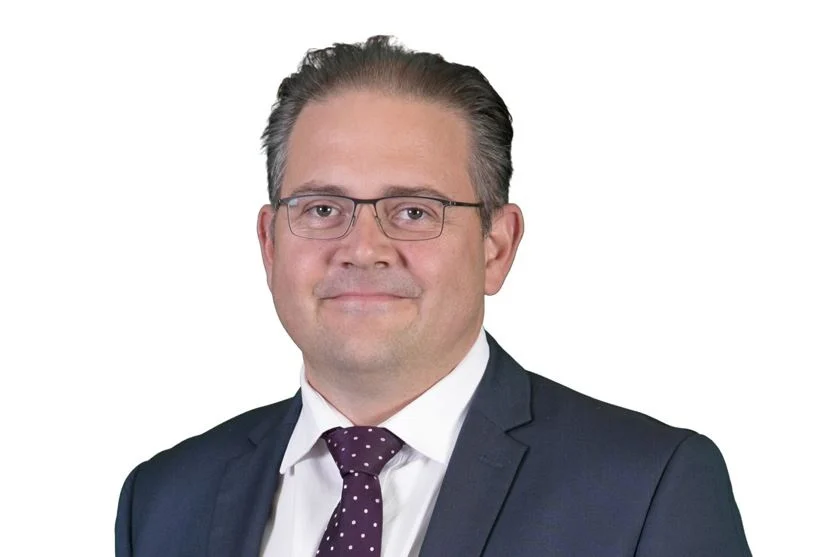
Maarten Ackerman is Citadel’s chief economist.The article reflects the author’s opinions and not necessarily those of The Southern African Times.