Wednesday, May 13, 2026
  • Login
The Southern African Times
  • Home
  • Southern Africa
  • Business
    • African Start ups
    • African Continental Free Trade Area
  • Technology
    • Lifestyle
      • Health
      • Culture
      • Food and Drink
      • Entertainment
  • Opinion
  • Sports
  • SAT Jobs
    • Events
  • About Us
    • Advertise with Us
    • Contact Us
No Result
View All Result
  • Home
  • Southern Africa
  • Business
    • African Start ups
    • African Continental Free Trade Area
  • Technology
    • Lifestyle
      • Health
      • Culture
      • Food and Drink
      • Entertainment
  • Opinion
  • Sports
  • SAT Jobs
    • Events
  • About Us
    • Advertise with Us
    • Contact Us
No Result
View All Result
The Southern African Times
No Result
View All Result
Home Opinion

Op-Ed by President Ramaphosa | Reparations must help to address Africa’s colonial legacy

by SAT Reporter
May 4, 2026
in Opinion
0
Op-Ed by President Ramaphosa | Reparations must help to address Africa’s colonial legacy

Every May, we observe Africa Month to commemorate the founding of the Organisation of African Unity in 1963. Celebrating and affirming our identity as Africans is as integral to our national character as the ideals that anchor our democracy.

We are one people. Despite Africa’s many languages and cultures, we take pride in a common identity, in our shared values and in a belonging that transcends geographical boundaries.

Even as we celebrate our continent’s vibrancy and dynamism, we are mindful of the legacy of Africa’s colonial past and how it continues to shape our continent’s fortunes. While most African countries achieved independence many decades ago, the effects of the colonial era are still evident in much of the inequality, economic exclusion, political instability and conflicts that persist in parts of Africa.


ADVERTISEMENT

The most extreme form of dehumanisation was the transcontinental slave trade perpetrated by European empires and slave-trading networks across the Sahara and North Africa. For more than a hundred years, millions of African men, women and children were hunted down, captured and traded as if they were not people, but possessions.

The reality is that much of the wealth of former colonial powers today is the result of the deprivation of Africa’s people. Not only were millions of Africans enslaved, but colonial powers grew wealthy from the vast tracts of African land they forcibly occupied and the valuable resources they extracted.

Across Africa, our people were taken, both dead and alive, as human specimens to be displayed and studied in faraway capitals. African historical artefacts were looted and taken to European museums.

The colonial powers have largely avoided a deeper reckoning with the consequences of these acts. Some have apologised for specific atrocities, but in the main they have fallen short of full unqualified apologies for colonialism.

Reparations for Africa, which was the site of some of the worst forms of brutality in human history, has been a contested issue for decades.

Opponents of reparations argue that modern states differ from those of the colonial period. It has been argued that too much time has passed, that those directly harmed are no longer alive and that it would be unjust to hold to account individuals or governments for actions committed decades or centuries ago.

This would be to wilfully ignore the intergenerational trauma wrought by slavery that continues to hold back the development of entire societies in Africa. As the Guyanese political activist and academic Walter Rodney writes in his seminal 1972 work ‘How Europe underdeveloped Africa’, “when one tries to measure the effect of European slave trading on the African continent, it is essential to realise that one is measuring the effect of social violence rather than trade in any normal sense of the word.”

This issue has now been given renewed momentum. In March this year, the United Nations General Assembly adopted a resolution declaring the trafficking of enslaved Africans and the racialised enslavement of Africans as the gravest crime against humanity.

The resolution is anchored in acknowledgement of harm, reparatory justice and restitution. It calls for looted cultural property to be returned and for compensation and other forms of reparation to be considered.

The former colonial powers derived financial benefit from the display of our looted historical and cultural artefacts in their museums and institutions. Enslaved labour from Africa built farms, industries and infrastructure to enrich colonial powers, as the countries from which the slaves were taken remain underdeveloped even today.

The colonial enterprise was not merely about the deprivation of human rights. It was motivated by profit. As Walter Rodney writes, “it was economics that determined that Europe should invest in Africa and control the continent’s raw materials and labour”.

Whatever form reparations ultimately take, they should be aligned with our continent’s developmental objectives and assist African countries to tackle debt challenges, poverty alleviation, inequality and unemployment.

Just as the exploitation of Africa and the enslavement of millions of her people made the former colonial powers wealthy, redress must take the form of sustained, direct, material investment in Africa’s development.

This should include increased foreign direct investment and market access for the African countries affected by slavery. It should include skills and technology transfer. And it should include the return of historical artefacts to their countries of origin.

South Africa supports a unified, collaborative approach to the issue of reparations for Africa. This must include concrete measures to redress the lingering effects of the slave trade and colonialism that are forward looking.

Just as truth and reconciliation has been an integral part of our own journey towards nationhood, so too must the former colonial powers confront the historical injustice of colonialism with honesty and integrity. Beyond that, they must make a clear commitment to tangible measures of redress that support Africa’s growth and development.

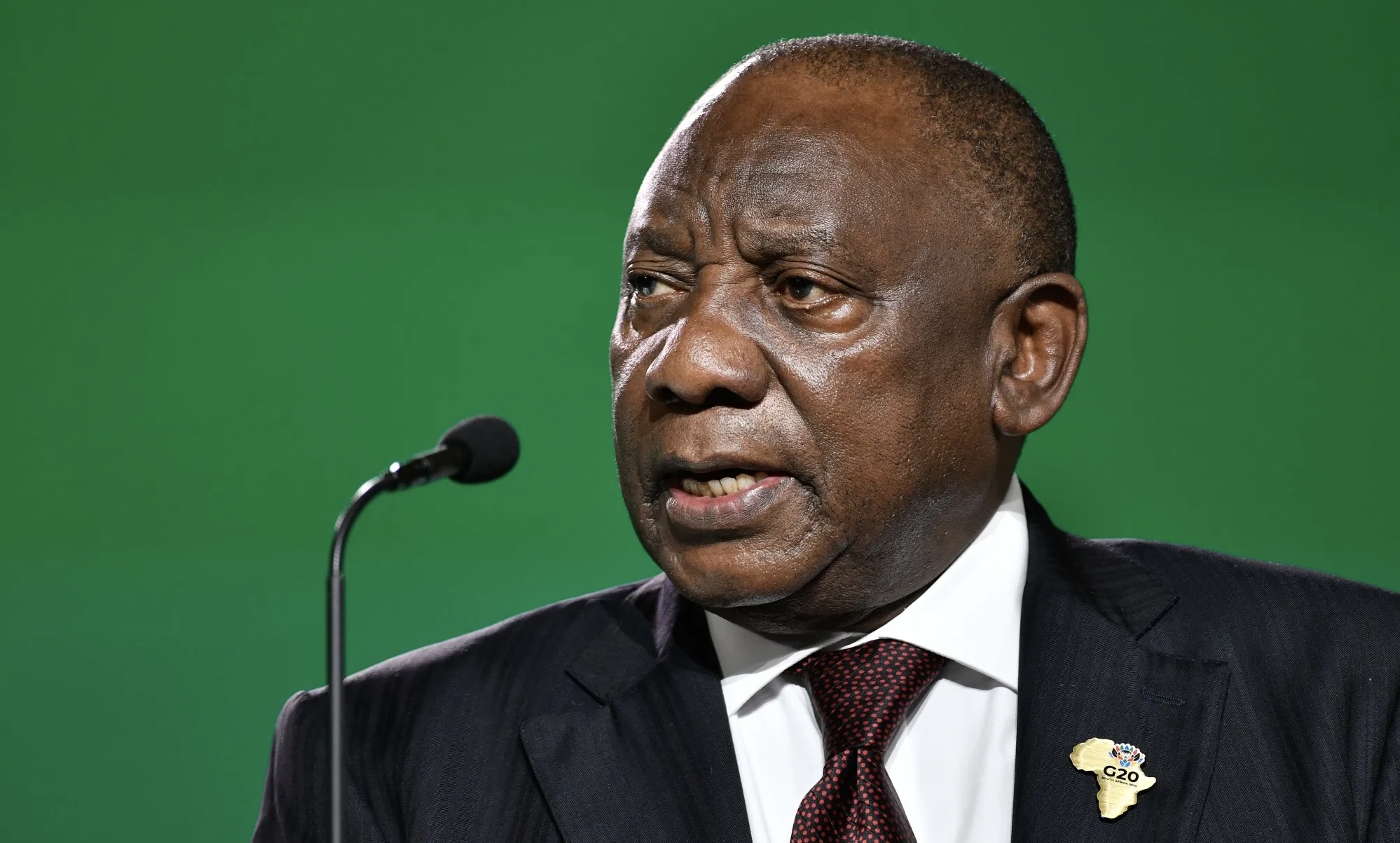
Cyril Ramaphosa is the President of the Republic of South Africa and President of the African National Congress (ANC). The views expressed in this article are those of the author and do not necessarily reflect those of The Southern African Times.


Tags: Africa MonthAfrican developmentcolonial legacycultural restitutionEconomic JusticeForeign Direct Investmenthistorical injusticeinequalitypostcolonial AfricareparationsslaveryUnited nationsWalter Rodney
Previous Post

Airlines Slash Flights as Fuel Shortage Fears Intensify

Next Post

South Africa Fuel Prices Surge to Multi Year High

SAT Reporter

Related Posts

Can the United States Still Sanction China Into Compliance?
Opinion

Can the United States Still Sanction China Into Compliance?

by SAT Reporter
May 12, 2026
Op-Ed by President Ramaphosa | Reparations must help to address Africa’s colonial legacy
Opinion

Op-Ed by President Ramaphosa | Everyone in South Africa Must Respect and Uphold Our Laws

by SAT Reporter
May 12, 2026
Who Owns the American Story? Druski’s Viral Satire and Hollywood’s Identity Crisis
Opinion

Who Owns the American Story? Druski’s Viral Satire and Hollywood’s Identity Crisis

by Michelle Mungeni
May 12, 2026
SA’s agriculture is growing, but is it working for everyone?
Opinion

SA’s agriculture is growing, but is it working for everyone?

by SAT Reporter
May 7, 2026
Zimbabwe’s Lithium Strategy Is Not China’s Problem. It Is an Economic One
Opinion

Zimbabwe’s Lithium Strategy Is Not China’s Problem. It Is an Economic One

by SAT Reporter
May 5, 2026
Next Post
South Africa Fuel Prices Surge to Multi Year High

South Africa Fuel Prices Surge to Multi Year High

Browse by Category

  • Africa AI
  • African Continental Free Trade Area
  • African Debt
  • African Start ups
  • Agriculture
  • AI Africa
  • Algeria
  • All News
  • Analysis
  • Angola
  • Arts / Culture
  • Asia
  • Botswana
  • BOTSWANA
  • BREAKING NEWS
  • BRICS
  • Burkina Faso
  • Burundi
  • Business
  • Business
  • Business Wire
  • Cameroon
  • Central Africa
  • Chad
  • China
  • Climate Change
  • Climate Changev
  • Community
  • Congo Republic
  • Conservation
  • Côte d’Ivoire
  • COVID 19
  • CRYPTOCURRENCY
  • Culture
  • Democratic Republic of Congo
  • Diplomacy
  • Eastern Africa
  • Economic Development
  • Economy
  • Education
  • Egypt
  • Elections 2024
  • Energy
  • Entertainment
  • Environment
  • Eritrea
  • Ethiopia
  • Europe
  • Fashion
  • Feature
  • Finance
  • Financial Inclusion
  • Food
  • Food and Drink
  • Foods
  • GABON
  • Ghana
  • Global
  • Global Africa
  • Guinea
  • Health
  • Immigration
  • in Southern Africa
  • International news
  • International Relations
  • Investment
  • Ivory Coast
  • Just In
  • Kenya
  • Lesotho
  • Libya
  • Life Style
  • Lifestyle
  • Literature
  • Malawi
  • Malawi
  • Mali
  • Markets
  • Mauritius
  • Middle East
  • Mining in Africa
  • Morocco
  • Mozambique
  • Namibia
  • Niger
  • niger
  • Nigeria
  • North Africa
  • North-Eastern Africa
  • Obituaries
  • Obituary
  • Opinion
  • PARTNER CONTENT
  • Politics
  • Property
  • Racism
  • Rwanda
  • Rwanda
  • SADC
  • SAT Interviews
  • SAT Investigation
  • SAT Jobs
  • Saudi Arabia
  • Senegal
  • Seychelles
  • Somaliland
  • South Africa
  • South Sudan
  • Sports
  • Startup Africa
  • STOCK EXCHANGE
  • Sudan
  • Sustainability
  • Sustainablity
  • Tanzania
  • Technology
  • Telecommunications
  • The Editorial Board
  • The Power Of She
  • Togo
  • Trade
  • Travel
  • Travel
  • Tunisia
  • Uganda
  • Uncategorized
  • Wealth
  • West Africa
  • World
  • World
  • Zambia
  • ZAMBIA
  • ZIMBABWE
  • Zimbabwe

Browse by Tags

#NewsUpdate #SouthAfrica #SouthernAfricanTimes #TheSouthernAfricanTimes AfCFTA africa African Continental Free Trade Area African development African Development Bank African economies African economy African Union Agriculture Angola Botswana Business China Climate change Cyril Ramaphosa Economic Development economic growth energy transition fiscal policy industrialisation Inflation Infrastructure Infrastructure Development International relations Investment Kenya Mozambique Namibia news Nigeria Regional Integration renewable energy Rwanda SADC South Africa Southern Africa sustainable development Tanzania United States Zambia Zimbabwe
ADVERTISEMENT

WHO WE ARE

The Southern African Times is a regional bloc digital newspaper that covers Southern African and world news. The paper also gives a nuanced analysis on news and covers a wide range of reporting which include sports, entertainment, foreign affairs, arts and culture.

Welcome Back!

Login to your account below

Forgotten Password?

Retrieve your password

Please enter your username or email address to reset your password.

Log In

  • Home
  • Southern Africa
  • Business
    • African Start ups
    • African Continental Free Trade Area
  • Technology
    • Lifestyle
      • Health
      • Culture
      • Food and Drink
      • Entertainment
  • Opinion
  • Sports
  • SAT Jobs
    • Events
  • About Us
    • Advertise with Us
    • Contact Us
Are you sure want to unlock this post?
Unlock left : 0
Are you sure want to cancel subscription?