Nigeria has formally joined the African Extractive Minerals Development Bank (AEMBANK), pledging to host its headquarters in a move viewed by many as both symbolic and strategic for the continent’s pursuit of financial and industrial self-determination .
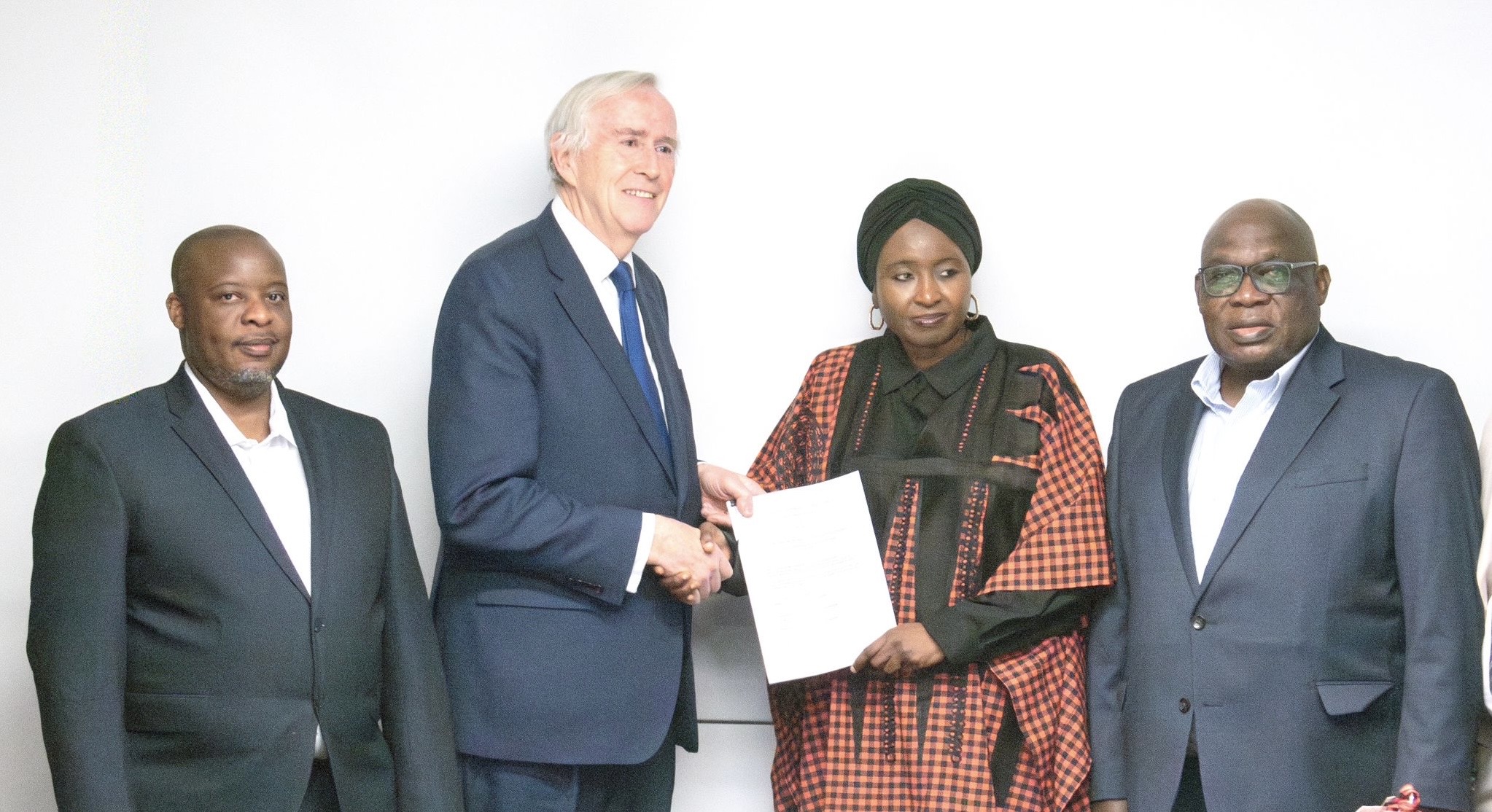
The agreement, signed on 4 December 2025 at the AFNIS London Roadshow, concluded several years of negotiations involving African governments, policymakers, and investors. Representing the Minister of Solid Minerals Development, Dr Oladele Alake, the Executive Secretary of the Solid Minerals Development Fund, Hajiya Fatima Shinkafi, signed Nigeria’s instrument of accession to the AEMBANK Charter.
In her remarks, Shinkafi described the decision as a “defining moment” for the continent’s extractive sector, suggesting that the institution could help unlock Africa’s mineral wealth through value addition, job creation, and domestic industrial capacity. She framed the initiative as part of Nigeria’s broader ambition to move beyond extractive dependency and to secure greater returns from its natural endowments through locally driven economic structures.



AEMBANK, a multilateral development finance institution, was established to fund mining and mineral beneficiation projects across Africa. Backed by a coalition of African states and private investors, its mandate is to channel financing into resource-linked industrialisation and to strengthen regional supply chains. The institution represents an attempt to bridge the longstanding gap between Africa’s mineral potential and its limited access to capital on equitable terms.
Ambassador (Rtd) Tim Morris, a member of AEMBANK’s Advisory Board, commended Nigeria’s commitment, noting the country’s efforts in bringing the initiative to fruition. He described AEMBANK as a mechanism for what he termed a “symbiotic handshake” between the Global North and South — a formulation that underscores the bank’s aspiration to reframe cross-regional economic cooperation on more balanced footing.
The decision to site the headquarters in Nigeria positions the country at the centre of Africa’s evolving financial landscape. Analysts suggest that Nigeria’s involvement could strengthen its influence in shaping the continent’s mineral policy and financing architecture. Yet, the success of the initiative will depend less on symbolism and more on how effectively AEMBANK can mobilise sustainable investment, enforce governance standards, and coordinate with existing institutions such as the African Development Bank and the African Export-Import Bank.

AEMBANK’s creation coincides with renewed calls across the continent to retain more value from raw materials and to integrate extractive activities into domestic manufacturing and energy transition strategies. For many African policymakers, the bank offers a chance to reshape the narrative surrounding Africa’s mineral endowment — not as a source of external dependency but as a foundation for technological growth and structural transformation.
While optimism remains measured, the initiative is seen as a tangible step toward building financial institutions that reflect African priorities and long-term economic resilience. Nigeria’s hosting of AEMBANK, observers note, could serve as both a political statement and a test case for how far the continent can advance towards self-financing its development ambitions in an increasingly competitive global economy.