
Friday, May 15, 2026
  • Login
The Southern African Times
  • Home
  • Southern Africa
  • Business
    • African Start ups
    • African Continental Free Trade Area
  • Technology
    • Lifestyle
      • Health
      • Culture
      • Food and Drink
      • Entertainment
  • Opinion
  • Sports
  • SAT Jobs
    • Events
  • About Us
    • Advertise with Us
    • Contact Us
No Result
View All Result
  • Home
  • Southern Africa
  • Business
    • African Start ups
    • African Continental Free Trade Area
  • Technology
    • Lifestyle
      • Health
      • Culture
      • Food and Drink
      • Entertainment
  • Opinion
  • Sports
  • SAT Jobs
    • Events
  • About Us
    • Advertise with Us
    • Contact Us
No Result
View All Result
The Southern African Times
No Result
View All Result
Home in Southern Africa

Namibia Commemorates First Genocide Remembrance Day Honouring Victims of Colonial Atrocities

by SAT Reporter
May 29, 2025
in in Southern Africa, South Africa
0
Namibia Commemorates First Genocide Remembrance Day Honouring Victims of Colonial Atrocities

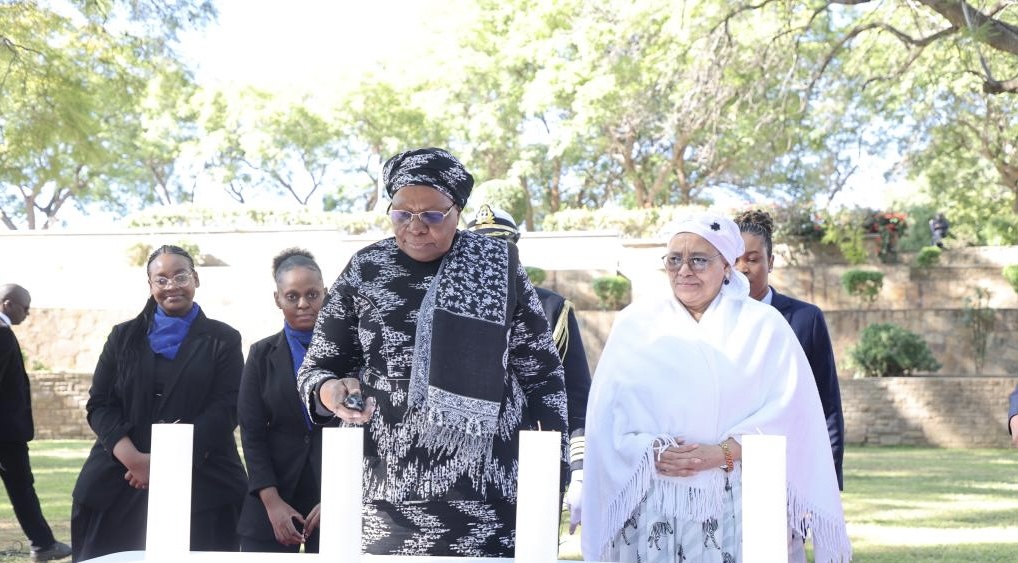
Namibia has formally marked its first Genocide Remembrance Day, honouring the memory of over 100,000 Ovaherero and Nama people who were systematically exterminated by German colonial forces between 1904 and 1908. The commemorative ceremony took place on 28 May 2025 in Windhoek, the nation’s capital, and was attended by government officials, diplomatic representatives, and members of the affected communities.

President Netumbo Nandi-Ndaitwah, speaking at the event, reflected on the magnitude of the atrocities committed under the imperial German regime. The Ovaherero and Nama communities, indigenous to what was then German South West Africa, suffered mass killings, displacement, forced labour, and starvation under a policy now recognised by historians and international legal scholars as constituting genocide. Many victims were interned in concentration camps, including the infamous Shark Island facility, where they were subjected to inhumane conditions. Human remains, including skulls, were taken to Germany for racial pseudoscientific studies—a practice that has since drawn widespread condemnation.

The date of 28 May was chosen for its profound historical resonance. On this day in 1907, German colonial authorities issued the order to close the concentration camps, symbolically ending the most overt phase of the genocidal campaign. However, the legacies of trauma and dispossession have continued to reverberate through generations of Ovaherero and Nama descendants.


ADVERTISEMENT

President Nandi-Ndaitwah emphasised the importance of remembrance as a foundation for justice and reconciliation. “We gather here today not only to honour the dead but also to renew our commitment to truth and reparative dialogue,” she stated. The president acknowledged the German government’s formal apology, delivered as part of ongoing negotiations that commenced in 2013. While a final agreement on reparations has yet to be concluded, the apology was described as a necessary—if incomplete—step toward restitution.

She urged the affected communities to maintain active engagement with the Namibian government in the pursuit of a just settlement: “We may not yet agree on the final quantum of reparations, but the process of dialogue itself has historic value.”

The establishment of Genocide Remembrance Day followed a parliamentary motion introduced in 2016, which prompted a broad-based national consultation process between 2017 and 2020. This culminated in the official adoption of the date as a day of national reflection and historical accountability.

International observers, including diplomats from Germany and other foreign missions, were present at the ceremony, underscoring the broader geopolitical and moral dimensions of Namibia’s pursuit of historical justice. While Namibia’s path toward formal reparations remains complex, the institutionalisation of Genocide Remembrance Day represents a significant milestone in the recognition of colonial-era atrocities and their contemporary relevance.

Namibia’s commemorative efforts resonate with broader global conversations on colonial legacies, transitional justice, and historical memory. The day serves not only as a memorial to those who perished but also as a reminder of the enduring struggle for dignity and redress.

Tags: #NAMAcolonial genocideGenocide Remembrance DayGerman colonialismHistorical JusticeNamibiaNamibian historyNetumbo Nandi-NdaitwahOvahereroreparations
Previous Post

AfDB Forecasts $1.43 Trillion Domestic Resource Potential

Next Post

Tanzania Embraces Technological Innovation to Advance Oil and Gas Potential

SAT Reporter

Related Posts

ANC Rallies Behind Ramaphosa as Farmgate Pressure Mounts
South Africa

ANC Rallies Behind Ramaphosa as Farmgate Pressure Mounts

by SAT Reporter
May 14, 2026
Rights Group Details Killings During Uvira Occupation
Democratic Republic of Congo

Rights Group Details Killings During Uvira Occupation

by SAT Reporter
May 14, 2026
Botswana Braces for South Africa Fuel Shock
Botswana

Botswana Braces for South Africa Fuel Shock

by SAT Reporter
May 11, 2026
South Africa Constitutional Court Reopens Scrutiny of Ramaphosa Over Phala Phala Case
BREAKING NEWS

South Africa Constitutional Court Reopens Scrutiny of Ramaphosa Over Phala Phala Case

by SAT Reporter
May 8, 2026
Why Zimbabwe Is Returning 67 Foreign Owned Farms
in Southern Africa

Why Zimbabwe Is Returning 67 Foreign Owned Farms

by SAT Reporter
May 8, 2026
Next Post
Tanzania Embraces Technological Innovation to Advance Oil and Gas Potential

Tanzania Embraces Technological Innovation to Advance Oil and Gas Potential

Browse by Category

  • Africa AI
  • African Continental Free Trade Area
  • African Debt
  • African Start ups
  • Agriculture
  • AI Africa
  • Algeria
  • All News
  • Analysis
  • Angola
  • Arts / Culture
  • Asia
  • BOTSWANA
  • Botswana
  • BREAKING NEWS
  • BRICS
  • Burkina Faso
  • Burundi
  • Business
  • Business
  • Business Wire
  • Cameroon
  • Central Africa
  • Chad
  • China
  • Climate Change
  • Climate Changev
  • Community
  • Congo Republic
  • Conservation
  • Côte d’Ivoire
  • COVID 19
  • CRYPTOCURRENCY
  • Culture
  • Democratic Republic of Congo
  • Diplomacy
  • Eastern Africa
  • Economic Development
  • Economy
  • Education
  • Egypt
  • Elections 2024
  • Energy
  • Entertainment
  • Environment
  • Eritrea
  • Ethiopia
  • Europe
  • Fashion
  • Feature
  • Finance
  • Financial Inclusion
  • Food
  • Food and Drink
  • Foods
  • GABON
  • Ghana
  • Global
  • Global Africa
  • Guinea
  • Health
  • Humanitarian Aid
  • Immigration
  • in Southern Africa
  • International news
  • International Relations
  • Investment
  • Ivory Coast
  • Just In
  • Kenya
  • Lesotho
  • Libya
  • Life Style
  • Lifestyle
  • Literature
  • Malawi
  • Malawi
  • Mali
  • Markets
  • Mauritius
  • Middle East
  • Mining in Africa
  • Morocco
  • Mozambique
  • Namibia
  • Niger
  • niger
  • Nigeria
  • North Africa
  • North-Eastern Africa
  • Obituaries
  • Obituary
  • Opinion
  • PARTNER CONTENT
  • Politics
  • Property
  • Racism
  • Rwanda
  • Rwanda
  • SADC
  • SAT Interviews
  • SAT Investigation
  • SAT Jobs
  • Saudi Arabia
  • Senegal
  • Seychelles
  • Somaliland
  • South Africa
  • South Sudan
  • Sports
  • Startup Africa
  • STOCK EXCHANGE
  • Sudan
  • Sustainability
  • Sustainablity
  • Tanzania
  • Technology
  • Telecommunications
  • The Editorial Board
  • The Power Of She
  • Togo
  • Trade
  • Travel
  • Travel
  • Tunisia
  • Uganda
  • Uncategorized
  • Wealth
  • West Africa
  • World
  • World
  • Zambia
  • ZAMBIA
  • Zimbabwe
  • ZIMBABWE

Browse by Tags

#NewsUpdate #SouthAfrica #SouthernAfricanTimes #TheSouthernAfricanTimes AfCFTA africa African Continental Free Trade Area African development African Development Bank African economies African economy African Union Agriculture Angola Botswana Business China Climate change Cyril Ramaphosa Economic Development economic growth energy transition governance industrialisation Inflation Infrastructure Infrastructure Development International relations Investment Kenya Mozambique Namibia news Nigeria Regional Integration renewable energy Rwanda SADC South Africa Southern Africa sustainable development Tanzania United States Zambia Zimbabwe
ADVERTISEMENT

WHO WE ARE

The Southern African Times is a regional bloc digital newspaper that covers Southern African and world news. The paper also gives a nuanced analysis on news and covers a wide range of reporting which include sports, entertainment, foreign affairs, arts and culture.

Welcome Back!

Login to your account below

Forgotten Password?

Retrieve your password

Please enter your username or email address to reset your password.

Log In

  • Home
  • Southern Africa
  • Business
    • African Start ups
    • African Continental Free Trade Area
  • Technology
    • Lifestyle
      • Health
      • Culture
      • Food and Drink
      • Entertainment
  • Opinion
  • Sports
  • SAT Jobs
    • Events
  • About Us
    • Advertise with Us
    • Contact Us
Are you sure want to unlock this post?
Unlock left : 0
Are you sure want to cancel subscription?
