Monday, June 22, 2026
  • Login
The Southern African Times
  • Home
  • Southern Africa
  • Business
    • African Start ups
    • African Continental Free Trade Area
  • Technology
    • Lifestyle
      • Health
      • Culture
      • Food and Drink
      • Entertainment
  • Opinion
  • Sports
  • SAT Jobs
    • Events
  • About Us
    • Advertise with Us
    • Contact Us
No Result
View All Result
  • Home
  • Southern Africa
  • Business
    • African Start ups
    • African Continental Free Trade Area
  • Technology
    • Lifestyle
      • Health
      • Culture
      • Food and Drink
      • Entertainment
  • Opinion
  • Sports
  • SAT Jobs
    • Events
  • About Us
    • Advertise with Us
    • Contact Us
No Result
View All Result
The Southern African Times
No Result
View All Result
Home in Southern Africa

Mozambique looks to private sector in war against Islamists

by SAT Reporter
March 16, 2021
in in Southern Africa, Just In, Mozambique
0
Mozambique looks to private sector in war against Islamists

London, (The Southern African Times) – When Islamist insurgents swept deep into Mozambique’s gas-rich north last year, helicopters flown by South African private military contractors bailed government forces out of what could have been a military disaster threatening multibillion-dollar liquefied natural gas investments.

But Dyck Advisory Group is also accused of committing war crimes — indiscriminately shooting into crowds of civilians and attacking a hospital in “a pattern of repeated, reckless targeting”, according to an Amnesty International report this month that has put a spotlight on the role of private security in the war for the resource-rich province of Cabo Delgado. 

DAG, which flew air support for security forces after being hired by the Mozambican national police last year, said it had commissioned an investigation. The allegations were “of great concern to the company, as we have detailed human rights policies and standard operating procedures in place to govern all our operations and take our responsibilities and obligations seriously”, it said.


ADVERTISEMENT

In recent months, the long-festering conflict between insurgents — linked to Isis but fuelled by local grievances — and the government has intensified, rendering hundreds of thousands of people homeless and many more living under the threat of famine. Last week the US government officially designated the insurgents as a foreign terrorist group and emphasised their links to Isis. 

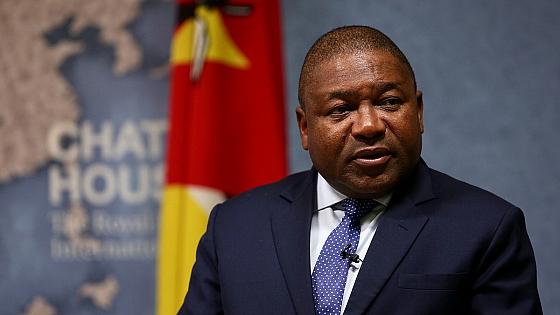
President Filipe Nyusi has turned to private contractors to help bolster a demoralised army and tighten security around gas-related projects that could transform the economy of one of the world’s poorest countries.

While Mozambique first reportedly turned to Russia’s Wagner Group, whose approximately 100 soldiers were quickly defeated by insurgents, it has now looked not just to DAG but to other companies for equipment and training. 

Paramount Group, the South African defence and aerospace group, reportedly has a contract to provide vehicles and training to the army. The group said it was “restricted from commenting on the nature and scope of its customer contracts”. All of its exports received the required approval of the South African government, it said.

Burnham Global, a Dubai-based contractor staffed by British military veterans, announced last month that Paramount had acquired a stake in the company and that together they had “a multimillion-dollar contract with an African government to provide a range of military training and advisory services . . . to effectively counter an ongoing insurgency within its borders”. 

Burnham Global declined to comment on whether the client was Mozambique. Other African countries from Nigeria to Mali are also fighting internal insurgencies. 

The company’s training work “is guided by a strict ethical code and adheres to the highest international standards”, it said. Mozambique’s defence ministry did not immediately respond to a request for comment on Paramount and Burnham Global.

Neither Paramount nor Burnham Global employ soldiers. “We employ engineers, technicians, naval architects, designers, mathematicians, lawyers, accountants, managers etc but no military personnel or mercenaries,” Paramount said.

The presence of private companies has attracted criticism. DAG helicopters helped stop an insurgent advance last year that could have threatened the provincial capital of Pemba. But “by firing indiscriminately into crowds, attacking civilian infrastructure and failing to distinguish between military and civilian targets, [DAG] have clearly violated international humanitarian law”, said Deprose Muchena, Amnesty’s regional director for east and southern Africa. 

Amnesty has also accused the insurgents and government security forces of war crimes. The government has always denied that security forces have abused civilians and insurgent prisoners. 

Amnesty’s findings “reinforce the horrific nature of the insurgency”, said Jasmine Opperman, an Africa analyst at Acled. There is an urgent need for military training, said Opperman. 

“You can get the best weapons and equipment . . . [but] if it ends up in government forces not being able to use them effectively, it is going to be a matter of time before they end up in the hands of the insurgency,” she said.

Fuel tanks at Maputo port
Fuel tanks at Maputo port © Alamy 

The proliferation of private security arrangements “makes governance more difficult” in a war that has more to do with local grievances than foreign terrorists, said Nuvunga. Civil society groups had struggled to access the terms of government dealings with private contractors, he said.

Even before any LNG production had begun, Mozambique was already the victim of a “presource curse” or corrosion of state institutions, Nuvunga said. It is vital that the Mozambican state retains the responsibility for security, not private companies, he added. 

The insurgency presents a clear risk to investors. In recent months, Total has limited work on Africa’s biggest private investment as a result of the nearby attacks. Patrick Pouyanné, Total’s chief executive, said it wanted security forces to provide a stronger 25km cordon around its operation. Further delays could imperil plans to start LNG production by the middle of the decade. 

“We don’t want Total to become a military entity or militarised company,” Nuvunga said. “We don’t want Iraq to repeat itself in Cabo Delgado.”

Previous Post

WTO pledges investment support, technical assistance to Nigeria

Next Post

Over 257,000 Rwandans have received COVID-19 vaccine: Health Ministry

SAT Reporter

Related Posts

Watervlei Memorial Park Set to Redefine Burial Services in Zimbabwe
Zimbabwe

Watervlei Memorial Park Set to Redefine Burial Services in Zimbabwe

by Leo Muzivoreva
June 19, 2026
South Africa’s Zimi Raises R50m for EV Expansion
in Southern Africa

South Africa’s Zimi Raises R50m for EV Expansion

by Times Reporter
June 12, 2026
Albaddad launches $1.9bn New Botswana City project in Gaborone
Botswana

Albaddad launches $1.9bn New Botswana City project in Gaborone

by Times Reporter
June 10, 2026
Tanzania Unveils US$24 Billion Budget as It Embarks on Vision 2050 Agenda
in Southern Africa

Tanzania Unveils US$24 Billion Budget as It Embarks on Vision 2050 Agenda

by Times Reporter
June 10, 2026
Namibia Welcomes Fresh Offshore Oil Discovery as Orange Basin Momentum Continues
in Southern Africa

Namibia Welcomes Fresh Offshore Oil Discovery as Orange Basin Momentum Continues

by Times Reporter
June 10, 2026
Next Post
Over 257,000 Rwandans have received COVID-19 vaccine: Health Ministry

Over 257,000 Rwandans have received COVID-19 vaccine: Health Ministry

Browse by Category

  • Africa AI
  • African Continental Free Trade Area
  • African Debt
  • African Start ups
  • Agriculture
  • AI Africa
  • Algeria
  • All News
  • Analysis
  • Angola
  • Arts / Culture
  • Asia
  • BOTSWANA
  • Botswana
  • BREAKING NEWS
  • BRICS
  • Burkina Faso
  • Burundi
  • Business
  • Business
  • Business Wire
  • Cameroon
  • Central Africa
  • Chad
  • China
  • Climate Change
  • Climate Changev
  • Community
  • Congo Republic
  • Conservation
  • Côte d’Ivoire
  • COVID 19
  • CRYPTOCURRENCY
  • Culture
  • Democratic Republic of Congo
  • Diplomacy
  • Eastern Africa
  • Economic Development
  • Economy
  • Education
  • Egypt
  • Elections 2024
  • Energy
  • Entertainment
  • Environment
  • Eritrea
  • Ethiopia
  • Europe
  • Fashion
  • Feature
  • Finance
  • Financial Inclusion
  • Food
  • Food and Drink
  • Foods
  • GABON
  • Ghana
  • Global
  • Global Africa
  • Guinea
  • Health
  • Humanitarian Aid
  • Immigration
  • in Southern Africa
  • International news
  • International Relations
  • Investment
  • Ivory Coast
  • Just In
  • Kenya
  • Lesotho
  • Libya
  • Life Style
  • Lifestyle
  • Literature
  • Malawi
  • Malawi
  • Mali
  • Markets
  • Mauritius
  • Middle East
  • Mining in Africa
  • Morocco
  • Mozambique
  • Namibia
  • Niger
  • niger
  • Nigeria
  • North Africa
  • North-Eastern Africa
  • Obituaries
  • Obituary
  • Opinion
  • PARTNER CONTENT
  • Politics
  • Property
  • Racism
  • Rwanda
  • Rwanda
  • SADC
  • SAT Interviews
  • SAT Investigation
  • SAT Jobs
  • Saudi Arabia
  • Senegal
  • Seychelles
  • Somaliland
  • South Africa
  • South Sudan
  • Sports
  • Startup Africa
  • STOCK EXCHANGE
  • Sudan
  • Sustainability
  • Sustainablity
  • Tanzania
  • Technology
  • Telecommunications
  • The Editorial Board
  • The Power Of She
  • Togo
  • Trade
  • Travel
  • Travel
  • Tunisia
  • Uganda
  • Uncategorized
  • Wealth
  • West Africa
  • World
  • World
  • Zambia
  • ZAMBIA
  • ZIMBABWE
  • Zimbabwe

Browse by Tags

#NewsUpdate #SouthAfrica #SouthernAfricanTimes #TheSouthernAfricanTimes AfCFTA africa African Continental Free Trade Area African development African Development Bank African economies African economy African Union Agriculture Angola Botswana China Climate change Cyril Ramaphosa Economic Development economic growth energy transition Ghana governance industrialisation Inflation Infrastructure Infrastructure Development International relations Investment Kenya Mozambique Namibia news Nigeria Regional Integration renewable energy Rwanda SADC South Africa Southern Africa sustainable development Tanzania United States Zambia Zimbabwe
ADVERTISEMENT

WHO WE ARE

The Southern African Times is a regional bloc digital newspaper that covers Southern African and world news. The paper also gives a nuanced analysis on news and covers a wide range of reporting which include sports, entertainment, foreign affairs, arts and culture.

Welcome Back!

Login to your account below

Forgotten Password?

Retrieve your password

Please enter your username or email address to reset your password.

Log In
  • Home
  • Southern Africa
  • Business
    • African Start ups
    • African Continental Free Trade Area
  • Technology
    • Lifestyle
      • Health
      • Culture
      • Food and Drink
      • Entertainment
  • Opinion
  • Sports
  • SAT Jobs
    • Events
  • About Us
    • Advertise with Us
    • Contact Us
Not enough quota to unlock this post
Unlock left : 0
Are you sure want to cancel subscription?