Tuesday, April 14, 2026
  • Login
The Southern African Times
  • Home
  • Southern Africa
  • Business
    • African Start ups
    • African Continental Free Trade Area
  • Technology
    • Lifestyle
      • Health
      • Culture
      • Food and Drink
      • Entertainment
  • Opinion
  • Sports
  • SAT Jobs
    • Events
  • About Us
    • Advertise with Us
    • Contact Us
No Result
View All Result
  • Home
  • Southern Africa
  • Business
    • African Start ups
    • African Continental Free Trade Area
  • Technology
    • Lifestyle
      • Health
      • Culture
      • Food and Drink
      • Entertainment
  • Opinion
  • Sports
  • SAT Jobs
    • Events
  • About Us
    • Advertise with Us
    • Contact Us
No Result
View All Result
The Southern African Times
No Result
View All Result
Home in Southern Africa Democratic Republic of Congo

More Than 200 Killed in Coltan Mine Collapse in Eastern Democratic Republic of the Congo

by SAT Reporter
March 5, 2026
in Democratic Republic of Congo, in Southern Africa
0
More Than 200 Killed in Coltan Mine Collapse in Eastern Democratic Republic of the Congo

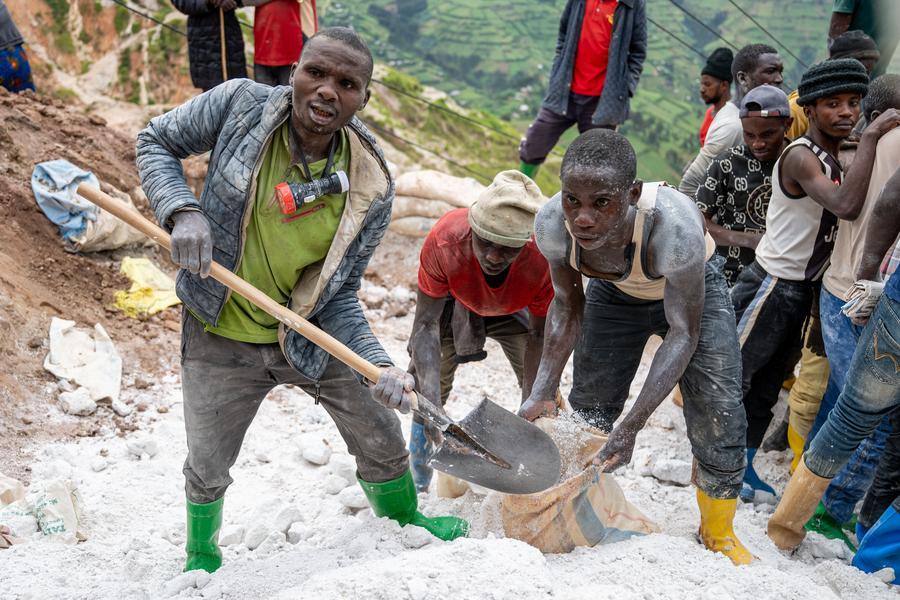
More than 200 people have died following the collapse of a coltan mining site in eastern Democratic Republic of the Congo, according to the country’s Ministry of Mines. The disaster occurred on Tuesday at the Rubaya mining area in North Kivu province after exceptionally heavy rainfall triggered a landslide on the Kasasa mountain that buried miners working at the site.

The Southern African Times understands from government statements that the provisional death toll exceeds 200 people, including around 70 minors. Authorities have indicated that the final number may rise as rescue and recovery efforts continue in a region where access remains difficult.

Rubaya is one of the most significant coltan producing areas in the Democratic Republic of the Congo, a country widely recognised for its vast mineral resources. Coltan, short for columbite tantalite, is the principal ore used to produce tantalum, a heat resistant metal widely used in the manufacture of mobile phones, semiconductors and other advanced electronic components. According to assessments cited by the United Nations, the Rubaya mines alone contribute an estimated 15 percent of the global supply of tantalum, underscoring the site’s strategic importance within global mineral supply chains. Further background on the mineral can be found in the Encyclopaedia Britannica overview of coltan, while global production data is available through the United States Geological Survey’s tantalum statistics.


ADVERTISEMENT

Local testimony suggests that the landslide occurred after intense rainfall destabilised slopes above the mining shafts. David Kasereka, an artisanal miner from Rubaya, told The Southern African Times that “the earth swallowed many people” when the hillside gave way. Artisanal miners and nearby residents were reportedly present at the site when the collapse occurred.

The Rubaya mining zone has been under the control of the March 23 Movement, commonly known as M23, since 2024. The presence of the armed group has complicated rescue operations and humanitarian access. The United Nations and several regional bodies have documented the continued volatility of eastern Congo, where armed groups, local defence forces and state actors intersect within a complex political and economic environment shaped partly by mineral extraction. More detail about the armed group’s activity and the broader conflict environment is documented in reports by the United Nations Group of Experts on the Democratic Republic of the Congo.

In November 2025 the Congolese government reclassified the Rubaya mining zone as a red zone, a designation that formally prohibits mining activity and mineral trading because of security concerns and safety risks. Despite these restrictions, artisanal mining activity has continued in parts of the region. Artisanal and small scale mining remains a major source of livelihoods across the eastern provinces, even as it exposes workers to significant hazards including landslides, poorly reinforced shafts and environmental degradation. Research examining the intersection between mineral extraction, governance challenges and armed conflict in the region has been published by organisations such as Global Witness in its work on conflict minerals.

This latest incident follows another fatal collapse reported in January at coltan mining sites in the same Rubaya area. Local media at the time suggested that the number of fatalities may have exceeded 400 when including missing persons. These repeated accidents have renewed discussion among Congolese authorities, regional organisations and civil society about the need for safer mining practices and improved oversight of artisanal extraction.

The Democratic Republic of the Congo holds some of the world’s largest deposits of cobalt, copper, tantalum and other critical minerals that underpin global energy and digital technologies. The country’s mineral wealth has long drawn international attention, yet communities living near extraction zones continue to face difficult working conditions, environmental risks and security challenges. The importance of strengthening governance and safety standards in the sector has been highlighted in development research by institutions such as the World Bank’s country overview of the Democratic Republic of the Congo and the African Development Bank’s profile of the country, both of which emphasise the need for mineral wealth to translate into sustainable development and community wellbeing.

The M23 movement has not publicly commented on the collapse. Congolese authorities say investigations into the incident are ongoing while local officials and community members continue recovery efforts.

The tragedy has once again drawn attention to the human cost embedded within global mineral supply chains and the realities faced by communities in eastern Congo whose labour and landscapes remain closely tied to the world’s demand for advanced technologies.

Tags: African mineral resourcesartisanal miningcoltan miningconflict minerals AfricaDemocratic Republic of the CongoM23 movementmining safety AfricaNorth KivuRubaya mine collapsetantalum supply chain
Previous Post

Tanzania Launches Major Fuel Storage Project at Dar es Salaam Port

Next Post

Afreximbank expands CARICOM financing commitment to US$5 billion

SAT Reporter

Related Posts

Namibia Reports Significant Decline in Wildlife Crime Following Intensified Enforcement
Conservation

Namibia Reports Significant Decline in Wildlife Crime Following Intensified Enforcement

by SAT Reporter
April 12, 2026
Zambia Maintains Fertiliser Stability Despite Global Disruptions
in Southern Africa

Zambia Maintains Fertiliser Stability Despite Global Disruptions

by SAT Reporter
April 12, 2026
4,496 South Africans Admitted as US Refugees in Six Months
in Southern Africa

4,496 South Africans Admitted as US Refugees in Six Months

by SAT Reporter
April 12, 2026
Flooding Halts Rail Traffic Along Angola’s Lobito Corridor
Angola

Flooding Halts Rail Traffic Along Angola’s Lobito Corridor

by SAT Reporter
April 12, 2026
Congo Enters Global Capital Markets with 1.25 Billion Dollar Debut Bond Issue
Democratic Republic of Congo

Congo Enters Global Capital Markets with 1.25 Billion Dollar Debut Bond Issue

by SAT Reporter
April 10, 2026
Next Post
Afreximbank expands CARICOM financing commitment to US$5 billion

Afreximbank expands CARICOM financing commitment to US$5 billion

Browse by Category

  • Africa AI
  • African Continental Free Trade Area
  • African Debt
  • African Start ups
  • Agriculture
  • AI Africa
  • Algeria
  • All News
  • Analysis
  • Angola
  • Arts / Culture
  • Asia
  • BOTSWANA
  • Botswana
  • BREAKING NEWS
  • BRICS
  • Burkina Faso
  • Burundi
  • Business
  • Business
  • Business Wire
  • Cameroon
  • Central Africa
  • Chad
  • China
  • Climate Change
  • Climate Changev
  • Community
  • Congo Republic
  • Conservation
  • Côte d’Ivoire
  • COVID 19
  • CRYPTOCURRENCY
  • Culture
  • Democratic Republic of Congo
  • Diplomacy
  • Eastern Africa
  • Economic Development
  • Economy
  • Education
  • Egypt
  • Elections 2024
  • Energy
  • Entertainment
  • Environment
  • Eritrea
  • Ethiopia
  • Europe
  • Fashion
  • Feature
  • Finance
  • Financial Inclusion
  • Food
  • Food and Drink
  • Foods
  • GABON
  • Ghana
  • Global
  • Global Africa
  • Guinea
  • Health
  • Immigration
  • in Southern Africa
  • International news
  • International Relations
  • Ivory Coast
  • Just In
  • Kenya
  • Lesotho
  • Libya
  • Life Style
  • Lifestyle
  • Literature
  • Malawi
  • Malawi
  • Mali
  • Markets
  • Mauritius
  • Middle East
  • Mining in Africa
  • Morocco
  • Mozambique
  • Namibia
  • Niger
  • niger
  • Nigeria
  • North Africa
  • North-Eastern Africa
  • Obituaries
  • Obituary
  • Opinion
  • PARTNER CONTENT
  • Politics
  • Property
  • Racism
  • Rwanda
  • Rwanda
  • SADC
  • SAT Interviews
  • SAT Investigation
  • SAT Jobs
  • Saudi Arabia
  • Senegal
  • Seychelles
  • South Africa
  • South Sudan
  • Sports
  • Startup Africa
  • STOCK EXCHANGE
  • Sudan
  • Sustainability
  • Sustainablity
  • Tanzania
  • Technology
  • Telecommunications
  • The Editorial Board
  • The Power Of She
  • Togo
  • Trade
  • Travel
  • Travel
  • Tunisia
  • Uganda
  • Uncategorized
  • Wealth
  • West Africa
  • World
  • World
  • Zambia
  • ZAMBIA
  • Zimbabwe
  • ZIMBABWE

Browse by Tags

#NewsUpdate #SouthAfrica #SouthernAfricanTimes #TheSouthernAfricanTimes AfCFTA africa African Continental Free Trade Area African development African Development Bank African economies African economy African Union Agriculture Angola Botswana Business China Climate change Cyril Ramaphosa Economic Development economic growth energy transition fiscal policy food security industrialisation Inflation Infrastructure Development International relations Investment Kenya Mozambique Namibia news Nigeria Regional Integration renewable energy Rwanda SADC South Africa Southern Africa sustainable development Tanzania United States Zambia Zimbabwe
ADVERTISEMENT

WHO WE ARE

The Southern African Times is a regional bloc digital newspaper that covers Southern African and world news. The paper also gives a nuanced analysis on news and covers a wide range of reporting which include sports, entertainment, foreign affairs, arts and culture.

Welcome Back!

Login to your account below

Forgotten Password?

Retrieve your password

Please enter your username or email address to reset your password.

Log In

  • Home
  • Southern Africa
  • Business
    • African Start ups
    • African Continental Free Trade Area
  • Technology
    • Lifestyle
      • Health
      • Culture
      • Food and Drink
      • Entertainment
  • Opinion
  • Sports
  • SAT Jobs
    • Events
  • About Us
    • Advertise with Us
    • Contact Us
Are you sure want to unlock this post?
Unlock left : 0
Are you sure want to cancel subscription?