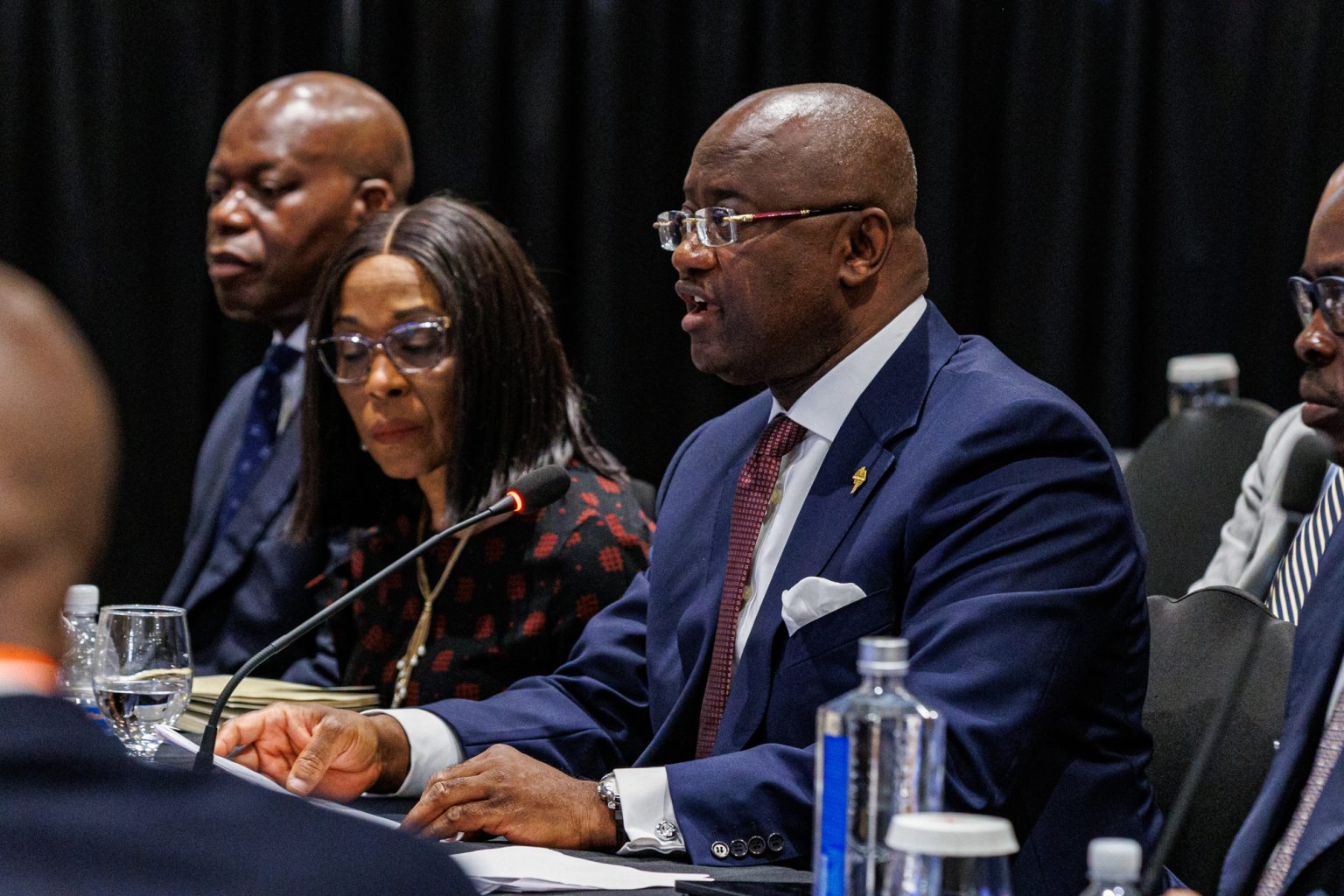
The African Export Import Bank has announced a significant expansion of its financial engagement with the Caribbean Community, raising its regional financing ceiling to US$5 billion over the next three to four years as part of a broader effort to deepen economic cooperation between Africa and the Caribbean.
The announcement was made by Afreximbank President Dr George Elombi during the 50th Regular Meeting of the Conference of Heads of Government of the Caribbean Community (CARICOM) in Basseterre, St Kitts and Nevis on 25 February 2026. According to the Bank, the revised commitment increases the previous financing envelope of US$3 billion and builds on more than US$750 million already disbursed in the region, alongside a pipeline of transactions valued at more than US$2 billion currently under implementation.
Dr Elombi said the expansion reflects the Bank’s intention to support structural economic transformation in Caribbean economies while strengthening long standing historical and commercial connections between Africa and the Caribbean. Afreximbank stated that the increased financing will target sectors considered central to economic diversification and value creation, including agro processing, infrastructure development, tourism, healthcare services and logistics.



The initiative forms part of the Bank’s broader mandate to facilitate trade and investment across what policymakers increasingly describe as “Global Africa”, linking African economies with those of the Caribbean diaspora through financial, cultural and commercial networks. The institution, headquartered in Cairo, has played a growing role in facilitating cross regional trade initiatives and investment frameworks aligned with the objectives of the African Export Import Bank and its support for continental integration under the African Continental Free Trade Area.
In outlining the Bank’s development approach, Dr Elombi indicated that Afreximbank’s strategy would emphasise value addition within domestic economies. Rather than focusing solely on primary commodity exports, the Bank aims to support processing industries that retain greater economic value locally and expand employment opportunities.
Planned investments include support for healthcare infrastructure in Barbados, Guyana and Grenada as well as tourism related projects across several Caribbean states including the Bahamas and Antigua and Barbuda. The Bank is also considering financing for agro processing facilities and logistics platforms in Barbados, Guyana, Antigua and Barbuda and St Kitts and Nevis. Infrastructure initiatives under discussion include power generation and distribution projects, road networks, trade centres and conference facilities in Jamaica, Grenada, Suriname and the Bahamas.
Financial sector support also forms part of the programme. Afreximbank has indicated that it will extend credit facilities to regional banks in Suriname, St Lucia, Grenada and Dominica, including lending lines intended to support small and medium sized enterprises through local development finance institutions.
Regional policymakers have also discussed improvements in transportation and payment infrastructure. Afreximbank confirmed that it is working with Caribbean partners on frameworks aimed at improving sea and air connectivity within the region in order to facilitate the movement of goods, people and investment.
Another initiative involves the expansion of the Creative Africa Nexus programme to support trade and collaboration in the cultural and creative industries between African and Caribbean markets. Cultural exchange and creative sector trade have increasingly been recognised as an area of shared economic potential across the African diaspora.
Dr Elombi also noted that Afreximbank has held discussions with the Eastern Caribbean Central Bank regarding support for a regional development strategy intended to double the size of the Caribbean economy over the next decade. According to the Bank, potential areas of cooperation include agricultural production, industrial processing, infrastructure development and energy systems.
The institution has also begun working with several African private sector companies seeking to expand into Caribbean markets. These include Access Bank, the Nigerian energy company Oando and industrial developer Arise Integrated Industrial Platforms, which is exploring the establishment of special economic zones in several Caribbean countries.

Afreximbank reaffirmed its commitment to developing an African Trade Centre in Bridgetown, Barbados, intended to serve as a regional hub for trade facilitation, investment promotion and commercial networking. The Bank is also supporting discussions around the creation of a Caribbean Eximbank that could mobilise capital for large scale regional projects.
Financial integration initiatives are also advancing. The Committee of CARICOM Central Bank Governors has endorsed the development of a regional payment platform modelled on the Pan African Payment and Settlement System, which Afreximbank launched in 2022 to facilitate cross border payments in local currencies across Africa. Officials believe a similar system in the Caribbean could reduce transaction costs and support intra regional trade.
The announcement comes ahead of the fifth Africa Caribbean Trade and Investment Forum scheduled to take place in St Kitts and Nevis in July 2026. The event, organised with the support of Afreximbank, is expected to convene policymakers, investors and cultural leaders from across Africa and the Caribbean to advance trade and investment cooperation. Further details on the forum can be found via the Africa Caribbean Trade and Investment Forum.
Observers note that the expansion of Afreximbank’s financing framework reflects a broader effort among African and Caribbean institutions to strengthen South South cooperation and develop financial mechanisms that respond to shared development priorities. For many policymakers in both regions, these partnerships represent an opportunity to diversify trade relationships, mobilise development finance and reinforce historical ties shaped by shared cultural and economic experiences.