Guinea-Bissau’s armed forces have declared they have assumed full control of the country, citing a response to actions by political actors allegedly seeking to destabilise the nation. The announcement was made through a televised statement broadcast on national television on the evening of 26 November by army spokesperson Dinis N’Tchama. Speaking on behalf of what is now being called the High Military Command for the Restoration of National Security and Public Order, the military has implemented a series of emergency measures with immediate effect.
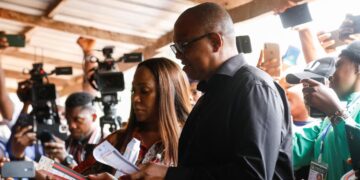
The electoral process that began earlier this week has been abruptly suspended. The country had opened polls on Sunday for its presidential and legislative elections, with over 960,000 registered voters set to choose a new head of state and 102 members of the National People’s Assembly. However, that process has now been halted, reflecting a growing regional concern over the fragility of electoral transitions in parts of West Africa.
The High Command’s announcement detailed the immediate closure of all public institutions and a suspension of media activity across the country. In a show of assertive control, Guinea-Bissau’s land, sea and air borders have also been sealed. A nationwide curfew was declared, now active from 7:00 in the evening until 6:00 in the morning.



Events escalated around 1:00 in the afternoon local time on 26 November when residents of Bissau, the capital, reported sustained gunfire near the presidential palace. Eyewitness accounts confirmed panic and displacement as military units quickly secured access routes and surrounded the compound. By the time of the evening broadcast, the city had quietened but was under heavy military presence, with strategic points visibly guarded.
The Southern African Times has confirmed through on-ground reporting that a number of high-ranking government officials were detained during the military action. Those reportedly in custody include the Minister of Interior Botche Candé, Chief of the General Staff Biaguê Na Ntan and Deputy Chief of Staff Mamadou Touré. No further details regarding their current conditions have been released by official sources.
Despite the military’s assertion of restoring national order, the situation remains fluid. While the streets of Bissau appear to have calmed under curfew, uncertainty lingers regarding the intentions of the new command and the timeline for a return to civilian governance. There has been no formal statement from the presidency or any remaining members of the civil government at the time of writing.
In a region historically affected by cycles of military interventions and contested democratic transitions, Guinea-Bissau’s latest developments present a complex intersection of internal political tensions and broader questions of governance. The military’s framing of the takeover as a protective act against destabilisation echoes patterns seen elsewhere on the continent, where institutional fragility and electoral disputes often provide a rationale for armed interventions.
The Chinese Embassy in Bissau swiftly issued a consular warning to its nationals following the announcement, urging vigilance and the avoidance of unnecessary movement. It called on Chinese citizens residing in or near areas of unrest to follow developments closely and remain in contact with consular services. This reaction underscores the broader international concerns surrounding the security environment in the country.
Guinea-Bissau has experienced multiple coups and attempted overthrows since gaining independence from Portugal in 1974. While this history is frequently cited in international coverage, African political analysts have cautioned against reductionist interpretations. Rather than viewing the situation solely through a prism of instability, many urge a more comprehensive understanding of how internal governance, regional dynamics and external influences converge to produce these ruptures.

As of now, no regional or continental body such as ECOWAS or the African Union has released a formal response. Observers expect these organisations to weigh in on the unfolding developments, particularly in light of recent continental efforts to reinforce constitutional order and democratic norms.
The events in Guinea-Bissau present a moment of reckoning not only for the country’s democratic trajectory but also for Africa’s broader engagement with models of power, civilian rule and military authority. While the global media may pivot quickly to framing this as yet another coup in a familiar pattern, there is value in recalibrating the narrative to centre the agency, complexity and political aspirations of the people most affected.