

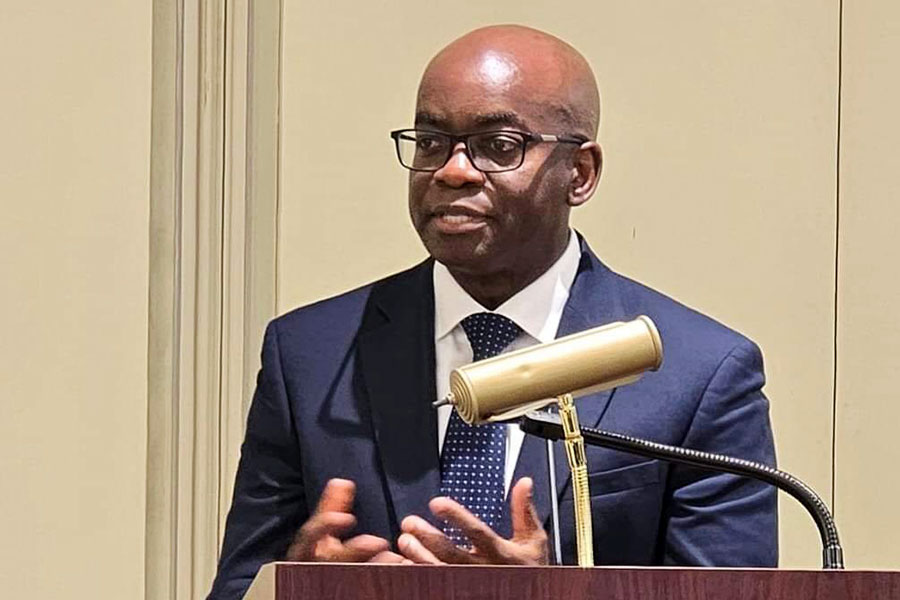
Five candidates are in the running to lead the African Development Bank (AfDB), with the election to be held during the institution’s annual meetings in Abidjan, Côte d’Ivoire, this Thursday. This leadership transition occurs at a time of significant transformation in global development financing, marked by declining concessional flows, fiscal tightening by donor nations, and rising borrowing costs. These dynamics have increased the strategic importance of the AfDB’s $318 billion capital base for Africa’s development.
Established in 1964, the AfDB plays a central role in mobilising and allocating capital for infrastructure, energy, health, education, and economic governance across the African continent. Its president holds substantial influence over the institution’s operational priorities, regional partnerships, and financing mechanisms.
Each candidate brings a unique set of experiences, regional backing, and policy focus. Together, they reflect the varied political, financial, and developmental challenges facing Africa in the current global economic climate.



Swazi Tshabalala, a South African banker with over three decades of experience in both public and private finance, is the only female candidate in the race. Until October 2024, she served as Senior Vice President at the AfDB. Tshabalala advocates for organisational reform within the bank to improve execution and coordination, particularly in high-impact sectors like infrastructure. According to her, the bank must streamline its operations and consolidate overlapping departments to focus on delivery. She also proposes building upon the AfDB’s exploration of hybrid capital—financial instruments that blend debt and equity features—to attract non-traditional investors and expand the bank’s financing capacity.
Amadou Hott, Senegal’s former Minister of Economy, Planning, and International Cooperation, brings an extensive background in development and investment banking, with experience in London, Lagos, and Dakar. Hott’s vision is anchored in boosting Africa’s financial independence. He proposes a comprehensive revenue mobilisation strategy to raise domestic tax collection, citing the continent’s low average tax-to-GDP ratio of 16% compared to the OECD average of 34%. By supporting African governments in preparing viable, risk-mitigated infrastructure projects, Hott believes the AfDB can help improve sovereign credit ratings and lower borrowing costs, while channelling more private investment into critical development sectors.

Samuel Munzele Maimbo, a Zambian national and Vice President at the World Bank (currently on leave), presents a policy platform centred on intra-African trade and financial integration. Backed by the Southern African Development Community (SADC) and the Common Market for Eastern and Southern Africa (COMESA), Maimbo argues that increasing trade among African nations—currently just 15% of total trade—can spur economic resilience. He proposes regulatory reforms and cross-border financial infrastructure that would allow African countries to more efficiently trade with, and lend to, one another. Maimbo also stresses the importance of behind-the-scenes data systems and harmonised rules to support regional economic interdependence.
Sidi Ould Tah, Director General of the Arab Bank for Economic Development in Africa (BADEA) and former Mauritanian finance minister, promotes a four-pronged reform strategy. His proposals include: expanding access to capital by engaging new financing partners, reforming financial systems for greater efficiency, formalising the informal sector (which employs over 80% of Africans), and building climate-resilient infrastructure. Ould Tah contends that strategic partnerships with private investors, regional development banks, and multilateral institutions can increase the bank’s financial leverage—transforming each dollar raised into as much as ten dollars in productive investments.
Abbas Mahamat Tolli, representing Chad, is a former Minister of Finance and current President of the Development Bank of Central African States. He also served as Governor of the Bank of Central African States (BEAC). Tolli’s campaign focuses on governance, transparency, and digital transformation. He asserts that Africa suffers substantial financial outflows due to fiscal evasion and resource mismanagement. His proposed reforms include digitising financial platforms, pooling risks across countries, and strengthening public-private partnerships. Tolli, who fled civil conflict as a child, frames his personal journey as reflective of Africa’s challenges and potential—underscoring his belief in inclusive development led by efficient financial governance.
The election’s outcome will shape not only the strategic direction of the AfDB, but also its relationships with regional economic blocs, international financial institutions, and African governments. With significant infrastructure deficits, climate vulnerabilities, and financing gaps across the continent, the new president must demonstrate technical expertise, political acumen, and visionary leadership to navigate complex development challenges.
More information about the AfDB and its role in Africa’s economic transformation is available on the African Development Bank website and through Reuters Africa’s coverage.


