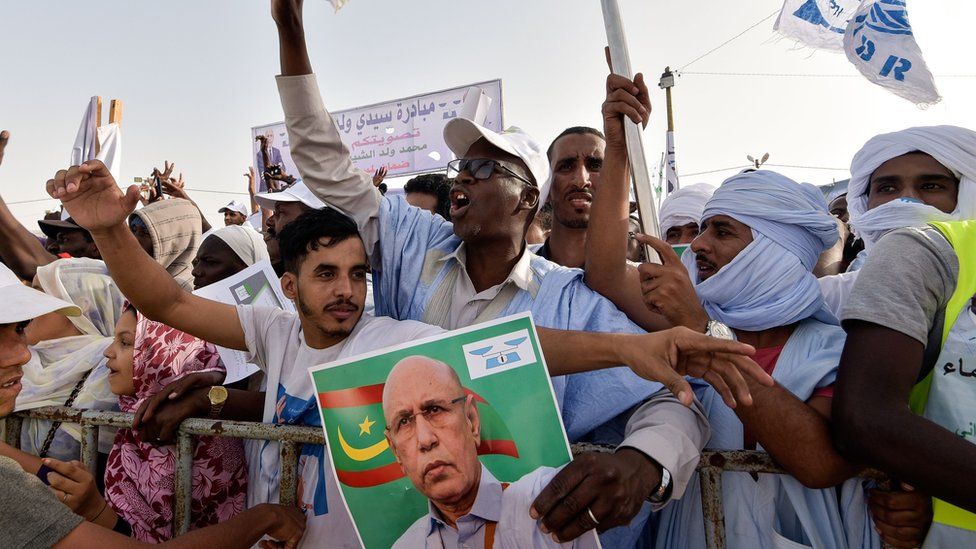
Mauritania commenced the first round of its presidential election early Saturday morning at 7:00 a.m. local time (0700 GMT). This crucial election sees voters choosing their new president from a slate of seven candidates, including the incumbent president Mohamed Ould Cheikh El Ghazouani and his principal adversary, Biram Dah Abeid. Abeid has previously secured the second position in both the 2014 and 2019 presidential elections.
The Independent National Electoral Commission (CENI), tasked with overseeing the electoral process, has confirmed that over 1.9 million individuals are registered to vote. Polling stations opened at the break of dawn, providing ample time for the electorate to cast their votes throughout the day.
Voting is set to conclude at 7:00 p.m. local time, with preliminary results anticipated to be announced later in the evening. Official results are expected within the subsequent two days, offering a clear picture of the electoral outcome. Should no candidate achieve an outright majority, a second round of voting has been scheduled for July 14.




This election is significant not only for the determination of Mauritania’s leadership but also for its implications on the nation’s political stability and democratic processes. Observers and citizens alike await the results with bated breath, hopeful for a smooth and fair electoral process.
As Mauritania stands on the brink of potentially significant political change, the international community watches closely, recognising the broader implications of this election for the region.