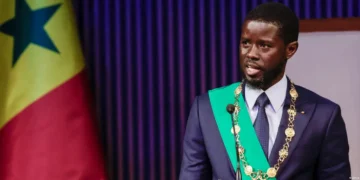
At the recently concluded Africa Trade Summit held in Accra, Ghana’s President John Dramani Mahama urged African states to intensify efforts towards constructing robust regional production value chains that transcend national borders. His remarks signalled a renewed emphasis on structural transformation and cross-border collaboration to reposition the continent within global manufacturing and trade networks.
The President argued that African economies cannot achieve meaningful industrialisation in isolation. Rather than pursuing self-contained national strategies, countries must harness the potential of collective industrial policies that allow raw materials, intermediate goods and final products to move fluidly within African regions. This approach aligns with the foundational goals of the African Continental Free Trade Area (AfCFTA), which has brought together 54 signatory nations to form the largest free trade bloc globally by number of participating countries.
President Mahama underscored the critical importance of scale and integration in industrial policy, noting that the AfCFTA provides a market of over 1.3 billion people. This demographic strength presents a compelling opportunity for Africa to position itself as a competitive manufacturing destination. He highlighted that fragmented markets and isolated national agendas cannot deliver the economic transformation required for meaningful development.



His address drew attention to strategic infrastructure investments needed to make regional industrial integration feasible. These include the expansion of transport corridors, the development of interconnected energy grids and the establishment of resilient digital infrastructure. Equally vital, according to the President, is the harmonisation of trade standards and regulatory frameworks which would reduce bottlenecks and build trust in cross-border commerce.

In recognising that no single country can manufacture all goods efficiently, President Mahama called for a decentralised industrial ecosystem. This would allow countries to specialise and add value within a shared supply chain, thereby fostering mutual interdependence and strengthening intra-African trade.
In his appeal to stakeholders, the President highlighted the multifaceted responsibilities required for this transformation. Governments must provide stable policy environments and visionary leadership. The private sector is expected to innovate and deploy capital towards scalable industrial projects. Financial institutions, he argued, must design long-term financing instruments tailored to African realities, while development partners need to align their support with Africa’s own development priorities. Lastly, Pan-African institutions must serve as facilitators in removing both structural and administrative barriers to integration.
The Africa Trade Summit, convened by the Africa Trade Chamber, brought together policymakers, business leaders and development experts in a coordinated attempt to catalyse inclusive and sustainable trade across the continent. The Chamber continues to play a central role in shaping Africa’s trade narrative by mobilising capital and advocacy for industrial development.

The Ghanaian President’s call adds to a growing consensus that Africa’s path to structural transformation requires coordinated economic strategies rooted in regional cooperation and anchored by African institutions. While past models have often mirrored external paradigms, the current shift prioritises endogenous agency, cooperation over competition, and a nuanced understanding of the continent’s interconnected challenges and possibilities.
By advocating for integrated value chains rather than self-contained economies, President Mahama has contributed to an evolving Pan-African discourse that sees industrialisation not merely as an economic goal but as a means to reshape Africa’s position in global value systems.